


TLDR
- Crude prices surged past $105 per barrel Thursday following heightened conflict in the Strait of Hormuz
- Iranian Revolutionary Guard Corps targeted three commercial vessels in the strategic waterway Wednesday
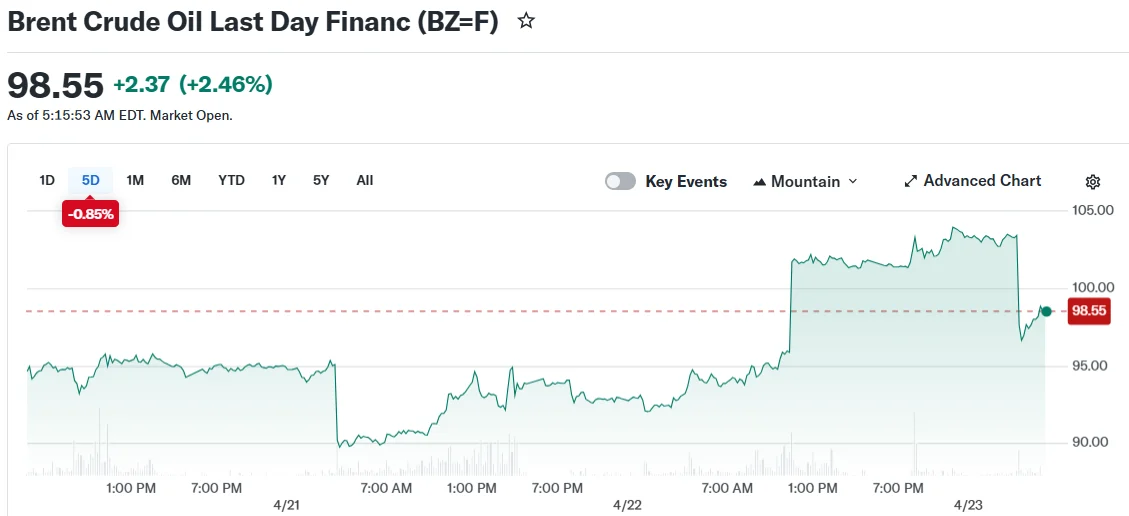
- Brent crude closed above the $100 threshold for the first time since the truce commenced
- Washington prolonged its ceasefire agreement while maintaining its maritime blockade on Iranian harbors
- Diplomatic negotiations between Washington and Tehran have reached an impasse with no scheduled sessions ahead
Crude oil markets experienced a sharp rally Thursday, with prices climbing past $105 per barrel as military confrontations reignited in the Strait of Hormuz, occurring mere hours following Washington’s announcement of an extended ceasefire arrangement with Iran.
The Islamic Revolutionary Guard Corps of Iran launched strikes against three merchant vessels navigating the strait Wednesday. These military actions occurred immediately following President Donald Trump’s declaration that the April 7 truce agreement would continue without a specified endpoint.
Brent crude benchmark futures advanced 1.4% to reach $103.36 per barrel during early Thursday trading. West Texas Intermediate contracts similarly climbed 1.4%, touching $92.96. Brent had earlier surged as much as 4.2% during the trading session before retracing gains following unverified reports of detonations within Iranian territory.
The strategic Strait of Hormuz serves as a critical chokepoint, facilitating approximately 20% of global petroleum supply. Following the outbreak of hostilities in late February, the near-complete closure of this waterway has drastically reduced crude shipments from key Gulf region exporters.

Washington continues to enforce a maritime blockade targeting vessels traveling to and departing from Iranian harbors. Iran’s Foreign Minister Abbas Araghchi has characterized the blockade as a breach of the ceasefire terms.
Vessel traffic through the strait came to a virtual halt Thursday. Maritime tracking indicated just one bulk cargo ship traversing the waterway.
Diplomatic Efforts Frozen
The United States and Iran remain gridlocked over multiple contentious matters, including Tehran’s nuclear development activities and Israel’s military operations in Lebanon.
Iranian President Masoud Pezeshkian expressed openness to diplomatic dialogue but identified the “blockade and threats” as primary barriers preventing meaningful negotiations. Tehran has indicated no intention to participate in talks in the immediate future.
Mediation efforts reportedly continue pushing for potential peace discussions as soon as Friday, per Wall Street Journal reporting. However, no formal meeting has received official confirmation.
“Tensions are remaining high, and with the US and Iran currently at a stalemate, until somebody flinches, the path of least resistance for prices still looks higher,” said Dennis Kissler, senior vice president at BOK Financial Securities.
Supply Constraints Impact Global Markets
Brent crude has climbed nearly 13% across just the previous three trading sessions. Market analysts indicate traders are increasingly factoring in extended supply disruptions rather than anticipating swift conflict resolution.
“The lack of progress in peace talks means that hopes the oil market had for a resolution will fade,” said Warren Patterson, head of commodities strategy at ING. “The market will gradually become numb to these headlines if they turn out to be just headlines.”
United States petroleum inventory figures released Wednesday by the Energy Information Administration revealed drawdowns across all primary refined product segments.
Global markets have increasingly relied upon American crude supplies to compensate for Middle Eastern supply interruptions. This elevated demand propelled aggregate US petroleum and fuel shipments to unprecedented levels, according to agency data.
Thursday maritime monitoring confirmed only a single vessel transiting the Strait of Hormuz, with no ships documented entering the critical waterway.
