


TLDR
- Crude oil benchmarks plunged Sunday following Trump’s announcement that a US-Iran agreement would be revealed “shortly”
- Brent crude declined 4.9% to $98.45 per barrel; WTI dropped 5.4% to $91.38
- The strategic Strait of Hormuz waterway has remained closed since February’s end, removing approximately 1 billion barrels from worldwide supply
- Critical obstacles persist, including Iranian frozen assets and Tehran’s nuclear ambitions
- American energy companies increased oil and gas drilling rigs for a fifth consecutive week, marking the longest streak since early 2025
Crude oil markets experienced a significant downturn Sunday extending into Monday following President Trump’s statement that Washington and Tehran were nearing a peace agreement that could reopen the strategically vital Strait of Hormuz.
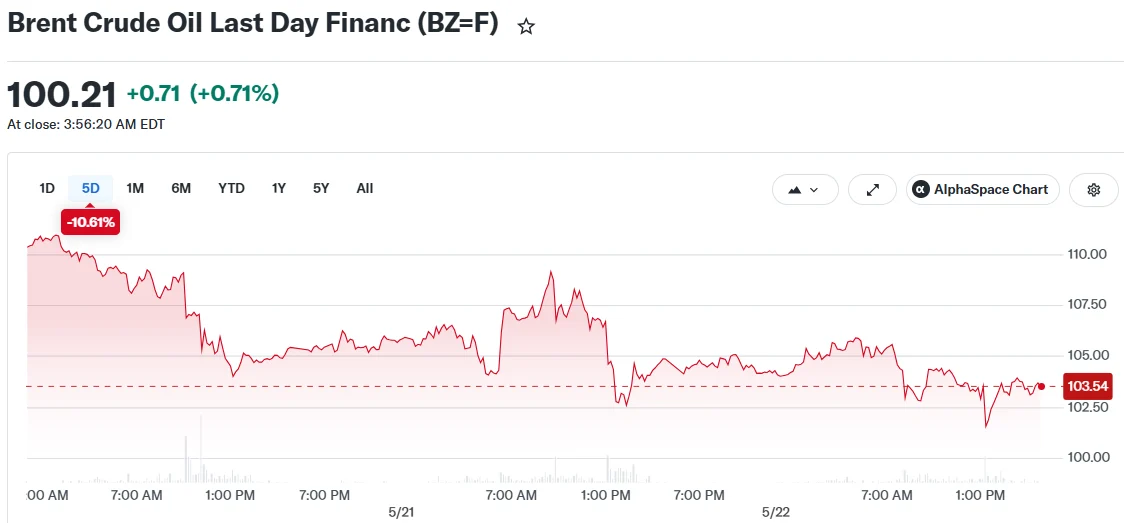
Brent crude experienced a 4.9% decline to $98.45 per barrel. West Texas Intermediate decreased 5.4% to $91.38. Both major benchmarks reached their lowest points since early May.
On Saturday, Trump indicated that an agreement had been “largely negotiated” and would be unveiled in the near future. He shared the announcement via Truth Social, noting the framework required finalization among the United States, Iran, and multiple additional nations.
By the following day, Trump adopted a more measured tone. He emphasized that Washington would avoid hastily entering an agreement and that time favored American interests. He subsequently clarified that a deal “isn’t even fully negotiated yet.”
Secretary of State Marco Rubio indicated additional developments might emerge Sunday, though Bloomberg reported that American officials confirmed the nation wasn’t prepared to finalize any agreement.

Outstanding Obstacles to Agreement
Both nations continue to disagree on multiple critical matters.
Tehran has demanded the release of its financial assets currently frozen by the US Treasury Department. Washington has consistently declined this request. Iran’s Supreme Leader Ayatollah Mojtaba Khamenei also declared last week that Iran’s nuclear stockpiles must remain within the country, directly contradicting an established American red line.
Iran’s diplomatic ministry characterized negotiations as reaching the “final stage” of preparing a memorandum of understanding. However, government-controlled media indicated the agreement could still fail.
Should an agreement materialize, it might encompass a comprehensive ceasefire, reopening of the Strait of Hormuz, and progressive relaxation of restrictions on Iranian petroleum exports. Nuclear matters would be addressed through subsequent negotiations.
The Strategic Importance of the Strait of Hormuz
The Strait of Hormuz facilitated approximately one-fifth of global oil and liquefied natural gas transport before hostilities commenced in late February.
Since its closure, worldwide markets have forfeited roughly 1 billion barrels of petroleum, according to International Energy Agency data. This represents the most significant supply disruption ever recorded.
Market analysts suggest that even with a signed agreement, restoring normal petroleum flows could require several months as damaged infrastructure undergoes repairs.
“We’ve witnessed this situation previously, only to see negotiations collapse,” stated Warren Patterson, head of commodities strategy at ING. “The market will likely exercise greater caution about excessive reactions.”
MST Marquee analyst Saul Kavonic indicated there is now “some light at the end of the tunnel,” though significant uncertainties persist.
In the United States, energy companies expanded oil and gas drilling operations for the fifth consecutive week. The rig count increased by seven to 558 during the week ending May 22, reaching its highest level since mid-2025. Baker Hughes observed the total remained 1% below year-ago levels.
