



Key Highlights
- Brent crude decreased 6.2% to settle at $103.04 while WTI declined 6.6% to $95.55 amid diplomatic progress
- Washington and Tehran approaching agreement on a single-page memorandum to resolve military confrontation
- Proposed terms include Iran halting nuclear enrichment with U.S. lifting economic sanctions and unfreezing assets
- President Trump suspended “Project Freedom” maritime escort operations during negotiation period
- American Petroleum Institute data showed crude stockpiles decreased by 8.1 million barrels in largest weekly decline since February
Crude oil markets experienced significant downward pressure Wednesday following emerging reports that Washington and Tehran are approaching a diplomatic resolution that could conclude hostilities and restore petroleum transport through the Strait of Hormuz.
Brent crude prices declined 6.2% to reach $103.04 per barrel, while West Texas Intermediate experienced a 6.6% reduction to $95.55. These benchmarks had already retreated nearly 4% during the previous trading session.
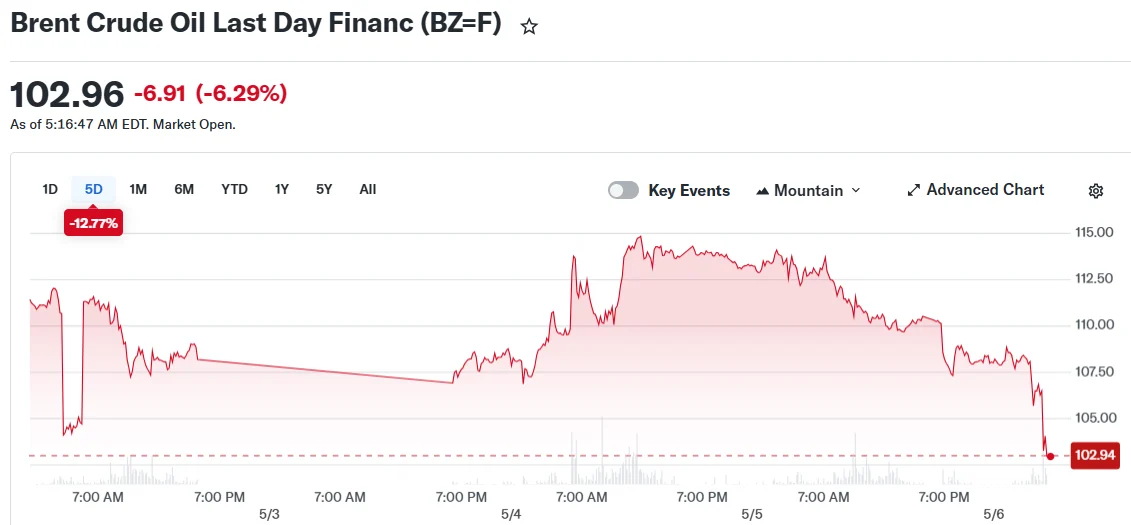
The market decline accelerated after an Axios publication revealed the White House is approaching completion of a single-page memorandum of understanding with Iranian officials. This potential agreement would establish groundwork for more comprehensive nuclear negotiations.
Administration sources indicated they anticipate Tehran’s response on critical matters within two days. While no final signatures have been secured, government representatives characterized the current negotiations as the most promising diplomatic progress since military operations commenced.

The preliminary framework encompasses Iran’s commitment to suspend nuclear enrichment activities. Reciprocally, Washington would remove economic sanctions and authorize release of approximately billions in frozen Iranian financial assets.
Both nations would additionally reduce constraints on maritime commerce traversing the Strait of Hormuz. This waterway represents a vital corridor for international petroleum shipments.
Oil prices have surged approximately 50% since hostilities erupted in late February. The military engagement eliminated hundreds of millions of barrels of Persian Gulf crude from international markets.
Over 1,550 commercial cargo ships carrying approximately 22,000 maritime personnel remain stranded in Persian Gulf waters, according to statements from General Dan Caine, chairman of the Joint Chiefs of Staff.
Shipping Restrictions Temporarily Suspended, Though Supply Normalization Faces Delays
President Trump announced the United States would temporarily suspend “Project Freedom,” the military program providing commercial vessel escorts through the strait, during ongoing diplomatic discussions.
“We have mutually agreed that, while the Blockade will remain in full force and effect, Project Freedom will be paused for a short period of time,” Trump communicated via social media platforms.
Secretary of State Marco Rubio informed journalists that “Operation Epic Fury is concluded,” occurring 66 days following the commencement of U.S. and Israeli military operations against Iran.
Despite prospects for diplomatic resolution, energy market specialists caution that petroleum supply restoration will not occur instantaneously. “This is not a switch you can just flip,” stated Dilin Wu, research strategist at Pepperstone Group. Stranded tanker vessels require rerouting coordination, insurance sectors must reassess risk pricing, and extraction operations need time for production escalation.
ING market analysts cautioned that approximately 13 million barrels daily of interrupted supply is currently being compensated through inventory depletion. “Tighter stocks will only leave the oil market trading in an ever more volatile manner,” their assessment indicated.
American Crude Reserves Experience Substantial Reduction
Notwithstanding the price correction, domestic supply figures provided some market stabilization. The American Petroleum Institute documented crude inventory reductions of 8.1 million barrels during the previous week. Gasoline reserves decreased 6.1 million barrels while distillate inventories fell 4.6 million barrels.
Official stockpile statistics from the Energy Information Administration were scheduled for release later Wednesday.
Saudi Arabia reduced pricing for its primary oil grade destined for Asian purchasers in June, though valuations remain elevated resulting from continuing Middle Eastern supply constraints.
