


TLDR
- Tim Scott, Chair of the Senate Banking Committee, requires unanimous Republican support from all 13 members before advancing the CLARITY Act
- Sen. John Kennedy refuses to back the legislation, partially due to disagreements over an unrelated housing proposal
- Sen. Thom Tillis advocates for mid-May committee action but insists on incorporating ethics provisions
- Outstanding concerns involve stablecoin incentive structures, decentralized finance protections, and the president’s cryptocurrency investments
- Industry analysts estimate passage probability between 15–25%
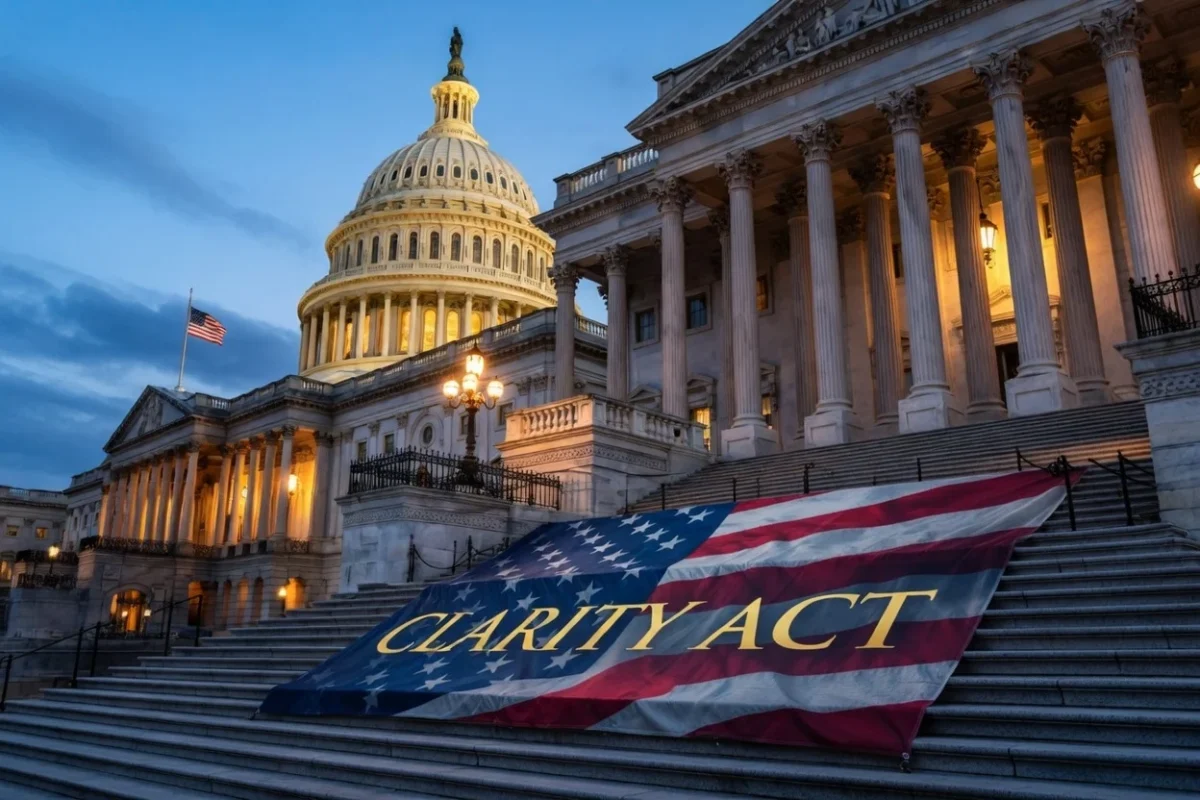
A comprehensive cryptocurrency regulatory framework known as the CLARITY Act is approaching a potential Senate committee vote next month. However, the legislation faces significant obstacles from Republican dissenters and multiple unresolved policy conflicts.
🔥BULLISH: 🇺🇸Senator Tom Tillis says the CLARITY Act is in the red zone and could head to committee markup in May, with a possible Senate floor move by June or July. pic.twitter.com/zfkqxNGFse
— Coin Bureau (@coinbureau) April 30, 2026
Tim Scott, who chairs the Senate Banking Committee, has established a requirement for unanimous Republican committee support before proceeding with the legislative process. While he acknowledged gaining commitments from Sen. Thom Tillis and several colleagues, complete consensus remains elusive.
In remarks to Fox Business, Scott characterized negotiations as being in the “red zone” toward reaching agreement. His timeline envisions bipartisan committee consideration in May, with full Senate consideration potentially occurring between June and July.
Tillis, serving as a critical Republican negotiator, has formally requested Scott to set a markup date and indicated revised legislative text could be available days beforehand. However, Tillis established a non-negotiable position: he will vote against the measure if it advances to the Senate floor lacking ethics requirements.
Among Republicans withholding endorsement is Sen. John Kennedy. Punchbowl News reports Kennedy’s opposition relates partially to dissatisfaction with House leadership and administration handling of separate housing legislation — extending beyond cryptocurrency policy differences alone.

Ethics and Trump Ties Are Complicating Talks
Democratic senators have positioned ethics requirements as fundamental to any agreement. Sen. Angela Alsobrooks stated that achieving bipartisan committee approval necessitates first addressing illicit finance protections and ethical standards.
Chair Scott maintains that ethics provisions fall outside his committee’s jurisdictional authority. This jurisdictional dispute remains unaddressed and may require resolution through alternative legislative channels before full Senate consideration becomes viable.
The president’s cryptocurrency business activities have amplified ethical scrutiny. Bloomberg calculated Trump has generated approximately $1.4 billion from digital asset enterprises, including involvement with World Liberty Financial, a decentralized finance and stablecoin platform. Trump family members collectively control 20% ownership in American Bitcoin, a cryptocurrency mining operation.
Recently, Trump organized a Mar-a-Lago event for investors holding the TRUMP memecoin, prompting sharp criticism from Democratic legislators.
The House-approved version of comparable legislation, titled Clarity, contains language prohibiting congressional members and senior executive officials from issuing digital commodities during their tenure. The White House has identified this provision as unacceptable.
Stablecoin Rewards and DeFi Still Unresolved
Separate from ethical considerations, the legislation has encountered resistance regarding stablecoin reward mechanisms. Public disputes between a prominent White House cryptocurrency adviser and banking institutions have occurred in full view.
Decentralized finance provisions face particular examination. Legislators and law enforcement organizations worry that certain developer liability protections could undermine prosecutorial capabilities for financial misconduct.
Senate Judiciary Committee Chair Chuck Grassley maintains ongoing discussions with Sen. Cynthia Lummis to resolve law enforcement objections.
The legislation confronts a critical calendar constraint. The Senate enters a five-week August recess preceding midterm elections. Failure to complete committee action and floor passage beforehand substantially diminishes prospects for advancement.
A cryptocurrency sector analyst projected passage likelihood this year at 15% to 25%. Research organization Galaxy offered a moderately more optimistic assessment, estimating approximately 50% probability.
