


Key Takeaways
- Charter Communications shares surged over 9% Monday following reports of potential collaboration talks with SpaceX on mobile services.
- The proposed arrangement would involve SpaceX’s Starlink routing certain traffic through Charter’s terrestrial network infrastructure while expanding Spectrum broadband coverage.
- Major wireless carriers including T-Mobile, AT&T, and Verizon saw stock declines Monday amid concerns about potential SpaceX disruption in the telecommunications market.
- Citi Research maintained its Buy recommendation on Charter while reducing its price target 17% to $190 due to challenging second-quarter comparisons.
- Charter’s second-quarter earnings release is scheduled for July 24 before market open, with analysts focused on broadband average revenue per user and the Cox Communications merger developments.
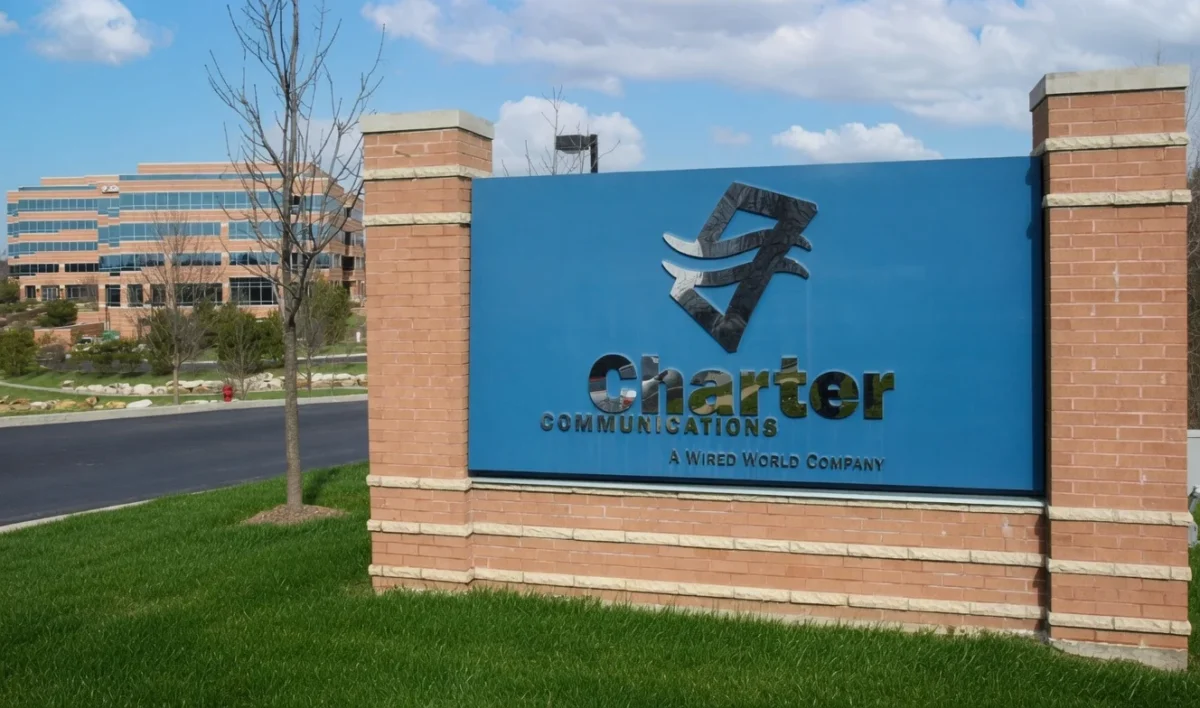
Charter Communications (CHTR) shares experienced a remarkable surge of more than 9% during Monday’s trading session, ranking among the top performers in the S&P 500 index. The dramatic price movement followed a Bloomberg report suggesting SpaceX has engaged in exploratory discussions regarding a potential mobile telecommunications partnership with the cable operator.
Charter Communications, Inc., CHTR
According to the reports, the proposed collaboration would involve routing a segment of SpaceX’s Starlink satellite traffic through Charter’s established ground-based internet infrastructure. As part of the arrangement, Charter would potentially leverage Starlink’s satellite network capabilities to extend its broadband service coverage to previously unreachable markets.
Wolfe Research’s Peter Supino characterized the relationship between the two companies as “potential frenemies” in his analysis shared with investors. His assessment suggests such a partnership could provide Starlink with access to tens of millions of additional residential locations and public venues, simultaneously boosting Charter’s fixed broadband operations.

The stock’s impressive rally coincided with Monday’s announcement from Comcast regarding plans to separate NBCUniversal into a standalone entity, which generated positive momentum across the cable sector broadly.
SpaceX’s Strategic Mobile Ambitions
SpaceX President Gwynne Shotwell indicated earlier this month that the company’s Starlink Mobile division is projected to ultimately surpass its residential broadband operations in scale. The satellite internet service currently maintains 10.3 million subscribers worldwide as of March data.
BNP Paribas analyst Sam McHugh suggested the Charter speculation might trigger broader market discussion about a more extensive strategic alignment, potentially including a merger scenario with T-Mobile in the future. He observed that a Charter agreement “would create synergies but not alter the long-term prospects” for either company, whereas a T-Mobile combination “could be more impactful” and represent genuine strategic risk for Charter.
T-Mobile’s exclusive United States direct-to-cellular partnership with SpaceX, which offers Starlink Mobile connectivity as a $10 monthly add-on feature, reaches its expiration date next month. Industry analyst Tim Farrar has stated the current arrangement hasn’t proven financially attractive for SpaceX, while T-Mobile has shown hesitance to increase payments for a service that represented merely 0.0002% of its total network traffic volume in May.
Major wireless carrier stocks declined significantly Monday. T-Mobile’s shares dropped approximately 5%, AT&T declined 4%, and Verizon plunged 5.2%, marking its steepest single-session loss since March 2025.
Analyst Perspectives on Charter’s Quarterly Results
Charter is scheduled to announce its second-quarter financial results prior to the opening bell on July 24. Citi Research’s Michael Rollins anticipates EBITDA figures may disappoint due to difficult year-over-year comparisons and broadband average revenue per user metrics expected to remain stagnant without pricing adjustments.
Rollins highlighted Charter’s substantial 64% year-over-year stock price decline and noted that competitive pressure on average revenue per user doesn’t support near-term stock performance. He also expressed skepticism regarding the feasibility of a comprehensive SpaceX mobile partnership.
Rollins pointed out that Charter’s current mobile virtual network operator agreement runs through Verizon, and such contracts typically prohibit extension to additional third parties. He proposed a more probable scenario might involve a distribution arrangement where Charter markets its Spectrum Mobile offering alongside SpaceX services, rather than a comprehensive infrastructure integration.
Despite these reservations, Citi maintained its Buy rating on Charter shares, although the firm reduced its price target by 17% to $190.
TD Cowen’s Gregory Williams outlined several potential strategies available to SpaceX for entering the wireless market: maintaining the status quo, constructing proprietary infrastructure, forming carrier partnerships, or pursuing an outright acquisition. He characterized the ambiguity surrounding SpaceX’s strategic intentions as an “overhang” affecting the wireless industry.
SpaceX representatives did not provide immediate comment in response to inquiries, and Charter declined to address the partnership reports.
