


Key Highlights
- Boeing received FAA authorization to manufacture 47 737 MAX aircraft monthly, increasing from the previous 42-unit cap, with ambitions to exceed 50 and reach 60 units
- Chief Executive Kelly Ortberg indicated China’s 200-aircraft commitment represents just the first wave, signaling additional orders ahead
- The aerospace giant shipped 600 aircraft in 2025, a significant jump from 348 units in 2024, yet still trailing the 800+ delivery milestone achieved in 2018
- The defense segment maintains unprecedented backlog levels, despite generating no operating profit since 2021
- Wall Street assigns BA a “Moderate Buy” rating with a consensus price objective of $259.80; shares began trading Thursday at $224.36
Shares of Boeing (BA) stock started Thursday’s session at $224.36, building on Wednesday’s 2.5% advance, following Chief Executive Kelly Ortberg’s comprehensive update at the Bernstein Strategic Decisions conference regarding manufacturing momentum, Chinese commitments, and the journey toward restored profitability.
The most significant development from Wednesday centered on the FAA granting Boeing authorization to manufacture 47 737 MAX aircraft each month. This represents an increase from the previous 42-unit ceiling, which had already been elevated from the 38-per-month restriction implemented following the door plug incident on a 737 MAX 9 in January 2024.
The aerospace manufacturer intends to accelerate production beyond 50 monthly units in upcoming months, with long-term objectives exceeding 60 aircraft. These production figures currently hold exceptional significance for the investment narrative.

Throughout 2025, Boeing completed delivery of 600 aircraft — representing substantial progress compared to merely 348 units in 2024. However, the company’s 2018 benchmark exceeded 800 deliveries. Industry analysts project Boeing will surpass that historical performance by 2028, forecasting approximately 860 deliveries.
The equation is straightforward: increased aircraft production translates to enhanced revenue generation and improved free cash flow. Boeing has consumed roughly $38 billion in cash reserves between 2019 and 2025, contrasting sharply with the approximately $59 billion in free cash flow generated during the preceding seven-year period. The financial deficit remains substantial, and production capacity represents the primary recovery mechanism.
Chinese Orders: Additional Volume Anticipated
Regarding China, Ortberg worked to temper investor concerns. Beijing’s recent commitment to 200 aircraft disappointed some stakeholders who anticipated approximately 500 units. Ortberg characterized this as an “initial tranche” and indicated subsequent orders would materialize.
This positioning provided some reassurance, though market reaction remained measured. Boeing’s commercial order book already extends well into the 2030s, positioning China as an upside catalyst rather than an immediate operational imperative.
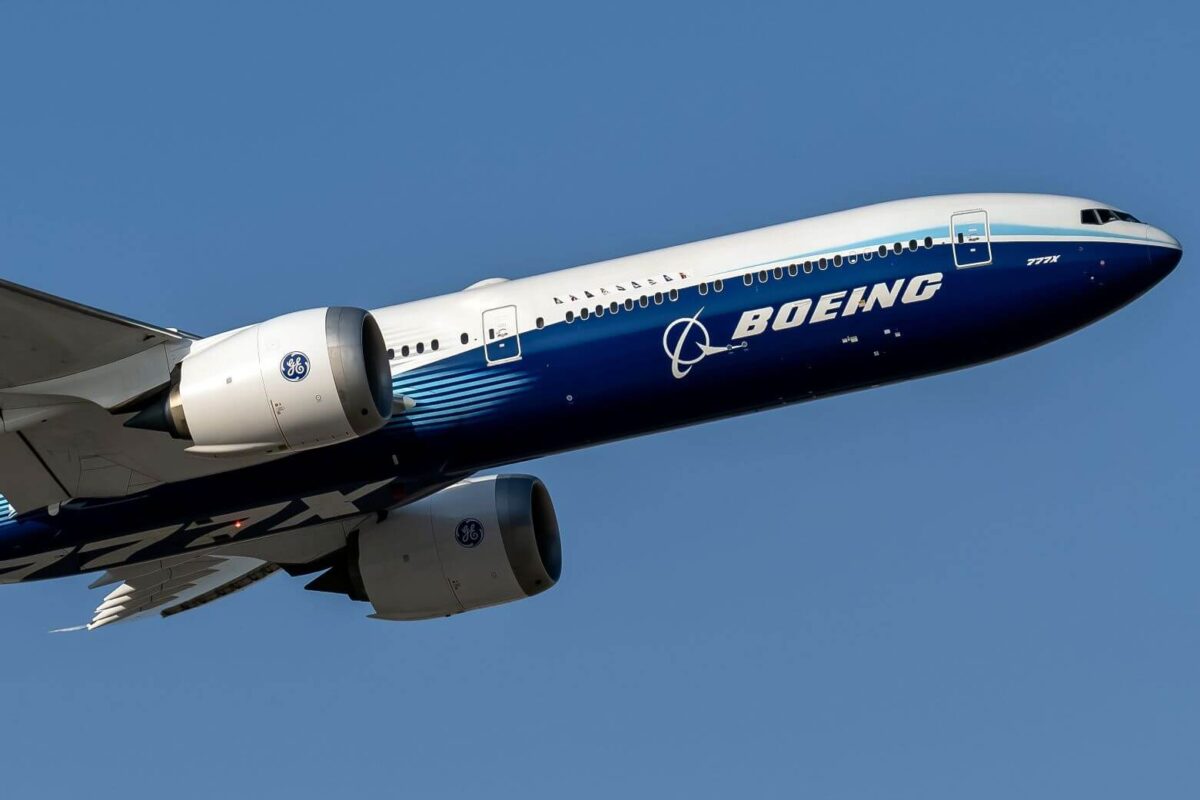
The FAA additionally indicated expectations for 737 MAX 7 certification this summer, with MAX 10 approval anticipated before year-end. Both certifications would expand available delivery configurations. The 777X and extended MAX 10 variants are scheduled to commence deliveries in 2027.
Defense Operations: Continuing Losses with Signs of Recovery
The defense division continues generating headwinds. Boeing’s defense operations recorded approximately $130 million in losses during 2025, following a $5.4 billion deficit in 2024. The segment hasn’t produced operating profit since 2021.
Ortberg revealed Boeing’s strategic shift away from fixed-price contractual arrangements, which have consistently produced financial losses. The defense backlog has reached record proportions, with management targeting a return to “high-single-digit” profit margins.
Recent contract losses involving NASA and Italian projects, combined with competitive pressure from SpaceX, underscore that the defense recovery trajectory won’t be linear.
From an institutional ownership perspective, hedge funds and major investors control 64.82% of Boeing shares. Director Bradley Tilden purchased 1,370 shares at $218.50 on May 20th, while Director Mortimer Buckley acquired 2,230 shares at $224.20 during March.
The consensus analyst price objective stands at $259.80, accompanied by a “Moderate Buy” recommendation. For Q1 2026, Boeing reported a loss of $0.20 per share, exceeding projections of -$0.68, on revenue of $22.22 billion — representing 14% year-over-year growth.
