



Quick Summary
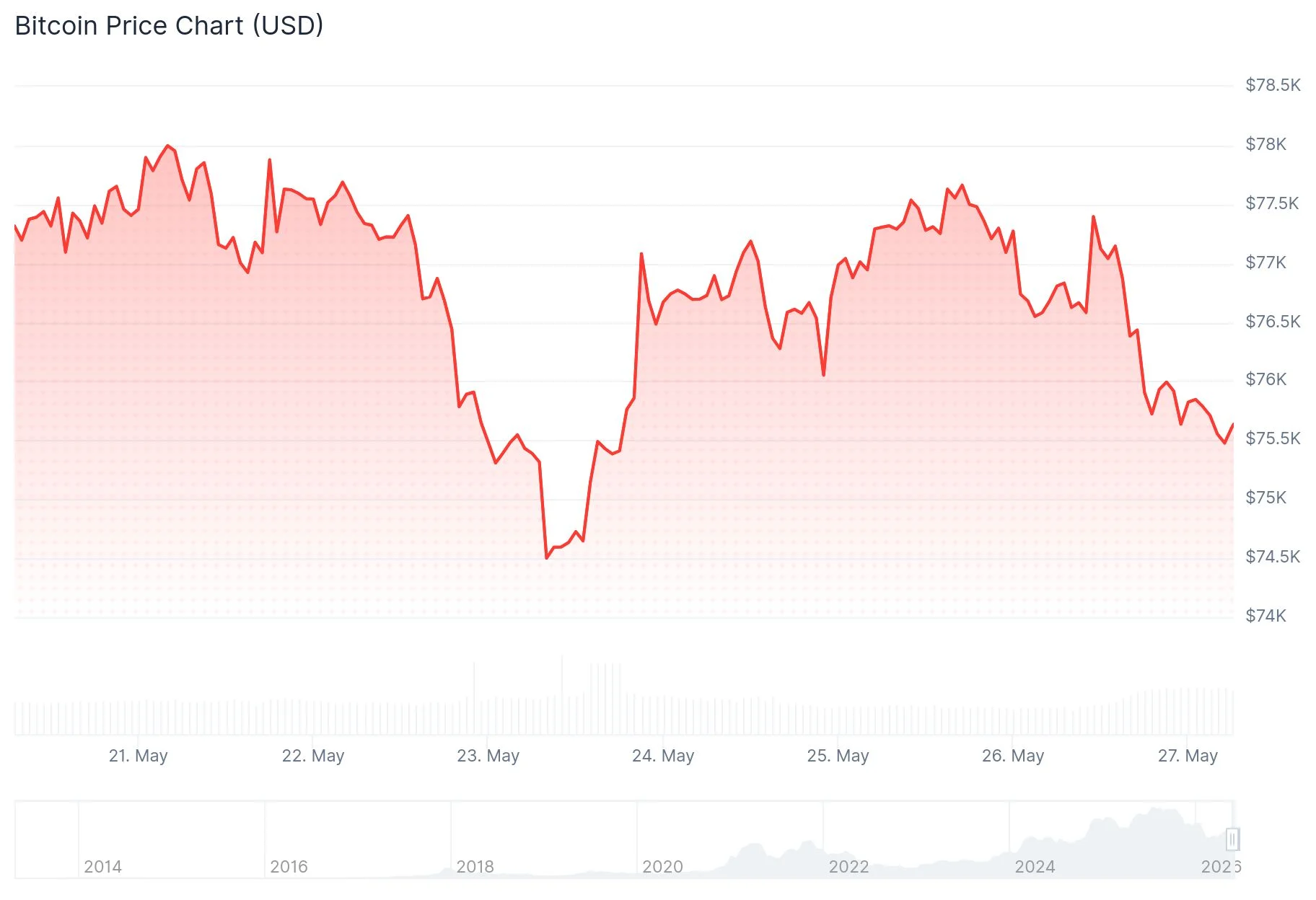
- BTC tumbled beneath the $77,000 threshold following U.S. military operations in Iran that dampened diplomatic progress expectations
- Spot Bitcoin ETFs in the United States saw $105 million in net withdrawals on May 22, marking the sixth consecutive session of outflows
- Equity index futures remained relatively unchanged, even as the S&P 500 and Nasdaq registered all-time closing highs during Tuesday trading
- Leading altcoins declined in tandem with Bitcoin, with Ethereum, XRP, Solana, and Cardano all posting losses
- Critical inflation metrics — specifically the PCE index — arrive Thursday and may shape Federal Reserve policy trajectory
Bitcoin experienced a sharp decline Tuesday following intensified U.S. military engagement in Iran that prompted investors to adopt a more risk-averse posture. Equity futures maintained stability as traders digested identical geopolitical developments.
Bitcoin retreated to $75,912, shedding approximately 2%, after hovering near $78,000 during the prior trading session. The selloff occurred after U.S. military forces executed what officials characterized as “defensive” operations in southern Iran, destroying two Islamic Revolutionary Guard Corps vessels attempting to deploy naval mines in the strategically vital Strait of Hormuz.
Tehran retaliated by launching missiles targeting U.S. aircraft. American forces responded with additional strikes against missile launch sites located near Bandar Abbas, the Wall Street Journal reported.
Diplomatic Breakthrough Hopes Evaporate
The military confrontation emerged merely days after President Trump announced that a peace framework with Iran had been “largely negotiated.” That earlier optimism dissipated rapidly as armed conflict intensified.

Secretary of State Marco Rubio indicated that finalizing any official agreement would probably require several additional days. The Strait of Hormuz continues to be substantially restricted for commercial shipping, sustaining anxiety across petroleum markets.
This volatility pattern has characterized the previous month for cryptocurrency participants — alternating between confidence stemming from potential diplomatic resolutions and apprehension regarding military escalation.
Investment Vehicle Withdrawals Compound Bitcoin Weakness
Beyond geopolitical factors, Bitcoin encountered supplementary selling pressure from diminishing institutional appetite. U.S. spot Bitcoin ETFs registered net redemptions totaling $105.19 million on May 22. This represented the sixth straight session of withdrawals, with cumulative outflows during this period reaching approximately $1.55 billion — roughly 1.6% of aggregate ETF holdings.
Nexo Dispatch analyst Dessislava Ianeva observed that although investors are reducing cryptocurrency allocations, market conditions show no indication of widespread panic. Funding rates remain stable and open interest has moderated from recent elevated levels.
Rising Treasury bond yields coupled with anticipation of Federal Reserve interest rate increases have also exerted downward pressure across the broader cryptocurrency sector.
Most alternative cryptocurrencies mirrored Bitcoin’s downward trajectory. Ethereum declined 1.7% to $2,074. XRP similarly dropped 1.7% to $1.33. Both Solana and Cardano registered decreases ranging from 1.7% to 1.8%.
Equity Markets Maintain Resilience
U.S. equity index futures traded essentially flat during early Wednesday hours. Dow and S&P 500 futures hovered near unchanged levels, while Nasdaq 100 futures advanced 0.1%.
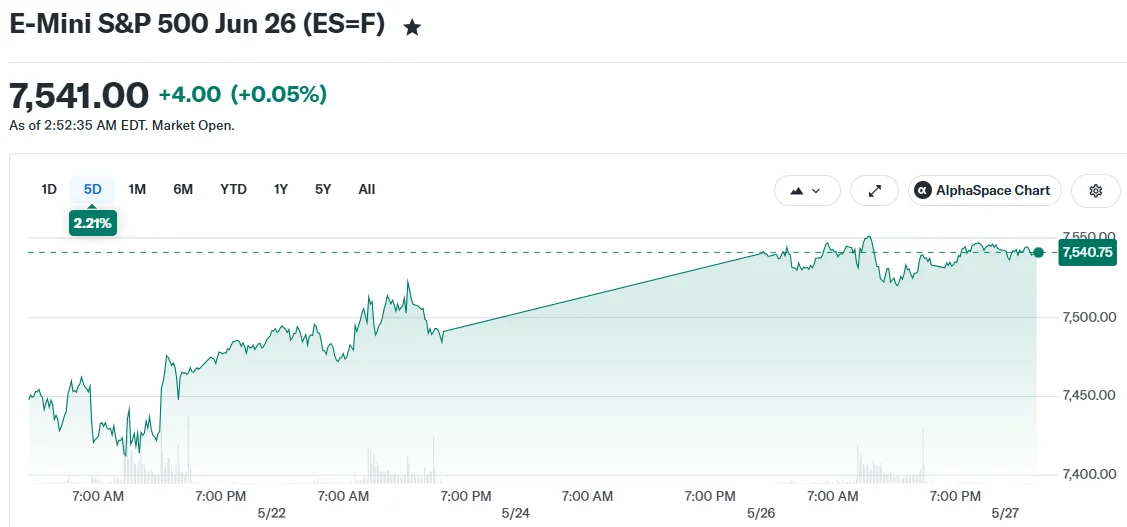
Tuesday’s session concluded with both the S&P 500 and Nasdaq Composite establishing new record closing highs, buoyed by optimism surrounding Iran negotiations and sustained confidence in semiconductor equities.
Corporate earnings announcements scheduled for Wednesday include Marvell Technology, Salesforce, Snowflake, and Abercrombie & Fitch.
Market participants are now focused intensely on Thursday’s PCE inflation report, the Federal Reserve’s preferred inflation gauge. This data release is anticipated to significantly influence market sentiment regarding forthcoming monetary policy adjustments.
