



Key Highlights
- BTC’s implied volatility has plummeted to 36%, marking an 8-month nadir
- Leveraged short exposure is densely packed within the $78,000-$83,000 range
- Bitcoin spot ETF withdrawals have surpassed approximately $1.74 billion
- Binance’s BTC holdings expanded by roughly 16,000 coins over 30 days
- Breaking above $82,000 may catalyze forced liquidations of bearish leverage trades
Bitcoin’s implied volatility metric has descended to 36%, representing its lowest reading across the past eight months. This indicator suggests market participants anticipate minimal price fluctuations in the near term.
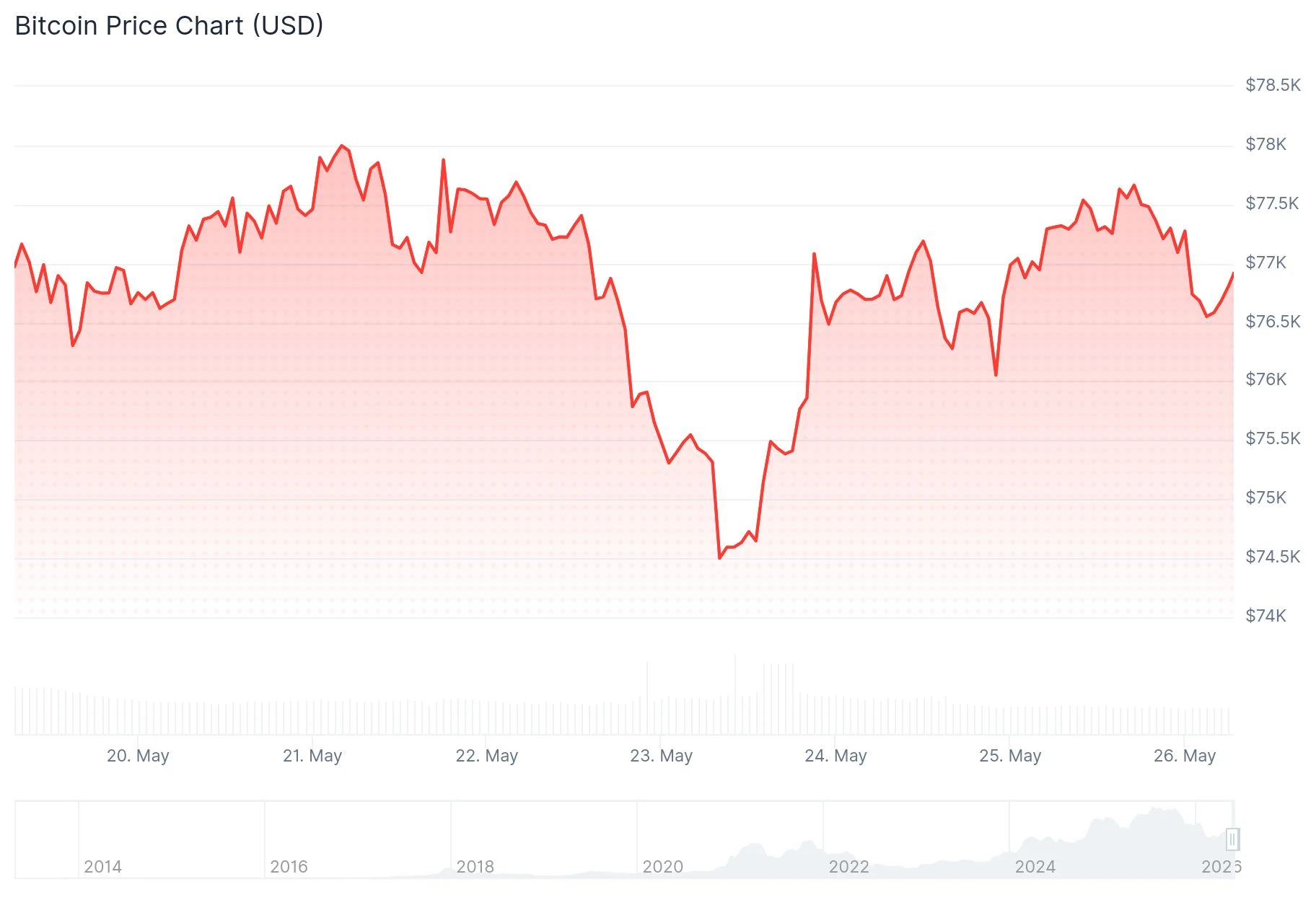
Implied volatility functions as a gauge for expected asset price movement. Such compressed levels typically signal a consolidation phase. Bitcoin has remained confined beneath the $90,000 threshold for approximately four consecutive months.
Tyler Evans, serving as chief investment officer at UTXO Management, highlighted digital credit instruments as a primary factor behind this subdued environment. According to Evans, collateralized lending facilities have enabled major holders — encompassing mining operations and treasury-building corporations — to maintain exposure without liquidating holdings.
Market analyst Daan Crypto Trades offered commentary via X regarding Bitcoin’s current positioning. His assessment indicates BTC is “trying to make a higher low here locally” but requires a decisive push beyond the lower $80,000 zone to validate continuation from February’s bottom. His conclusion: genuine breakout confirmation remains absent.

Bearish Positioning Reaches Critical Density — Reversal Catalyst Looms
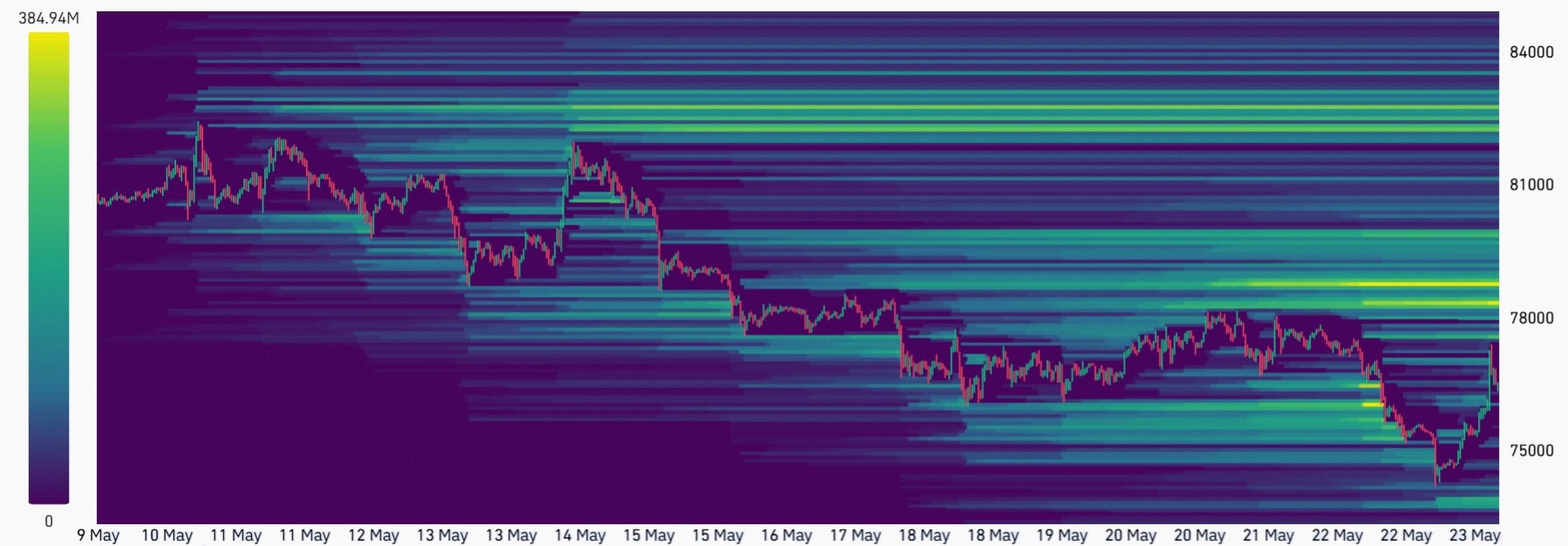
Liquidation visualization data sourced from CoinGlass reveals substantial short position accumulation concentrated between $78,000 and $83,000. Bearish traders have apparently gained conviction following Bitcoin’s extended period beneath $90,000.
Put option contracts currently command a 14% premium relative to call options, per Glassnode analytics. Typical market equilibrium places this differential between -6% and +6%. The metric has persistently remained outside this normalized band for sixteen consecutive weeks.
Should Bitcoin breach the $82,000 level, this concentrated short exposure faces severe squeeze dynamics, potentially triggering cascading liquidations and amplifying upward momentum.
Institutional Appetite Shows Deterioration
From a demand perspective, underlying fundamentals appear less constructive. Spot Bitcoin ETF redemptions have exceeded $1.74 billion, while the Coinbase Premium Index has plunged into significantly negative territory — indicating diminished purchasing pressure from United States-based investors.
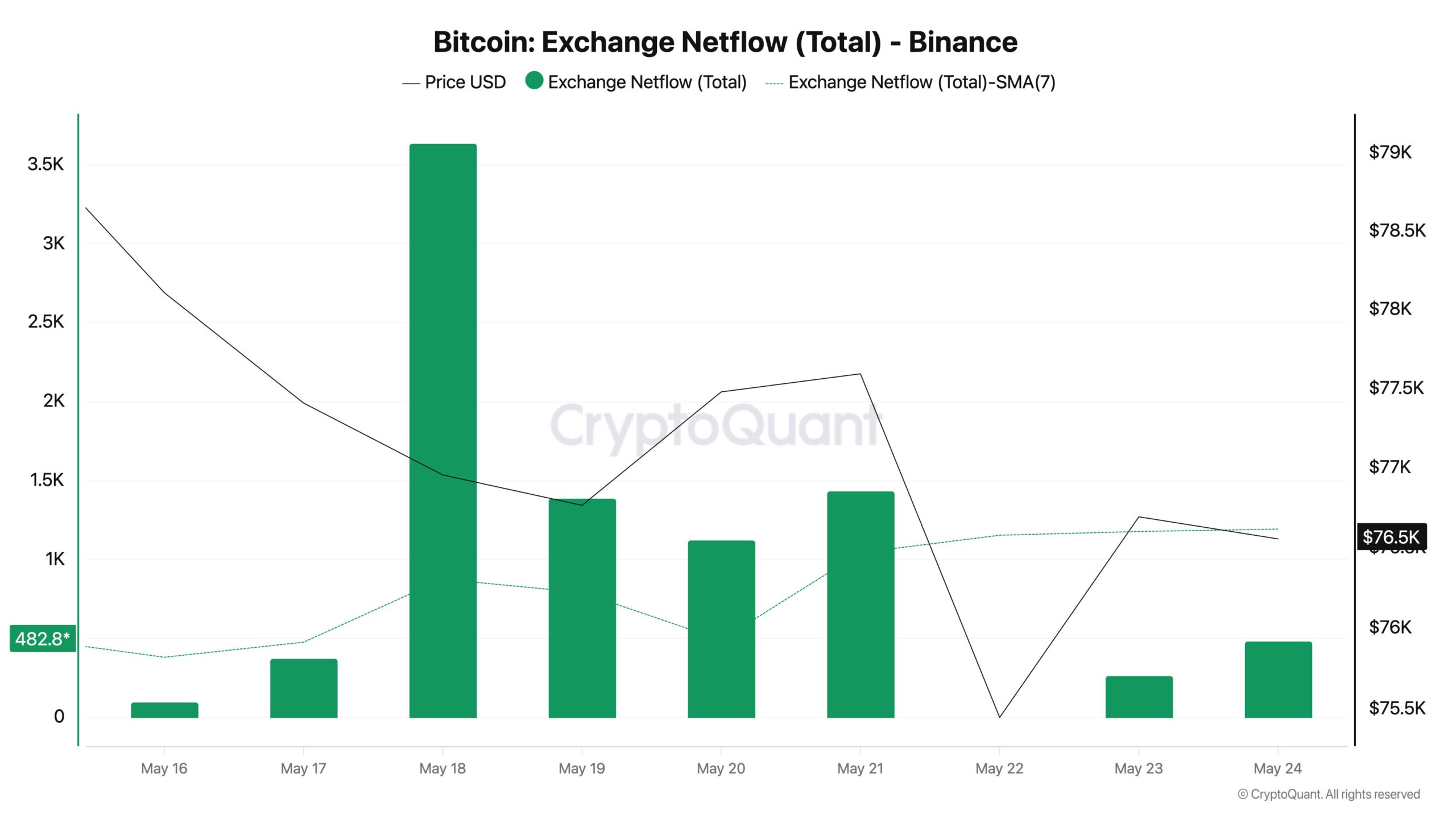
Binance BTC netflow activity surged approximately 425% as aged coins migrated back to exchange platforms. Binance deposits escalated from roughly 378 BTC on May 16 to nearly 1,190 BTC within a ten-day window, featuring a dramatic single-session influx exceeding 3,600 BTC on May 18.
Bitcoin’s Apparent Demand indicator contracted to approximately -147,000 BTC, registering its most negative level since December 2025. This metric evaluates whether sustained accumulation adequately offsets fresh supply generation.
Bitcoin experienced a transient 6.2% decline coinciding with the period of heightened exchange inflows. Binance’s total BTC reserves expanded from approximately 616,000 BTC to around 632,000 BTC throughout the preceding month.
Funding rates have maintained positive territory despite these softening conditions, indicating leveraged long position holders continue participating actively in derivatives markets.
