



Key Highlights
- BTC plunged beneath $77,000 during Monday’s session, marking its weakest performance since the beginning of May
- Crude oil prices surged beyond $110 per barrel, intensifying inflation concerns and driving Treasury yields upward
- The 30-year Treasury yield reached 5.13%, marking its highest closing level in seventeen years
- Approximately $500 million in leveraged long contracts were wiped out within a single hour
- Blockchain analytics reveal long-term investors are holding steady, while recent buyers face mounting losses
Bitcoin (BTC) tumbled beneath the $77,000 threshold during Monday’s Asian trading session, registering its weakest level since the start of May. The decline stemmed from a confluence of escalating crude oil values and climbing Treasury yields that redirected capital away from higher-risk investments.
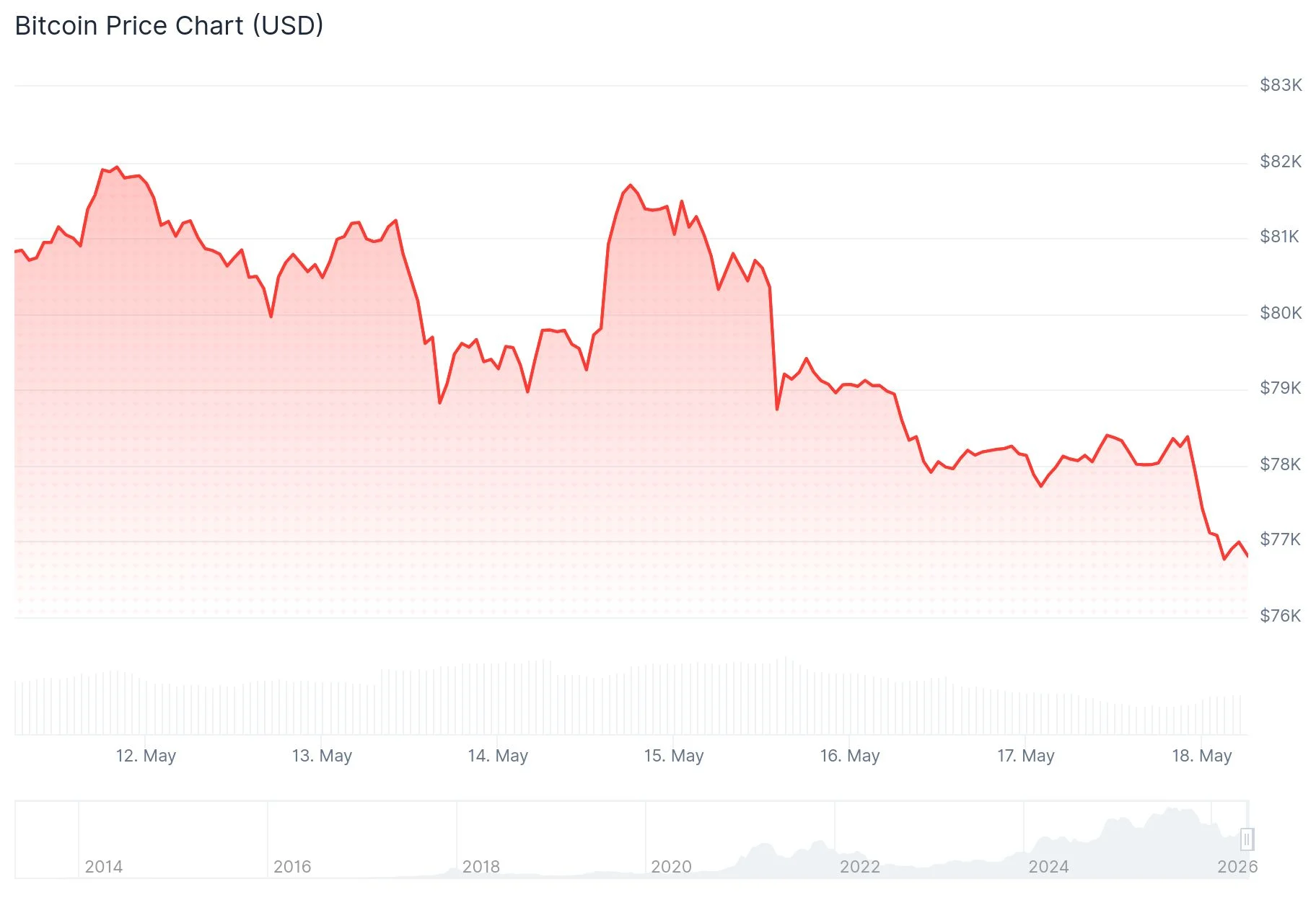
BTC traded at approximately $76,726 during the latest update, representing a decline of around 1.5% over the previous 24 hours. The leading cryptocurrency momentarily breached $80,000 during the prior week but couldn’t sustain momentum above that psychological barrier.
Crude oil values climbed past the $110 per barrel mark on Monday. News of drone-related incidents in the United Arab Emirates combined with stagnating diplomatic negotiations concerning Iran fueled the surge. U.S. President Donald Trump intensified market concerns on Sunday by declaring that “time is ticking” for Iran to secure an agreement with American officials.
Escalating oil values heightened anxieties about widespread inflation, which triggered a selloff in government bonds and elevated yields. The 30-year Treasury yield advanced to 5.13%, representing its strongest close since seventeen years ago. The 10-year yield similarly rose to its most elevated level since the opening months of 2025.

Market analyst The Kobeissi Letter highlighted the velocity and magnitude of the downturn on X, stating: “BREAKING: Bitcoin falls below $77,000 as over $500 million worth of levered long positions are liquidated in 60 minutes.” Such forced liquidations can magnify price declines far beyond what organic selling pressure would typically generate.
Prediction platforms currently estimate a 98% probability that the Federal Reserve will maintain current interest rates in June and 94% in July. Futures contracts have additionally started incorporating the possibility of a rate increase in 2026. Elevated interest rates enhance the appeal of secure fixed-income instruments relative to non-yielding holdings like BTC.
Recent Buyers Face Losses
Blockchain analytics from Binance Research, referencing Glassnode data, indicated that approximately 60% of bitcoin’s circulating supply hasn’t been transferred in more than twelve months. Exchange wallet balances also stand near their lowest point in six years, which constrains obvious spot-market selling pressure.
Nevertheless, the short-term holder MVRV ratio currently sits beneath 1. This metric indicates that recent purchasers are, collectively, experiencing unrealized losses. This dynamic renders the market more vulnerable to additional downside, as these holders possess diminished financial cushion to weather further turbulence.
Analyst Daan Crypto Trades observed on X that BTC was challenging a critical support area identified as the bull market support band, cautioning that a weekly close beneath the $75,000–$76,000 range would, in his assessment, resemble a “dead cat bounce.”
Critical Market Events Approaching
Market participants are monitoring several events that could influence price action. Nvidia’s earnings report drops on Wednesday and has emerged as a broader indicator of risk sentiment given its dominant position in artificial intelligence infrastructure. U.S. Producer Price Index data releases Thursday, offering additional insight into inflationary trends.
Developments surrounding the CLARITY Act, a legislative proposal aimed at establishing crypto market structure in Washington, remain on the watchlist for digital asset observers.
Bitcoin exchange wallet balances continue hovering near six-year lows, while the 30-year Treasury yield maintains its highest close since 2007.
