


Key Takeaways
- ASTEROID emerged as a meme token inspired by a Shiba Inu plush that traveled aboard the Polaris Dawn space mission
- Price appreciation exceeded 670,000% within a seven-day period, reaching peak valuation on April 21, 2026
- Current valuation stands at approximately $154.7 million with $62.4 million in 24-hour trading activity and 22,799 wallet holders
- The project offers zero functional utility, lacks a developmental roadmap, and operates without formal governance mechanisms
- Security auditor GoPlus has identified critical vulnerabilities: contract owner maintains authority to prevent token sales, create unlimited supply, and alter transaction costs
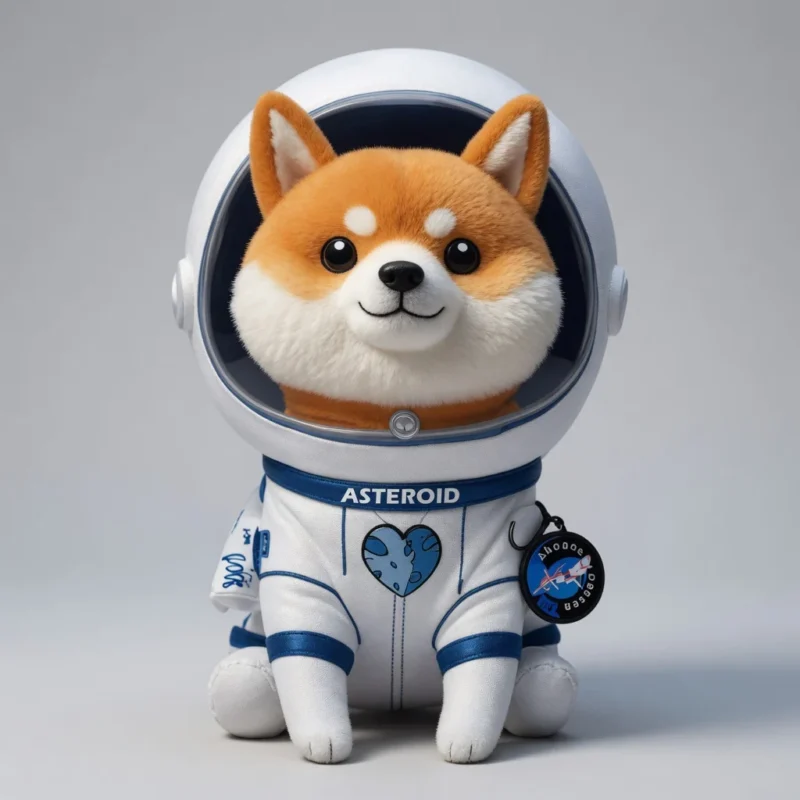
The origins of Asteroid Shiba trace back to an authentic space exploration moment. The cryptocurrency derives its identity from “Asteroid,” a Shiba Inu stuffed animal that served as a zero-gravity indicator during the Polaris Dawn mission. Liv Perrotto, a pediatric cancer survivor, created the plush toy, lending the initiative an emotional resonance rarely found in speculative meme tokens.
This compelling origin story quickly gained traction across social media platforms. Market participants began associating the token with Elon Musk and SpaceX, triggering significant price momentum.
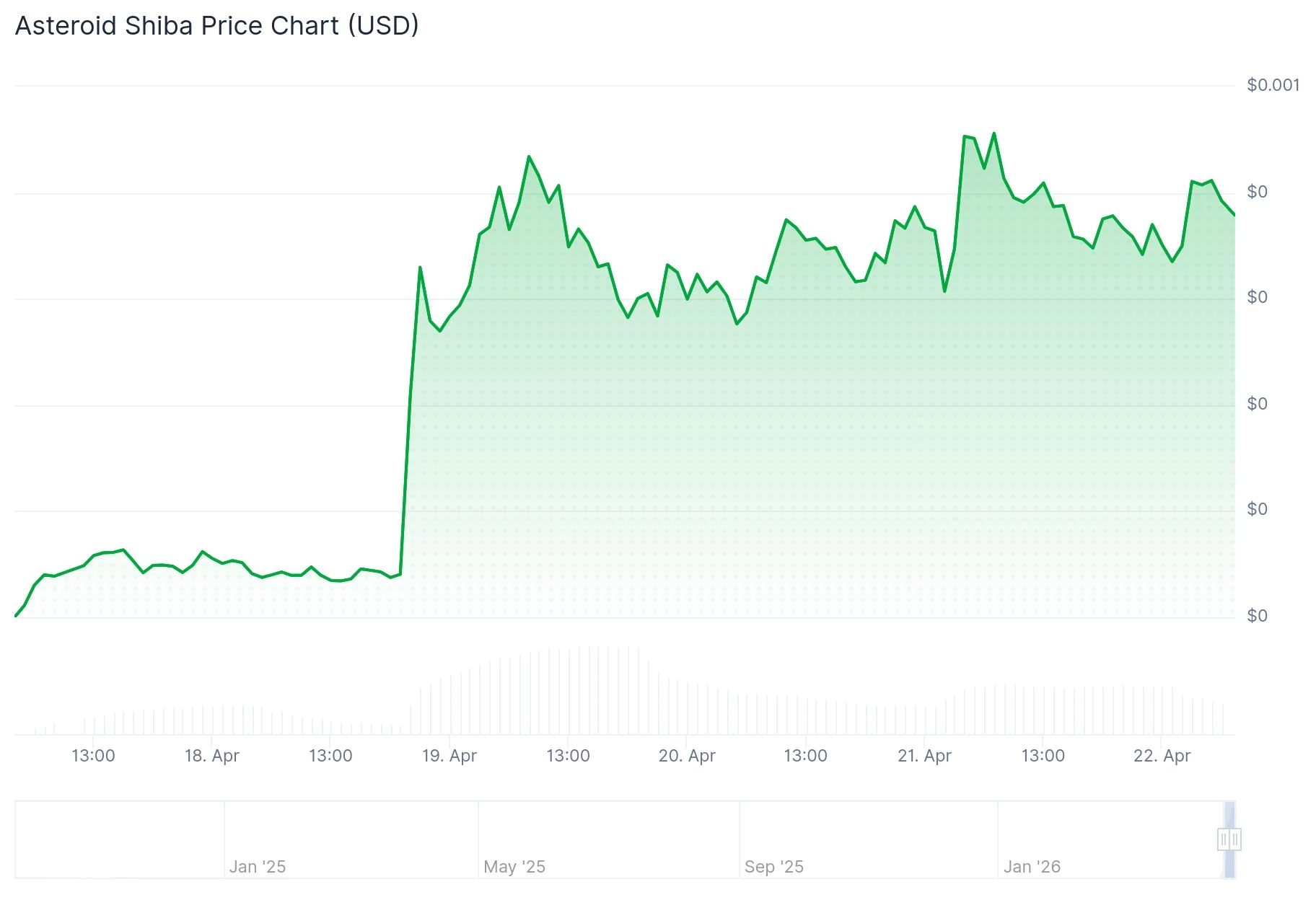
Data from CoinGecko indicates ASTEROID experienced appreciation exceeding 670,000% across one week. The token established its all-time high on April 21, 2026. Coverage referenced by Yahoo Finance suggested Elon Musk’s acknowledgment of Asteroid as a SpaceX mascot—or at minimum, market interpretation of his statements in that manner—fueled substantial buying pressure.
Present market capitalization hovers near $154.7 million, with fully diluted valuation matching this figure. Twenty-four-hour trading volume registers approximately $62.4 million. Blockchain explorer Etherscan validates roughly 22,799 token holders, demonstrating genuine market distribution.

Absence of Fundamental Value Proposition
Despite explosive price performance, ASTEROID demonstrates significant fundamental weaknesses. CoinGecko’s assessment explicitly notes the token possesses no practical utility. No development roadmap exists, no governance framework has been established, and no conventional application supports the asset.
Investors are not acquiring functional technology or services. Instead, they are speculating purely on narrative momentum.
DEX Screener characterizes ASTEROID as a community-controlled project, with ownership purportedly transferred to the community in September 2024. This structure means no identifiable leadership team operates publicly, no accountability mechanisms exist, and minimal transparency surrounds decision-making authority.
Smart Contract Vulnerabilities Pose Primary Concern
The most substantial risk identified in available data involves smart contract architecture. CoinGecko displays a GoPlus security alert indicating the contract creator maintains capabilities to disable selling functions, modify transaction fees, generate additional token supply, and execute token transfers.
For a meme coin already dependent exclusively on market sentiment, this degree of centralized contract authority introduces risk factors extending beyond typical price volatility.
This discovery does not definitively categorize ASTEROID as fraudulent. However, it establishes that potential losses may stem from contract manipulation, not merely adverse market conditions.
As of April 21, 2026, ASTEROID achieved its highest recorded valuation, maintaining a market capitalization near $154.7 million with more than 22,799 verified holders according to Etherscan blockchain data.
