


TLDR
- Gold retreated as much as 1.1% Wednesday, settling near $4,786 per ounce
- Decline follows diplomatic momentum in US-Iran negotiations from recent peak levels
- Conflict-related oil surge triggered inflation concerns, dragging gold roughly 9% lower since hostilities started
- Trump indicated the Iran conflict is nearing conclusion, potentially before King Charles’s US visit
- Current two-week truce extends through April 21, with negotiations expected to resume shortly
Precious metal markets experienced a pullback Wednesday as investors assessed emerging diplomatic developments between Washington and Tehran while balancing persistent inflation dynamics and dollar strength.
Spot gold declined approximately 1% to $4,795 per ounce during London’s morning session. Futures contracts similarly retreated, shedding 0.7% to reach $4,817.70 per ounce.
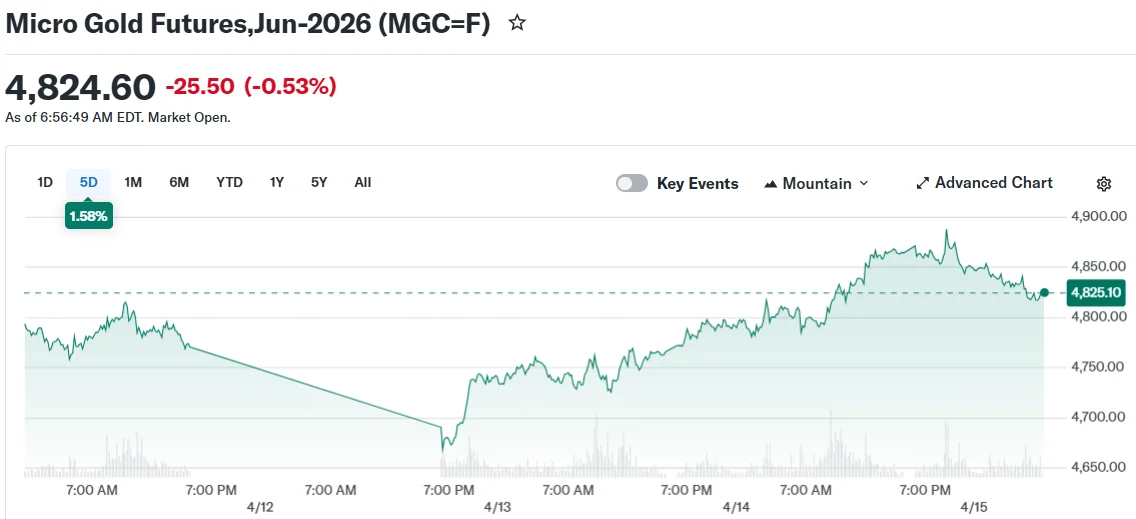
Notwithstanding Wednesday’s pullback, the yellow metal maintains approximately 1.6% gains across the past week. This weekly advance signals mounting market confidence that hostilities initiated in late February could be approaching resolution.
The conflict commenced with coordinated US-Israeli military operations targeting Iran. Subsequently, energy infrastructure faced severe disruption, particularly affecting the Strait of Hormuz — a critical passage handling approximately one-fifth of global oil shipments — which has experienced substantial blockage.

Gold has surrendered roughly 9% since combat operations began. During the conflict’s initial phase, market liquidity constraints forced investors to liquidate gold positions to offset losses elsewhere in their portfolios.
How the War Hit Gold
The military escalation propelled oil prices significantly upward, amplifying concerns about worldwide inflation acceleration. This scenario prompted market participants to anticipate central banks maintaining or elevating interest rates, presenting headwinds for gold given its non-yielding characteristics.
Market participants simultaneously gravitated toward the US dollar throughout the crisis, rather than traditional safe-haven gold, partially because America’s net energy exporter status reduces vulnerability to Hormuz-related disruptions.
The dollar index currently hovers marginally above pre-conflict readings, as diplomatic advancement diminishes safe-haven flows into the currency.
“Markets have grown more confident that the Middle East crisis is moving toward a resolution,” analysts at ING said in a note.
US President Donald Trump characterized the conflict as “close to over” during media appearances with Fox News and Sky News. He suggested a comprehensive ceasefire was “very possible” ahead of King Charles’s scheduled American visit.
Trump additionally informed journalists that renewed diplomatic discussions with Iran could commence within 48 hours, following initial negotiation rounds conducted in Pakistan over the weekend.
Ceasefire Timeline and Sticking Points
Washington and Tehran are presently adhering to a 14-day cessation of hostilities scheduled through April 21. Mediating parties are addressing three principal challenges: Tehran’s nuclear development program, Strait of Hormuz accessibility, and conflict reparations.
The Associated Press, referencing regional diplomatic sources, indicated both nations plan to reconvene negotiations and that intermediary initiatives to prolong the truce have shown advancement.
Tensions persist nevertheless. The US military verified complete implementation of its naval embargo targeting Iran. Israel simultaneously maintains strikes against Hezbollah positions in Lebanese territory, potentially complicating broader peace efforts.
Israel and Lebanon conducted their inaugural direct diplomatic engagement in decades at Washington this week. Israeli officials have challenged Iranian assertions that Lebanon was incorporated within the existing ceasefire framework.
Pepperstone strategist Dilin Wu said gold is “caught between easing conflict expectations and still-unresolved inflation pressures,” adding that the Federal Reserve’s higher-for-longer rate stance means gold “faces a natural ceiling.”
Silver similarly declined Wednesday, falling 1.4% to $78.40 per ounce, following gains exceeding 5% during the prior trading session.
