


TLDR
- Natural gas prices in Europe are poised to record their first quarterly decrease in over 12 months.
- The TTF benchmark in the Netherlands increased 2% to reach 43.44 euros per megawatt-hour on Tuesday.
- A peace agreement between Iran and the United States restored normal passage through the Strait of Hormuz, reducing supply concerns.
- Storage facilities for natural gas in Europe are filled to less than 48%, significantly below previous year levels and historical averages.
- European officials state that current storage capacity does not present an immediate risk to winter energy security.
Wholesale natural gas prices across Europe increased during Tuesday’s trading session. However, the overall market trajectory indicates the first quarterly price reduction in more than 12 months.
The Dutch TTF front-month futures contract, which serves as Europe’s primary pricing benchmark, advanced 2% to settle at 43.44 euros per megawatt-hour. This positions the market for its first quarterly price decline after six consecutive quarters of increases.
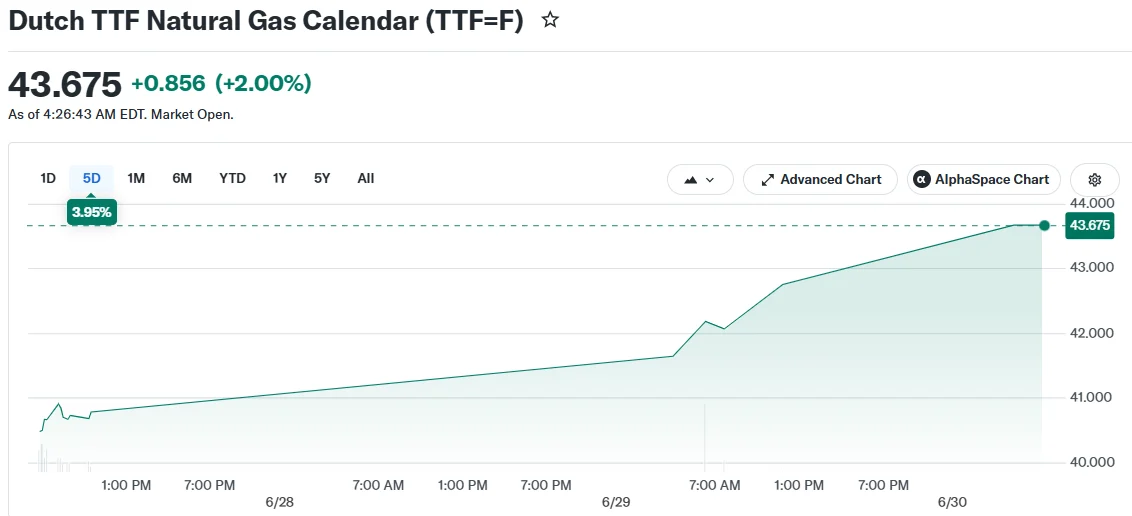
Meanwhile, Britain’s wholesale natural gas futures also posted a 2% gain, climbing to 104.57 pence per therm. The UK market is similarly positioned for its first quarterly decline after five straight quarters of growth.
What Drove the Market Volatility
Earlier in the year, prices surged dramatically amid military tensions involving Iran. The conflict sparked widespread concerns about the security of critical energy transport corridors throughout the Middle East.

Last week, additional attacks on commercial vessels temporarily disrupted shipping lanes through the Strait of Hormuz. Diplomatic negotiations between Washington and Tehran are scheduled to continue today in Doha.
Approximately 20% of global liquefied natural gas shipments pass through the Strait of Hormuz. Any interruption to this vital shipping channel typically triggers immediate price increases in energy markets.
A ceasefire agreement reached in recent weeks enabled shipping operations to return to normal patterns. LNG cargo shipments from Qatar and the United Arab Emirates that had been delayed are now reaching international buyers.
International crude oil prices have similarly retreated to pre-conflict levels. This development eliminated a key factor that had been supporting elevated electricity and gas prices throughout Europe.
Storage Capacity Remains Critical Issue
Despite the favorable price trends, market analysts warn that insufficient storage capacity could prevent further price declines. Current storage levels across Europe stand at just under 48% of total capacity.
This represents a significant decrease from the 56.2% storage level recorded during the comparable period one year ago. The figure also trails the five-year historical average injection rate of 61%.
According to Wood Mackenzie data cited by the Financial Times, European Union storage facilities may conclude the refill cycle at approximately 76% capacity. Such an outcome would represent the weakest peak storage performance recorded since 2011 at minimum.
The storage deficit results from the Iranian military conflict, which prevented LNG tankers from transiting the Strait of Hormuz. Diminished output from production facilities in Qatar and the UAE contributed additional pressure.
European storage infrastructure began the injection period at only 28% capacity. Current average levels throughout the continent hover around 48%.
The European Commission released a statement Sunday indicating that present storage levels do not constitute an urgent threat to energy security. Officials emphasized that reaching 80% storage capacity provides adequate supply for winter consumption.
A commission representative noted that storage sits approximately 10% beneath pre-crisis historical averages. The official also highlighted that natural gas consumption throughout the European Union has decreased roughly 17%.
The commission has advised member nations to target storage levels between 75% and 80%. Previous years saw nonbinding recommendations set at 90%.
