



Key Takeaways
- ADA is currently valued at approximately $0.15 with total market capitalization between $5.6–$5.9 billion
- Conservative estimates point to $0.60–$1.00 valuation by 2031, suggesting market cap growth to $24–$40 billion
- Optimistic scenario reaches $2.00–$3.50 if DeFi adoption accelerates, scaling delivers, and institutions enter
- Pessimistic outlook maintains $0.08–$0.15 range if ecosystem growth remains stagnant
- Weighted average projection estimates ADA around $0.85 by the end of 2031
Cardano (ADA) remains among the cryptocurrency sector’s most controversial blockchain platforms. Advocates highlight its peer-reviewed methodology, strong decentralization principles, and dedicated supporter base. Detractors argue its development pace lags behind competitors like Ethereum, Solana, and emerging Layer 1 alternatives.
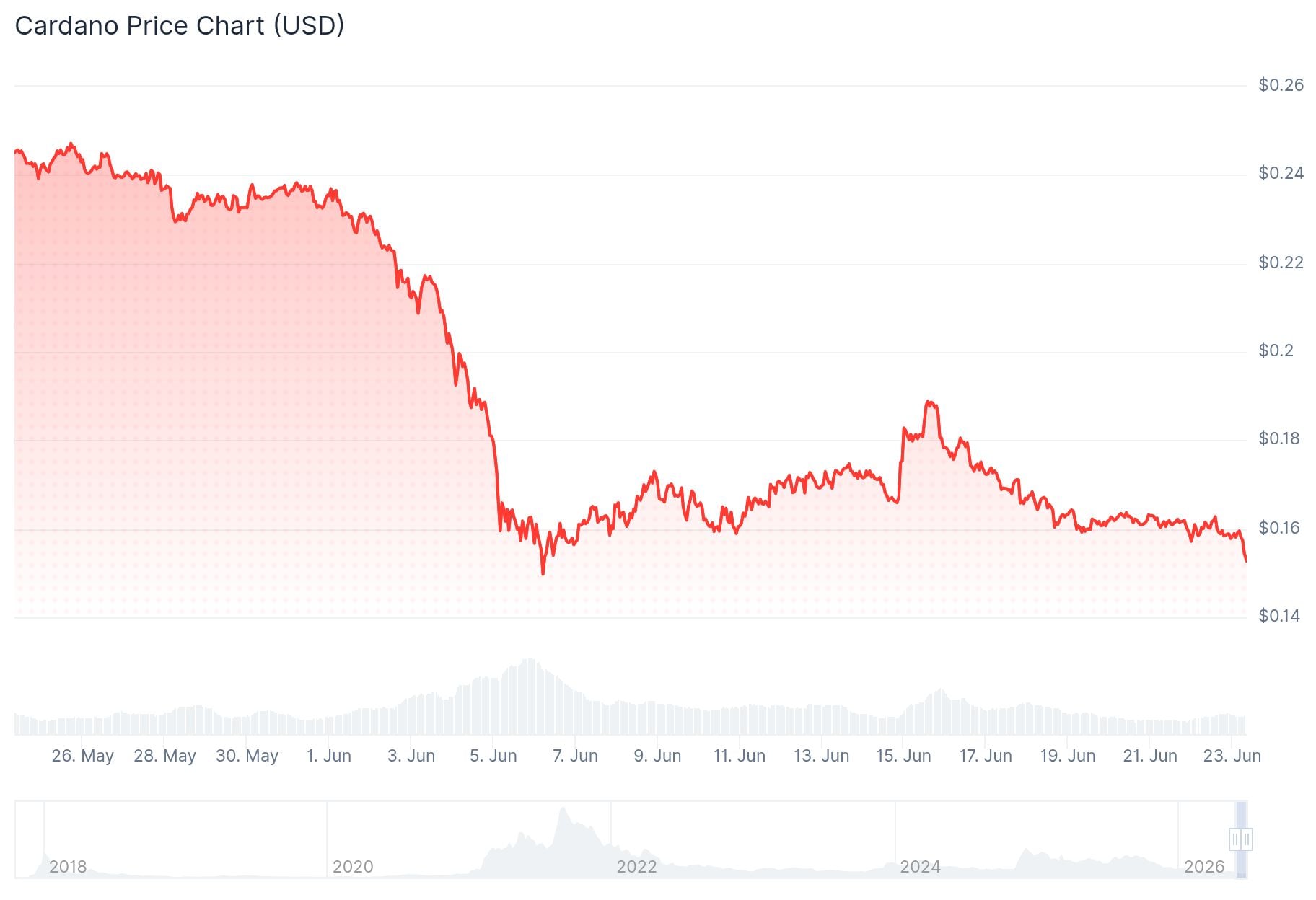
At present, ADA is valued near $0.15. This valuation places Cardano’s total market capitalization within the $5.6 billion to $5.9 billion range. The project maintains approximately 36.4 billion ADA tokens in circulation, with a maximum fixed supply ceiling of 45 billion.
The fixed supply cap provides ADA with more predictable tokenomics compared to inflationary cryptocurrencies. However, supply constraints alone cannot drive appreciation. Cardano requires genuine demand expansion.
Conservative Outlook: $0.60 To $1.00 By 2031
The most probable trajectory over the next five years involves modest appreciation. Under this scenario, Cardano maintains its position as a credible Layer 1 platform without capturing market leadership in smart contract functionality.

Reaching $0.60 to $1.00 would place Cardano’s market capitalization between $24 billion and $40 billion by 2031. This represents substantial growth from today’s valuation, though it would remain beneath ADA’s historical peak.
This projection assumes Cardano captures value from the next cryptocurrency bull cycle, implements effective governance mechanisms, and delivers meaningful scalability improvements. The platform has entered its Voltaire development era, emphasizing decentralized governance structures.
Cardano’s technical evolution has progressed through distinct development eras: Byron, Shelley, Goguen, Basho, and currently Voltaire. While each stage has expanded capabilities, market participants are demanding tangible adoption metrics beyond technical milestones.
Optimistic Scenario: $2.00 To $3.50
For ADA to achieve $2.00 to $3.50 valuations, three critical developments must occur.
First, on-chain activity must expand substantially—including decentralized finance protocols, stablecoin integration, asset tokenization, and functioning applications. Second, scalability enhancements must demonstrate measurable performance gains, not merely theoretical advances. Third, institutional investors must adopt ADA as a regulated, core Layer 1 holding.
At $3.50, Cardano’s market capitalization would approach $140 billion. This doesn’t necessitate surpassing Ethereum or Solana, but does require substantially narrowing the current adoption differential.
Pessimistic Scenario: $0.08 To $0.15
Should developer engagement, DeFi total value locked, and user acquisition remain subdued, ADA could trade sideways between $0.08 and $0.15 throughout the forecast period. Cardano would retain its community foundation but struggle to attract fresh capital inflows.
Competitive dynamics present the primary downside risk. Ethereum maintains the largest developer ecosystem. Solana leads in transaction throughput and retail engagement. Emerging blockchain platforms continue competing aggressively for liquidity and attention.
Applying probability weightings across these three distinct scenarios yields an expected ADA valuation near $0.85 by 2031.
