



Key Highlights
- BTC declined to $62,715, experiencing a 14.5% weekly decline amid AI sector reversal
- ETH decreased 4.8% to $1,696 while SOL tumbled 5.4% to $66.51
- Broadcom’s disappointing AI semiconductor forecast sparked Nasdaq’s third consecutive day of losses
- Bitcoin spot ETFs in the US have seen continuous outflows for 13 sessions, reaching $4.4 billion total
- Markets await Friday’s employment data release for signals on Federal Reserve monetary policy direction
Cryptocurrency markets experienced significant pressure on Friday as a widespread retreat from artificial intelligence-related investments simultaneously impacted digital assets and traditional equity markets.
BTC descended to $62,715 throughout Asia-Pacific trading sessions, registering a 1.9% daily decline and a substantial 14.5% weekly drop. ETH retreated 4.8% to $1,696, while SOL decreased 5.4% to $66.51. Solana’s weekly losses have now reached 18.5%.
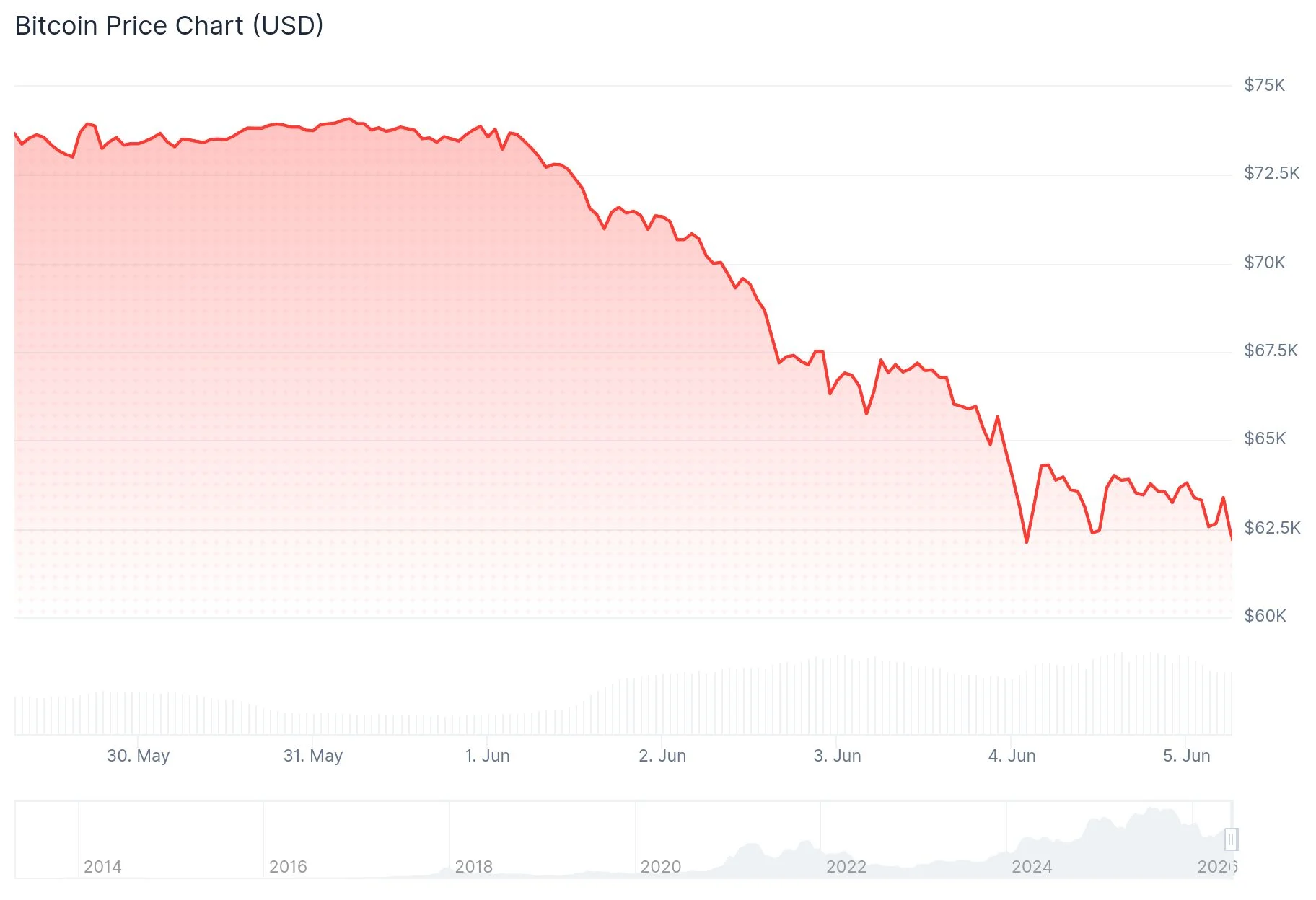
The downturn’s origin wasn’t within cryptocurrency markets. It began with semiconductor giant Broadcom.
Chip Giant’s Results Trigger Market-Wide Decline
Broadcom unveiled its latest quarterly earnings on Wednesday evening. The company’s forward guidance for AI chip revenue fell short of analyst projections, bringing an end to several months of consistent gains across semiconductor equities. This development created cascading effects throughout global financial markets.

Nasdaq 100 futures contracts declined 1.2% Friday morning, representing the third consecutive session of negative momentum. South Korea’s KOSPI benchmark plummeted 4.7%. Memory chip producer SK Hynix experienced an 8% decline. The MSCI Asia-Pacific benchmark index retreated 1.4%.
Foreign exchange markets experienced turbulence as well. South Korea’s won reached its weakest position since 2009. Indonesia’s rupiah traded near historic lows as international investors withdrew capital from domestic fixed-income securities.
India’s rupee provided a notable exception. The Reserve Bank of India implemented measures designed to encourage capital inflows, successfully supporting the currency’s stability.
ETF Capital Flight Intensifies Downward Momentum
The market correction struck cryptocurrency during a particularly fragile period. United States-based spot Bitcoin exchange-traded funds have recorded 13 consecutive trading sessions with net capital outflows, accumulating approximately $4.4 billion since mid-May.
Strategy additionally revealed its first Bitcoin liquidation since 2022 during this week. The firm offloaded 32 BTC to fulfill dividend payments on preferred equity instruments. Combined, these developments have eliminated a critical source of purchase demand that had provided support for Bitcoin throughout much of the previous 18 months.
Hyperliquid’s HYPE token had been among the limited assets maintaining weekly gains. That narrative shifted Friday. HYPE plunged 14.8% to $62.14, reducing its weekly advance to merely 1.5%.
Zcash had similarly preserved positive territory earlier in the week. By Friday’s session, those gains had completely evaporated.
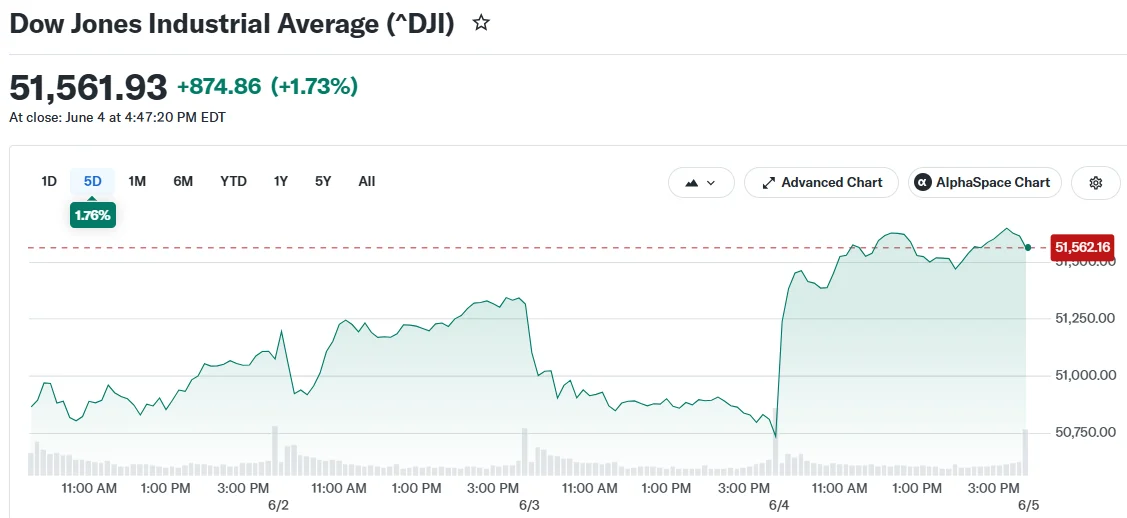
The Dow Jones Industrial Average diverged from broader market trends Thursday, advancing to an all-time peak. Healthcare and financial sector equities drove the rally, despite Broadcom’s results pressuring technology shares.
Employment Data Becomes Critical Catalyst
The upcoming significant catalyst for financial markets arrives with the US nonfarm payrolls release, scheduled for Friday morning at 8:30 a.m. Eastern Time. Economic forecasters anticipate steady job creation and unchanged unemployment figures.
Results indicating weaker-than-anticipated employment growth could reinvigorate market expectations for Federal Reserve interest rate reductions under recently confirmed chairman Kevin Warsh. Such an outcome would likely compress real yields and could provide upward momentum for both AI-related investments and digital currencies.
Stronger employment figures could extend market declines. Pending the data publication, equity and cryptocurrency markets continue tracking parallel downward trajectories.
