



Key Takeaways
- BTC plummeted beneath $62,000, marking its lowest level in nearly four months and sitting approximately 50% under its record peak.
- Cryptocurrency markets witnessed more than $1.5 billion in forced liquidations within a single day, including over $800 million in Bitcoin positions.
- Spot Bitcoin ETFs in the United States recorded approximately $1 billion in net withdrawals during the week, continuing an unprecedented outflow trend.
- Market observer Ali Charts reported 54,000 BTC transferred to trading platforms last week, creating around $3.78 billion in potential sell pressure.
- Strategy, holding the largest corporate Bitcoin position, executed its initial BTC sale in almost four years, sparking concerns about its accumulation strategy.
Bitcoin experienced a significant downturn during early Thursday trading hours in Asian markets, momentarily dipping to $61,442 before staging a modest rebound to approximately $63,832. This price action represented the cryptocurrency’s weakest performance in nearly four months and positioned it roughly 50% beneath its October peak.
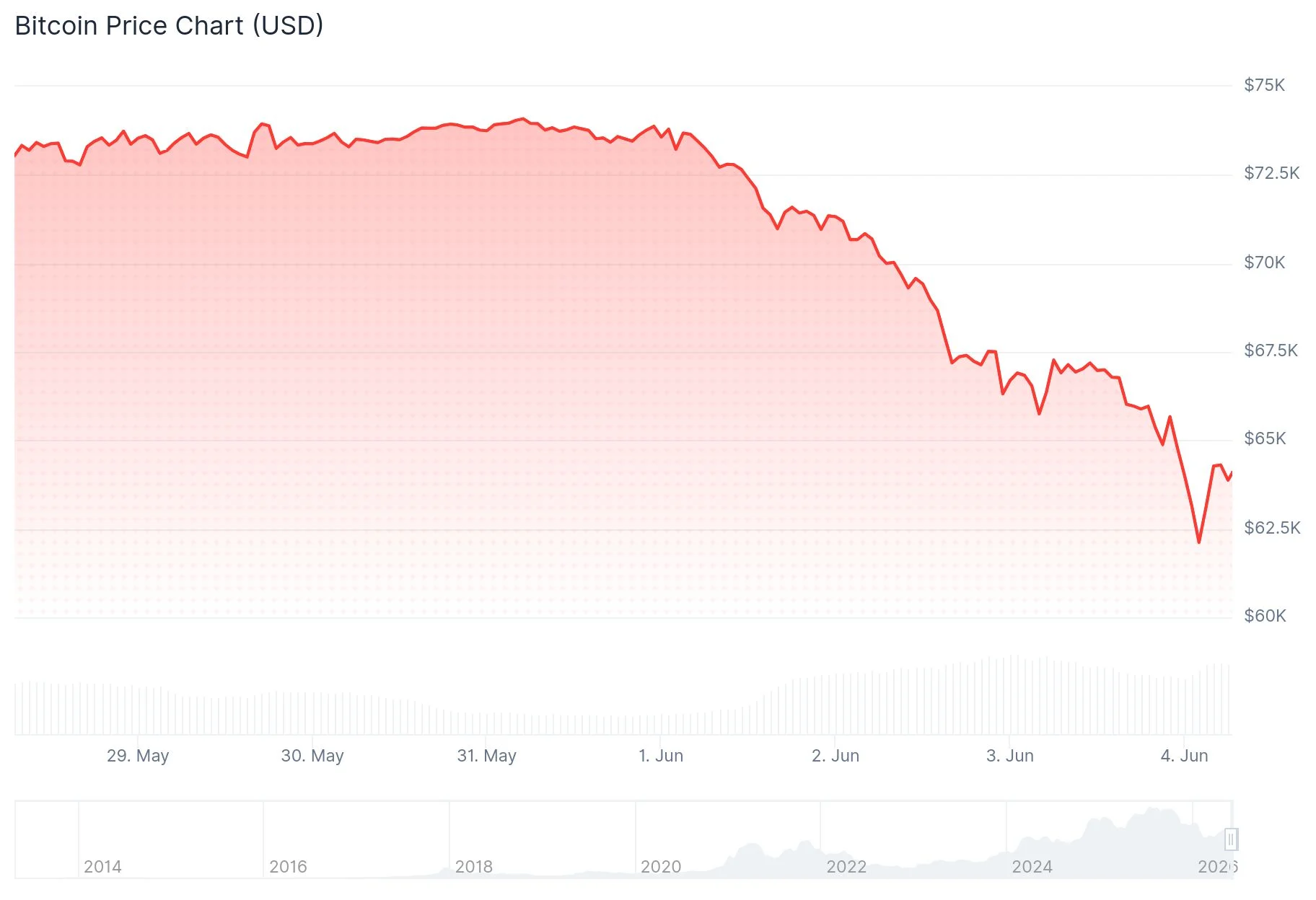
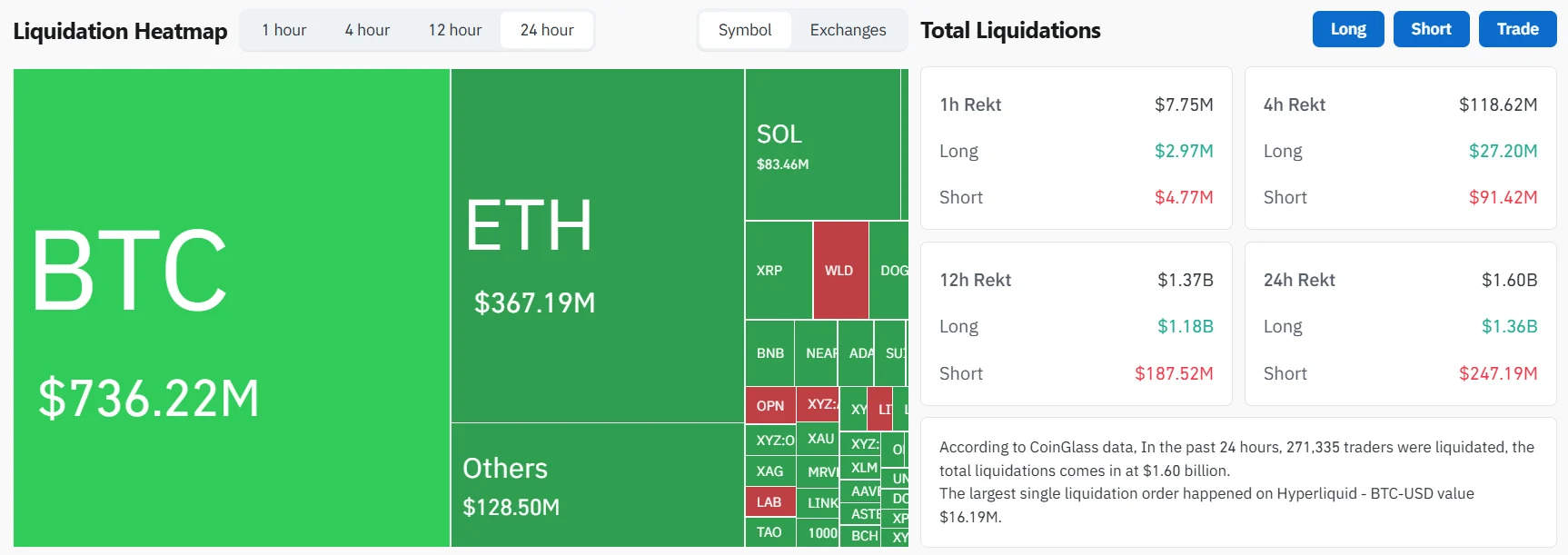
The downturn initiated a cascade of forced liquidations throughout cryptocurrency markets. Data from CoinGlass reveals that over 208,000 market participants faced liquidations during the preceding 24-hour period. Bitcoin positions alone accounted for more than $800 million in losses, with Ether representing an additional $386 million. Combined liquidations across the cryptocurrency sector exceeded $1.5 billion.
Research analysts at Presto Research observed that Bitcoin’s underperformance throughout the year has aligned with strong momentum in both precious metals and technology stocks focused on artificial intelligence. With market participants adjusting their projections for Federal Reserve monetary policy decisions downward, investment flows have pivoted toward these alternative opportunities.
Cryptocurrency market analyst Ali Charts identified a concerning trend on social platforms, noting that 54,000 BTC — valued at roughly $3.78 billion — transferred to exchange wallets during the previous seven days. He indicated that this surge in immediately available supply created near-term downward price momentum, initially pulling the asset down to $65,300 when he published his observations.

Institutional Bitcoin Fund Withdrawals Reach New Highs
Institutional participation has weakened considerably. Spot Bitcoin exchange-traded funds in the United States have experienced approximately $1 billion in net redemptions throughout the current week, based on tracking data from SoSoValue. Wednesday alone witnessed outflows approaching $396 million.
Across the previous three-week period, institutional market participants have withdrawn a total of $3.7 billion from Bitcoin-focused ETF products. Significant portions of this capital have relocated into artificial intelligence-related equities, which provide corporate earnings transparency and participation in a rapidly expanding technological sector that cryptocurrency assets cannot replicate.
Escalating tensions between the United States and Iran have compounded market stress. Increased geopolitical uncertainty has amplified risk-averse behavior across financial markets. Dollar demand strengthened on projections that sustained conflict could trigger energy-driven inflationary pressures, creating additional headwinds for speculative investment categories including digital assets.
Strategy Breaks Four-Year Accumulation Streak With Bitcoin Disposal
Strategy, maintaining the most substantial corporate Bitcoin reserves globally, divested a segment of its BTC portfolio during the week — representing its first divestment in almost four years. Despite the relatively modest transaction size, the decision transmitted a pessimistic signal throughout markets.
The transaction has reignited debate regarding the sustainability of Strategy’s balance sheet approach, which fundamentally relies on continued Bitcoin price appreciation.
Presto Research suggested that meaningful Bitcoin price recovery may depend less on cryptocurrency-specific catalysts and more on broader inflation moderation and renewed investor enthusiasm for liquidity-dependent asset classes.
