



Key Takeaways
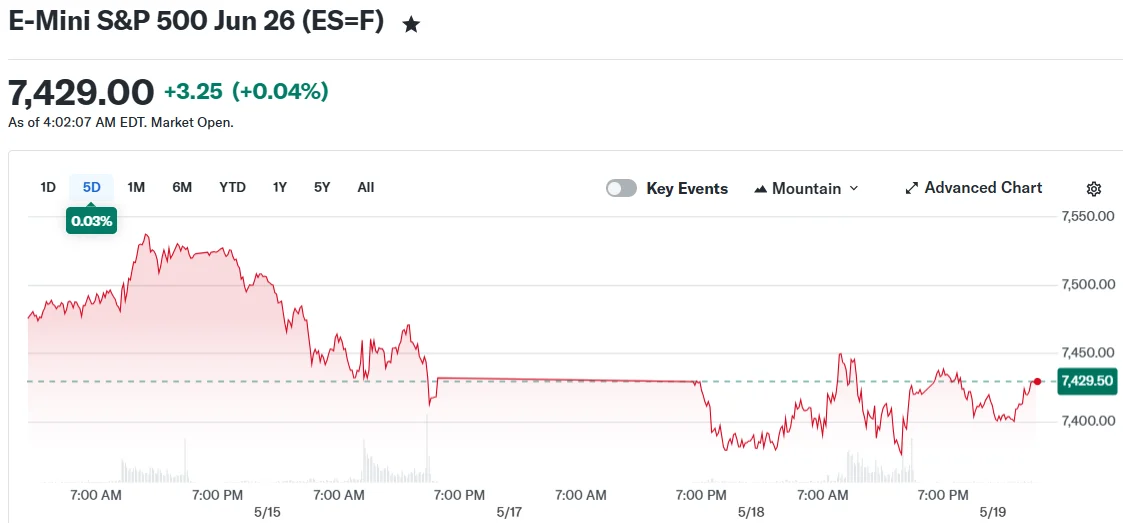
- Futures for the Nasdaq 100 declined approximately 0.8% in Tuesday’s pre-market session, while S&P 500 futures fell 0.4% and Dow futures dipped 0.2%
- Treasury yields surged, with the 10-year rate climbing back over the 4.6% threshold, intensifying pressure on technology and growth-oriented equities
- Crude oil markets retreated following Trump’s announcement of halting a planned strike on Iran amid what he called “serious negotiations”
- Wednesday’s Nvidia earnings release represents a critical moment for artificial intelligence investments and overall market sentiment
- A Bank of America survey revealed fund managers view global chip stocks as the market’s most overcrowded position
Equity futures traded lower during Tuesday’s pre-market hours, building on Monday’s negative momentum. Technology shares spearheaded the downturn, with Nasdaq 100 contracts falling roughly 0.8%. Futures tied to the S&P 500 retreated 0.4%, while Dow contracts edged down 0.2%.
Bond market movements continued applying pressure to stocks, with the benchmark 10-year Treasury yield pushing past 4.6% once again. Elevated borrowing costs typically dampen enthusiasm for growth-focused equities, especially within the technology arena.
Inflation concerns are fueling the upward trajectory in yields. Recent blockades affecting the Strait of Hormuz have elevated energy costs in recent trading sessions, sparking questions about whether the Federal Reserve might reverse course on monetary policy.
Market participants are split on the central bank’s trajectory. Any movement toward tightening would create headwinds for artificial intelligence and growth companies, whose stock prices rely significantly on projected future profitability.

Middle East Diplomatic Developments Provide Market Support
President Trump announced Monday that substantial diplomatic discussions are taking place with Iranian officials, suggesting a “very good chance” exists for reaching an agreement on Tehran’s nuclear activities. He revealed that a scheduled military operation against Iran has been postponed following requests from Persian Gulf regional partners.
This diplomatic development sent oil prices tumbling. Brent benchmark crude declined 1.4% to settle at $110.43 per barrel. The West Texas Intermediate contract dropped 0.7% to $103.67. Despite these pullbacks, both oil markers remain elevated more than 50% compared to pre-conflict pricing.
Treasury markets also responded favorably to the geopolitical news. The two-year note yield decreased 1.8 basis points to 4.071%. The 10-year rate fell 1.4 basis points to 4.608%.
ING analysts observed that energy markets “remain extremely sensitive to Iran-related headlines” and continue experiencing significant volatility across trading sessions.
Digital currency Bitcoin saw modest gains as petroleum prices and government bond yields moderated, based on early trading data.
Market Focus Shifts to Nvidia Wednesday
Nvidia will report quarterly results Wednesday in what’s widely viewed as the week’s most significant corporate event. Market expectations point toward robust financial performance, though the chipmaker has consistently raised the bar with previous earnings beats.
Given that other leading semiconductor manufacturers have already released their quarterly reports, Nvidia’s numbers could establish the trajectory for AI-related investments heading into summer months. Bank of America’s latest fund manager poll identified global semiconductor stocks as the market’s most concentrated bet currently.
Approximately half of the fund managers surveyed by BofA continue anticipating Federal Reserve rate reductions within the coming year. Portfolio managers are increasingly shifting capital toward commodities, utility companies, and emerging market assets amid growing technology sector uncertainty.
The dollar index slipped 0.1% relative to major global currencies. Trading sentiment remains guarded ahead of Wednesday’s highly anticipated earnings release.
