



Key Takeaways
- Bullion climbed 0.7% to reach $4,570.60 per ounce on Monday before retreating
- Earlier trading saw the precious metal touch its weakest point since March 30
- Treasury yields declined following a period of intense selling pressure in debt markets
- Attacks on Emirati nuclear infrastructure and Saudi targets raised questions about ceasefire stability
- Presidential trip to Beijing yielded no progress on Tehran peace negotiations
The gold market experienced erratic price action on Monday as traders monitored stabilizing government bond markets alongside escalating Middle Eastern security concerns.
The precious metal advanced 0.7% to $4,570.60 per ounce during morning trading. However, earlier in the session, bullion had touched its weakest level since March 30, highlighting the turbulent nature of recent price movements.
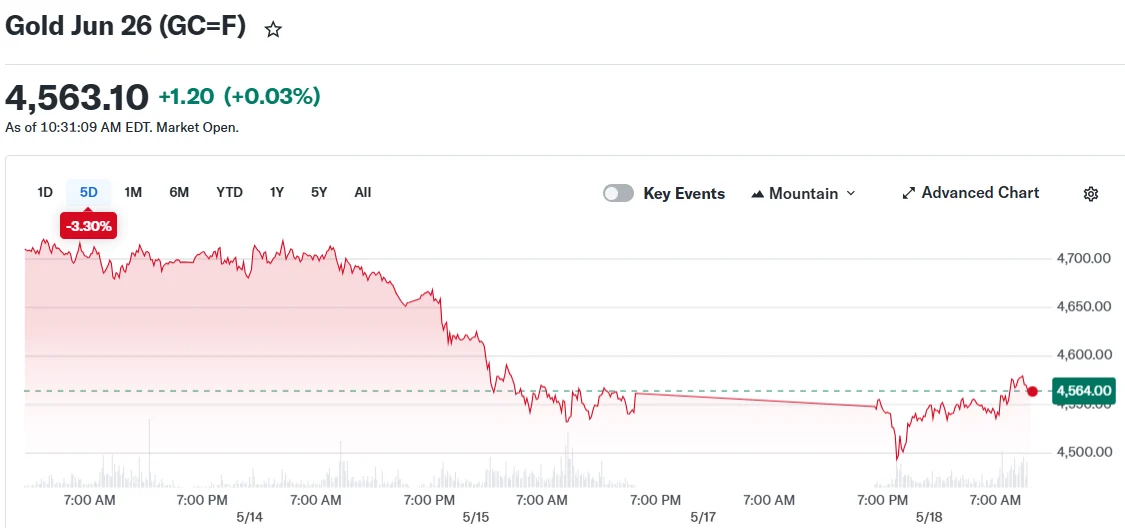
Futures contracts for the yellow metal declined 0.3% to $4,574.20 per ounce at certain points throughout the trading day.
The price swings occurred as treasury yields retreated following a challenging period for sovereign debt instruments. Recent selling pressure had created anxiety among market participants.

Oil prices also declined after Iranian state media suggested Washington had floated the idea of temporarily lifting petroleum sanctions on Tehran pending a comprehensive peace agreement.
Middle East Conflict Continues to Impact Sentiment
Gold has surprisingly retreated from levels seen when hostilities with Iran began in late February. While this may appear counterintuitive given the ongoing military situation, there’s a logical explanation.
Market participants have pivoted toward the U.S. dollar as their preferred safe-haven instrument. The greenback has benefited from perceptions that America’s position as a significant energy producer shields it from supply disruptions triggered by the conflict.
A rising dollar increases the cost of gold for international purchasers, potentially dampening appetite for the metal.
Inflation worries have also created headwinds for precious metals. Should the conflict drive consumer prices higher, monetary authorities may tighten policy. Elevated borrowing costs tend to diminish the appeal of non-income-producing assets like bullion.
UAE Strikes and Diplomatic Setback Heighten Uncertainty
During the weekend, an unmanned aerial attack sparked a blaze at an Emirati nuclear installation. Saudi authorities reported intercepting three additional drones.
These incidents have renewed skepticism about the durability of the current U.S.-Iran ceasefire arrangement.
President Donald Trump declared via social media that “the clock is ticking” for Tehran to finalize a peace agreement. He indicated that Washington might restart military operations absent a settlement.
Certain market observers had anticipated Trump’s recent China trip might facilitate movement in Iranian peace discussions. Beijing’s status as a major purchaser of Iranian crude provides it with significant influence in negotiations.
However, the summit failed to yield concrete pledges from Chinese leadership.
David Morrison, Senior Market Analyst at Trade Nation, noted that weekend developments revived anxieties that had temporarily subsided during Trump’s Asian visit.
“It became painfully apparent that the Chinese trip was a non-event, while Iran appears in no mood to accede to the U.S. peace plan,” Morrison said.
With the ceasefire facing renewed strain and diplomatic channels showing little progress, precious metals prices are expected to remain unstable in coming sessions.
