


TLDR
- Gold futures pushed past the $4,700 per troy ounce threshold, bolstered by institutional buying and ongoing regional tensions
- Military engagement between U.S. and Iranian forces occurred near the Strait of Hormuz, though President Trump confirmed the ceasefire continues
- Market participants are monitoring U.S. employment figures, which may shape Federal Reserve interest rate policy
- The precious metal is poised for approximately 1.5–2% weekly gains following a rebound from recent lows
- Silver, platinum, and copper posted gains alongside gold on Friday
The price of gold advanced beyond $4,700 per troy ounce during Friday’s session, positioning itself for positive weekly performance as institutional demand and regional instability continued to attract market participants.
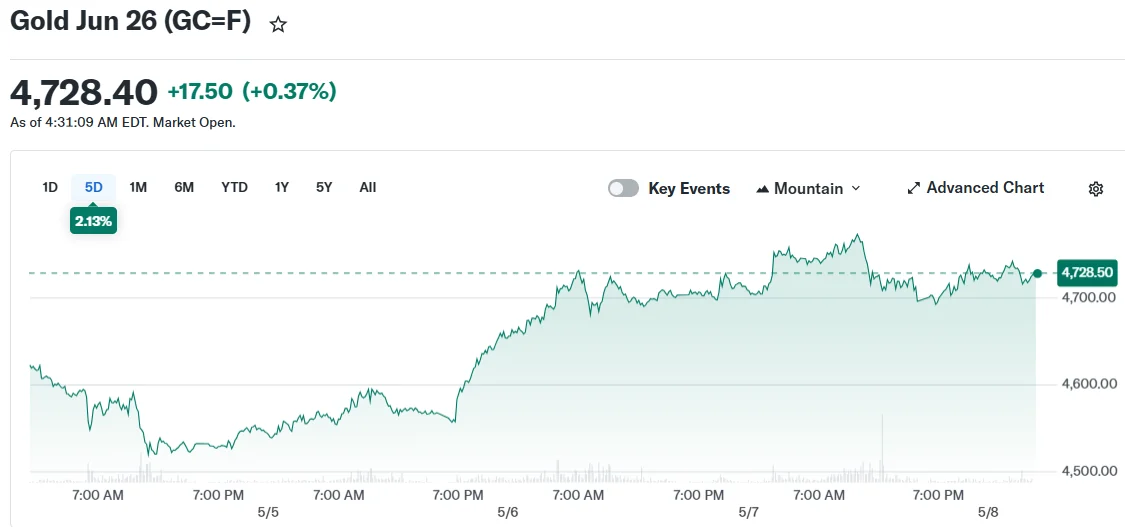
Spot gold appreciated 0.8% to reach $4,723.52 per ounce during early market hours. U.S. gold futures advanced 0.5% to $4,731.96. The precious metal has gained approximately 2% across the week, bouncing back from the lowest levels seen in a month during early May.
Market strategists from Saxo Bank indicated that gold’s resilience despite strengthening equity markets suggests continued central bank accumulation. They additionally pointed to investor anxiety surrounding inflation trends, economic expansion, and sovereign debt burdens.
From a technical analysis perspective, experts at XS.com noted that gold maintains a bullish formation provided it remains above the $4,680 per ounce threshold. This price point currently serves as near-term support.

The recent upward breakout has activated fresh algorithmic purchasing and institutional capital flows, according to Simon-Peter Massabni of XS.com. He indicated an increasing probability that gold could target the $4,800 mark if current momentum persists.
Middle East Ceasefire Stays Intact
U.S. and Iranian military forces engaged in combat near the Strait of Hormuz on Thursday, representing the most significant violation of the month-long ceasefire agreement. Iranian authorities subsequently reported that conditions along coastal regions had stabilized.
President Trump confirmed to ABC News that the ceasefire arrangement remains operational. Both parties are collaborating with mediators on establishing a memorandum of understanding to resume diplomatic negotiations.
Gold experienced a decline exceeding 10% following the escalation of the Iran conflict in late February. Climbing oil prices during that period amplified inflation expectations and elevated interest rate projections, creating headwinds for the precious metal.
This week, prospects for a comprehensive peace agreement helped moderate oil prices. Declining oil costs alleviate inflation pressures, which subsequently diminishes expectations that the Federal Reserve will maintain elevated interest rates.
A modest retreat in the U.S. dollar mid-week also provided tailwinds for gold. The U.S. Dollar Index traded flat to marginally lower during Asian market hours on Friday.
Jobs Data Could Move Markets
Traders exercised caution with position sizing ahead of the U.S. non-farm payrolls release scheduled for later Friday. Market analysts project employment growth around 65,000, with the unemployment rate anticipated to remain steady at 4.3%.
Weaker employment figures could bolster expectations for future Federal Reserve rate reductions. Declining interest rates typically benefit gold, which generates no income yield.
Other precious and industrial metals posted gains on Friday. Spot silver advanced 1.9% to $79.95 per ounce. Platinum increased 1.7% to $2,060.30 per ounce. Copper futures traded on the London Metal Exchange rose 0.4%.
The next significant resistance level market participants are monitoring for gold stands at $4,800 per ounce.
