


Key Highlights
- More than 100 job openings related to Optimus reveal Tesla’s aggressive push toward industrial-scale robot manufacturing
- Elon Musk confirmed discontinuation of Model S and Model X vehicles, reallocating Fremont factory space for Optimus assembly
- Version 3 of the Optimus humanoid robot will enter production during summer 2026, with full-scale manufacturing planned for 2027
- Construction has started on a specialized Optimus production plant at Gigafactory Texas, aiming for 10 million annual units
- Musk projects the robot program could deliver $10 trillion in revenue, potentially eclipsing Tesla’s automotive division
As of March 25, 2026, Tesla (TSLA) is changing hands at approximately $278 per share.
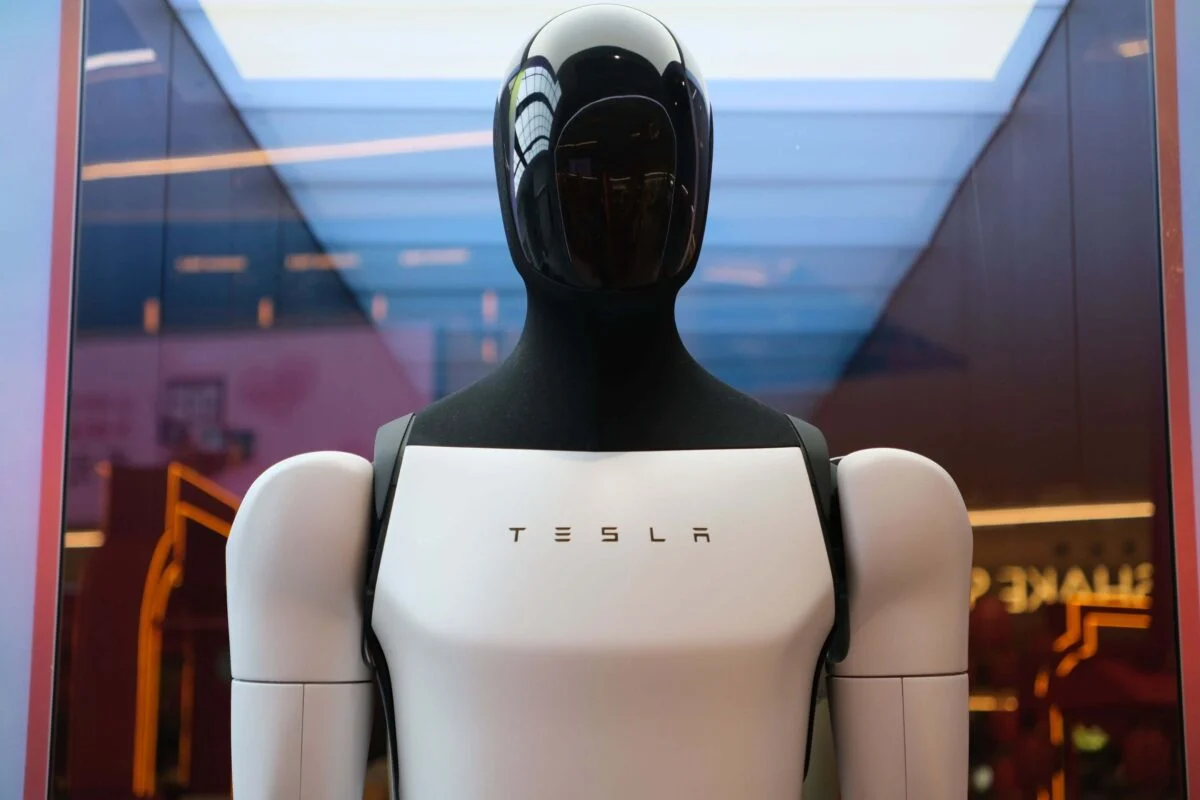
Tesla is doubling down on humanoid robotics in what represents its most ambitious diversification yet. The electric vehicle giant is rapidly transitioning Optimus from experimental concept to production-ready hardware, with an aggressive hiring campaign that signals the company’s seriousness.
Across Tesla’s American operations, more than 100 positions specifically tied to Optimus are currently open. These opportunities span Robotics Software Engineers, Manufacturing Engineers, Mechanical Integration Engineers, and AI Engineers specializing in world modeling and video generation technologies.

One particular job posting emphasizes building robust data infrastructure for Optimus production facilities and creating automation systems for large-scale manufacturing. The terminology clearly indicates factory-floor implementation rather than research and development.
The most definitive indication of Tesla’s strategic direction emerged during the January 28, 2026 Q4 2025 earnings conference call. Musk revealed that Tesla would cease manufacturing the Model S and Model X, converting those Fremont, California production lines exclusively to Optimus robot assembly.
This represents a bold strategic pivot. Tesla is essentially retiring two legacy vehicle platforms to make room for what Musk characterizes as the company’s most significant product opportunity.
Manufacturing Roadmap
The third generation of Optimus is scheduled to begin production this summer, with the company targeting full mass production capabilities by 2027. Tesla’s initial manufacturing objective is one million humanoid robots annually.
Additionally, Tesla initiated construction on a purpose-built Optimus production complex at Gigafactory Texas during late 2025. The facility’s ultimate capacity target stands at 10 million units per year.
To demonstrate progress, Tesla has released promotional footage showcasing the robot’s advanced components — including precision reduction gearboxes and highly articulated hands — offering insight into the project’s engineering maturity.
Economic Rationale
Musk’s strategic reasoning centers on labor market transformation. Should Optimus successfully perform repetitive physical tasks at scale and competitive cost, the addressable market becomes massive.
Initial deployment sectors include manufacturing assembly operations, material handling, quality control inspection, and warehouse logistics functions — encompassing loading, unloading, sorting, and transportation activities.
Looking further ahead, Tesla envisions Optimus penetrating consumer households, healthcare facilities, and comprehensive logistics networks at consumer electronics-level adoption rates.
Musk has publicly stated that Optimus could ultimately exceed Tesla’s automotive operations and generate $10 trillion in revenue. While that projection generates headlines, investors are primarily focused on near-term execution milestones.
GF Value currently estimates TSLA’s fair value at $253.41, suggesting the stock trades at a significant premium. The equity has become a lightning rod for debate regarding how much of the Optimus opportunity is already reflected in the share price.
What’s undeniable is that Tesla’s hiring spree and factory reconfiguration demonstrate concrete commitment: Optimus has graduated from experimental project to core business initiative.
Production of the third-generation Optimus is scheduled to commence this summer, with industrial-scale manufacturing targeted for 2027.
