



TLDR
- Bank of America warns the S&P 500 appears overpriced on 18 of 20 valuation metrics, setting a cautious year-end 2026 target of 7,100
- The firm recommends rotating out of expensive tech stocks into health care and real estate sectors, which show improving fundamentals and lower valuations
- Health care posted 10.3% sales growth in Q3 2025 while real estate showed 6.5% sales growth, both outperforming on earnings surprises
- AI adoption could reduce demand for professional service jobs, potentially hurting consumer spending and the economy
- Passive funds now control the majority of S&P 500 float, creating potential liquidity risks if private market stress forces selling
Bank of America issued a stock market warning for 2026, setting an S&P 500 price target of 7,100. This represents the most cautious forecast among major Wall Street banks. The S&P 500 gained 16% in 2025, but the investment bank says valuations have reached dangerous levels.
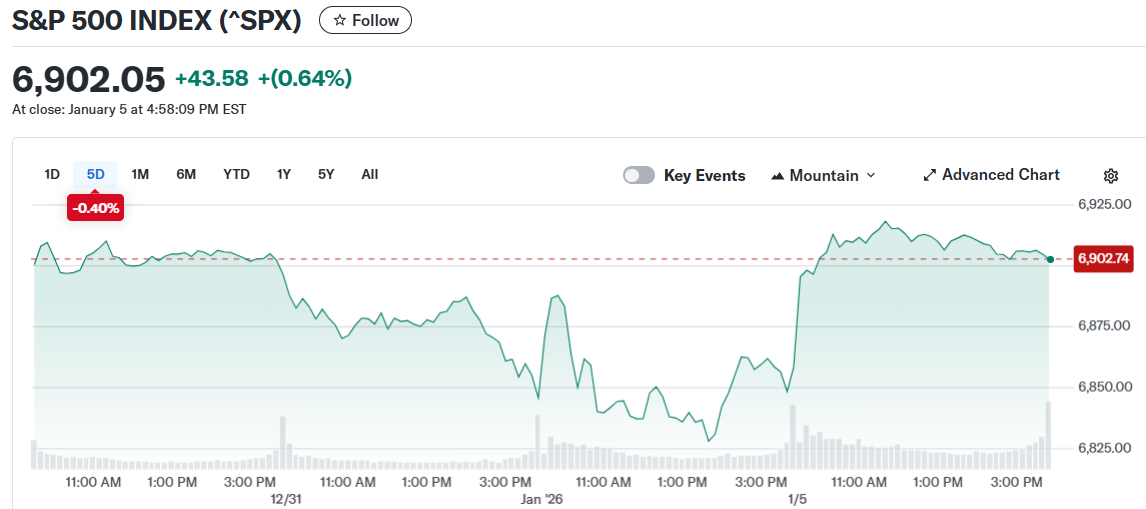
Chief equity strategist Savita Subramanian said the S&P 500 appears overpriced on 18 of 20 valuation metrics. These include market cap-to-GDP, price-to-book, and enterprise value-to-sales ratios. Nine metrics now exceed levels seen at the dot-com bubble peak in March 2000.
The S&P 500’s three-month return stood at 6.02% as of November 2025, down from 7.90% the prior month. This slowdown comes as tech stock dominance faces questions. The “Magnificent 7” tech stocks contributed 54% of the S&P 500’s price gain through Q3 2025.
Subramanian argues the index now consists of higher-quality businesses with strong balance sheets. These companies deserve premium valuations but create risk when the market prices in perfection. Growth must stay high and earnings surprises must break favorably.
Bank of America Recommends Health Care and Real Estate Stocks
Bank of America assigned overweight ratings to health care and real estate stocks for 2026. The firm’s model ranks health care as the most attractive sector and real estate third. Both sectors offer lower valuations and improving fundamentals compared to technology.

Health care stocks posted 10.3% year-over-year sales growth in Q3 2025. The sector’s earnings growth rose to 5.2% from 1.4%, with a 12.1% aggregate earnings surprise. Real estate showed 2.5% earnings per share growth and 6.5% sales growth.
Despite strong fundamentals, these sectors lagged tech in 2025. The Health Care Select Sector SPDR Fund returned 13% while the Technology Select Sector SPDR Fund gained 24%. Real estate posted just 0.3%. This performance gap could fuel sector rotation in 2026.
AI Impact on Jobs and Consumer Spending
Bank of America warns AI adoption threatens professional service jobs. Professional and business services workers have driven consumption growth since the 1980s. These workers now face pressure as companies automate white-collar tasks.
The November 2025 jobs report showed little change in professional and business services employment. Amazon CEO Andy Jassy warned companies will need fewer people doing current jobs. Hiring trends suggest demand for professional roles will slow before new AI jobs appear.
If this gap persists, consumer spending will likely decline. Bank of America remains underweight on consumer discretionary and communication services stocks. The firm also warned about risks from passive investing trends.
Passive funds now account for the majority of S&P 500 float. Many pensions pair passive index exposure with private equity holdings. If private lending stress continues, asset owners could be forced to sell equity holdings. Bank of America maintains its health care and real estate recommendations as the index trades at 18-year highs on most valuation metrics.
