


Key Takeaways
- President Trump used Truth Social to condemn banking institutions, claiming they’re sabotaging the GENIUS Act stablecoin legislation
- The central dispute revolves around allowing third-party platforms to provide yield on customer-held stablecoins
- Banking institutions contend that stablecoin yield offerings could cause significant deposit outflows from traditional banks
- Senate Banking Committee delayed its markup session in January following Coinbase’s withdrawal of support
- House Financial Services Committee Chair French Hill proposed the Senate should pass the House-approved CLARITY Act instead
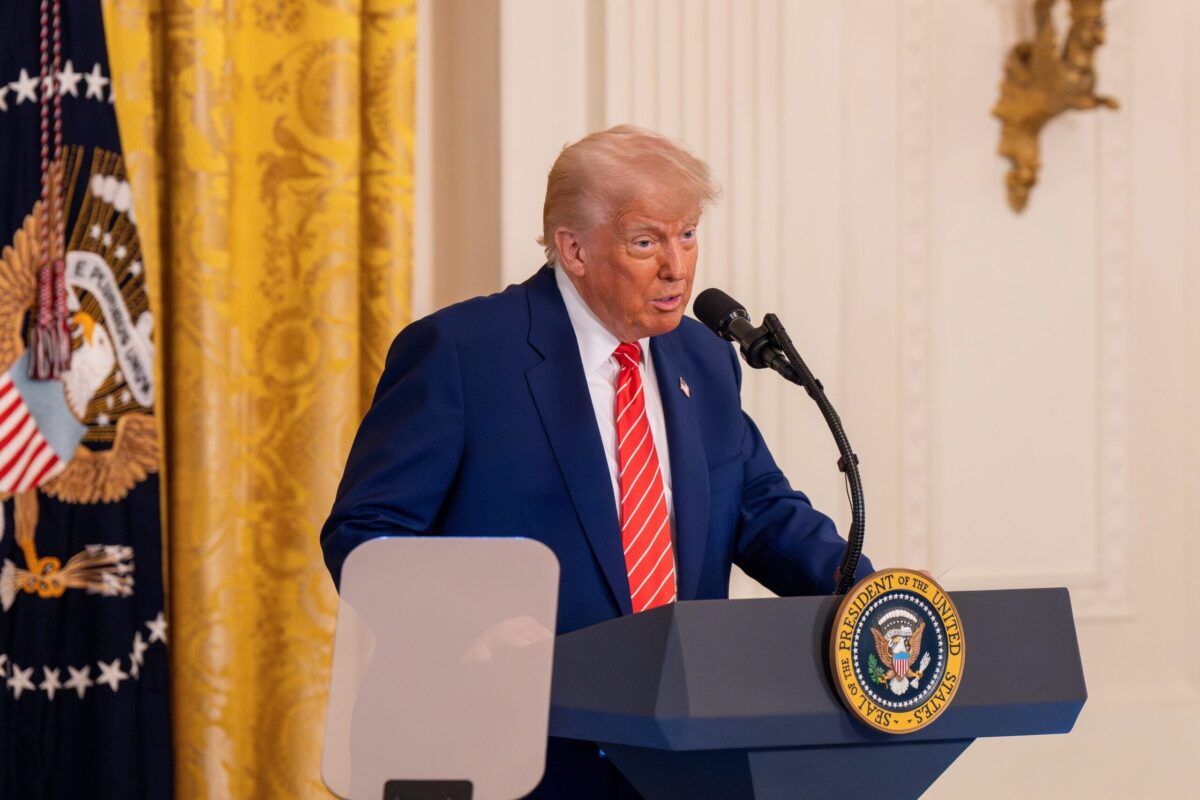
On Tuesday, Trump used his Truth Social platform to condemn banking institutions for obstructing cryptocurrency legislation.
The President claimed banks were jeopardizing the GENIUS Act — the stablecoin legislation he enacted in July — while simultaneously attempting to prevent passage of the CLARITY Act, the cryptocurrency market structure bill currently deadlocked in the Senate.
“The Banks are hitting record profits, and we are not going to allow them to undermine our powerful Crypto Agenda,” Trump declared.
The GENIUS Act establishes stablecoin regulations while prohibiting issuers from offering yield directly to token holders. Nevertheless, third-party services such as cryptocurrency exchanges retain the ability to provide yield to their users.
Banking institutions are demanding this gap be eliminated. Their position maintains that permitting platforms like Coinbase to offer stablecoin yields would drain deposits from conventional banking institutions.
Cryptocurrency firms and industry advocates have vigorously opposed any prohibition on yield offerings.

Coinbase withdrew its endorsement of the Senate legislation in January due to this disagreement. This action prompted the Senate Banking Committee to delay a planned markup session, with no rescheduled date announced.
The Source of the Impasse
The White House has facilitated a minimum of three negotiation sessions between banking and cryptocurrency industry stakeholders this year to finalize bill language.
A tentative White House target of late February expired without reaching consensus.
Proposed legislative text is allegedly being distributed among lawmakers, though no formal agreement has been revealed.
The Senate’s legislative calendar is becoming compressed. Summer recess approaches while the 2026 midterm election season intensifies.
French Hill’s Position
House Financial Services Committee Chair French Hill offered his perspective during a separate Tuesday engagement.
He noted the CLARITY Act, which secured House passage with 78 Democratic supporters, already confirmed that stablecoins function as payment instruments rather than investment vehicles and should not generate interest directly.
Hill suggested the Senate should embrace the House bill’s provisions if unable to forge its own compromise.
“If the Senate can’t come to a straightforward conclusion here, I recommend they use the language that we have in the House-passed Clarity Act,” Hill stated.
Trump also mentioned World Liberty Financial, his family-connected enterprise that issues its own stablecoin designated USD1.
The Office of the Comptroller of the Currency released a proposed rule last week stating that agreements between stablecoin issuers and third-party partners must explicitly specify what those partners are providing — though it avoided implementing an outright yield payment prohibition.
Trump’s statement followed several days during which his attention centered on U.S. military operations against Iran, which have caused disruptions to air travel and maritime shipping throughout the Middle East.
