



TLDR
- Pi Network’s native token recovered 60% from a February record low of $0.13, reaching $0.2056 before retracing
- The network is executing a multi-phase upgrade to v22/v23 protocols, with four stages remaining
- More than 16 million users have successfully migrated through KYC, aided by newly implemented AI verification tools
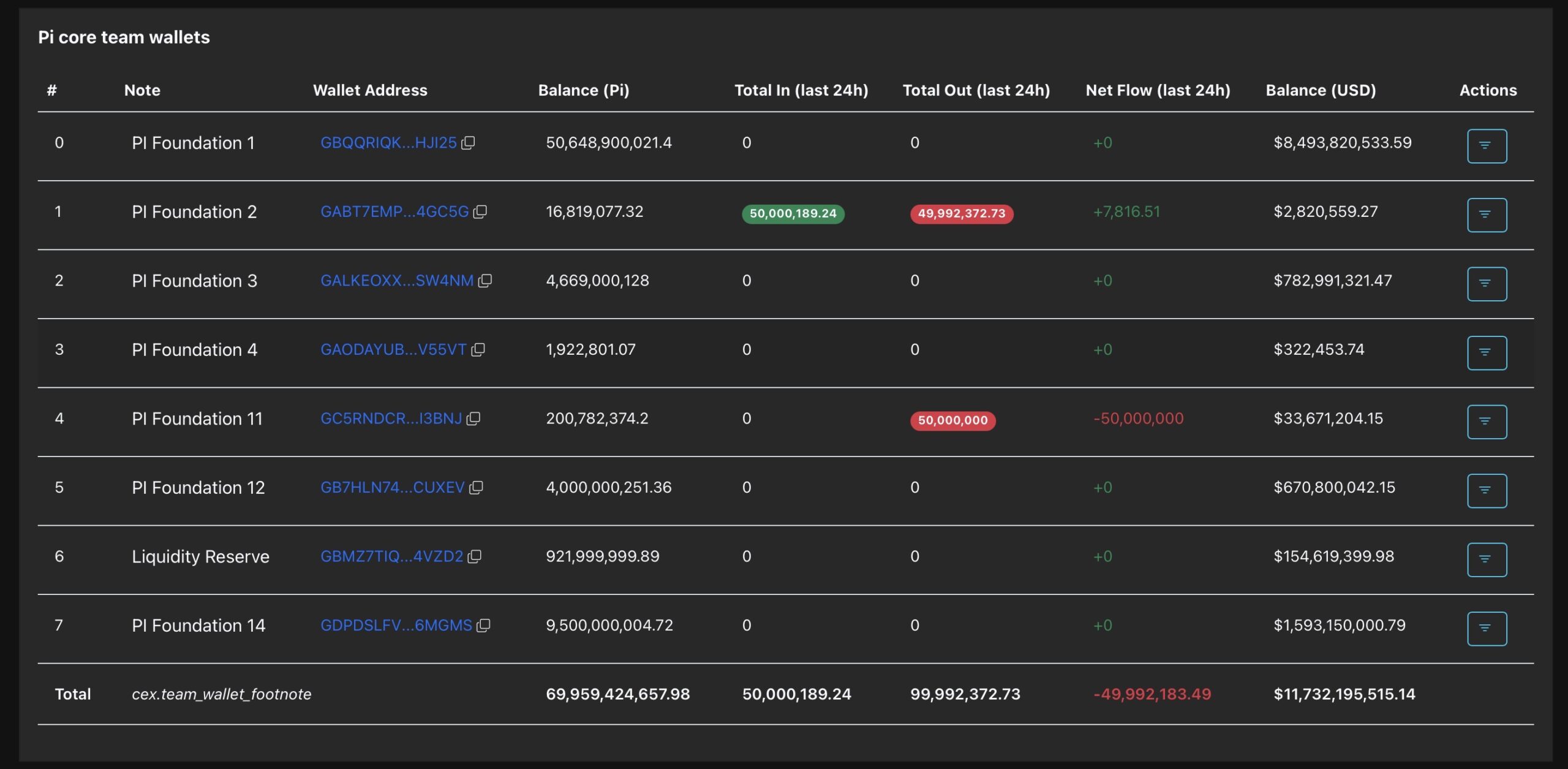
- Blockchain analytics reveal Pi Core Team wallets transferring substantial PI quantities to exchange-associated addresses
- Current trading price sits around $0.17, facing resistance at $0.20 while $0.12 represents critical support if $0.15 fails
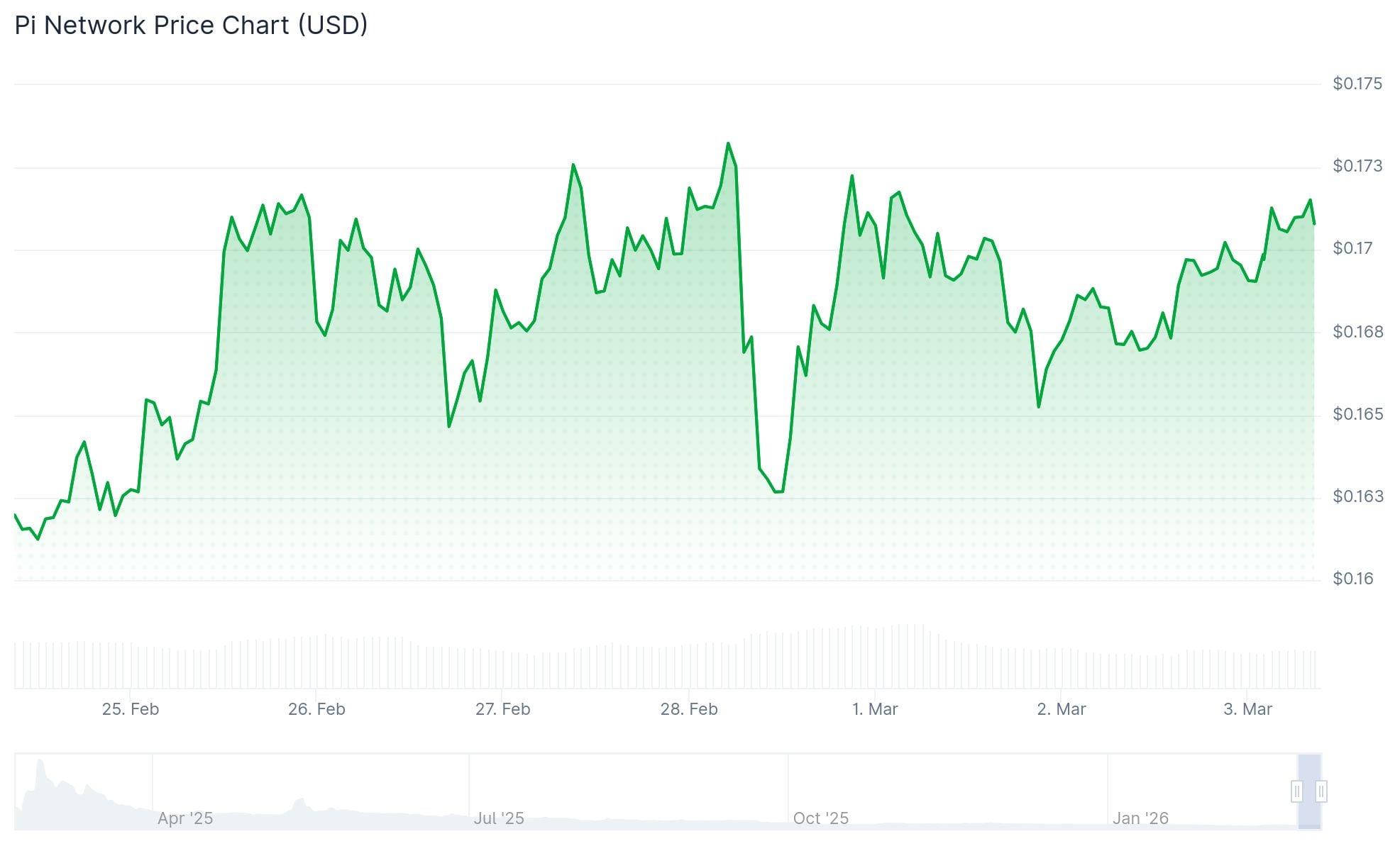
Pi Network’s native token is currently valued near $0.17 following a dramatic rebound from February’s historic bottom. The cryptocurrency plummeted to $0.13 before surging 60% to peak at $0.2056, though it has since retreated from those levels.
The recent upward momentum faces significant headwinds. Blockchain monitoring data reveals that wallets associated with the Pi Core Team have transferred substantial volumes of PI tokens to addresses connected with cryptocurrency exchanges over the last 48 hours.
Such transactions typically indicate potential liquidation activity. When major stakeholders offload holdings, it can absorb market demand and create price ceilings that limit upward movement.
The developments have sparked concern among community members. More than 35 million individuals participated in mining PI through mobile devices during the project’s initial phase, with many waiting extended periods for the Open Mainnet deployment.

Network Upgrade Still In Progress
Pi Network is actively transitioning its infrastructure to v22, with v23 planned as the subsequent milestone. The project has successfully completed two of six scheduled upgrade phases.
The outstanding upgrade components are projected to conclude by April. This technical enhancement aims to strengthen developer infrastructure, increase transaction throughput, bolster security protocols, and expand network capacity.
Major protocol upgrades have historically influenced token valuations. Whether this pattern materializes for PI depends partially on whether distribution pressure from large holders subsides.
Validator compensation is scheduled for distribution within this month. Payment allocations will reflect validator efficiency, transaction processing volume, and contributions to network stability.
KYC Progress and New Features
The Pi Network has processed KYC migration for over 16 million Pioneers. Recent implementation of artificial intelligence-powered tools has accelerated the verification timeline.
Pi Network’s development team has suggested plans for a KYC-as-a-Service offering, potentially positioning PI as a competitor to identity verification platforms such as Worldcoin and Humanity Protocol.
Price Levels to Watch
PI maintains its position around $0.17. Technical analysis indicates the $0.20 threshold has transitioned from a support floor to a resistance ceiling.
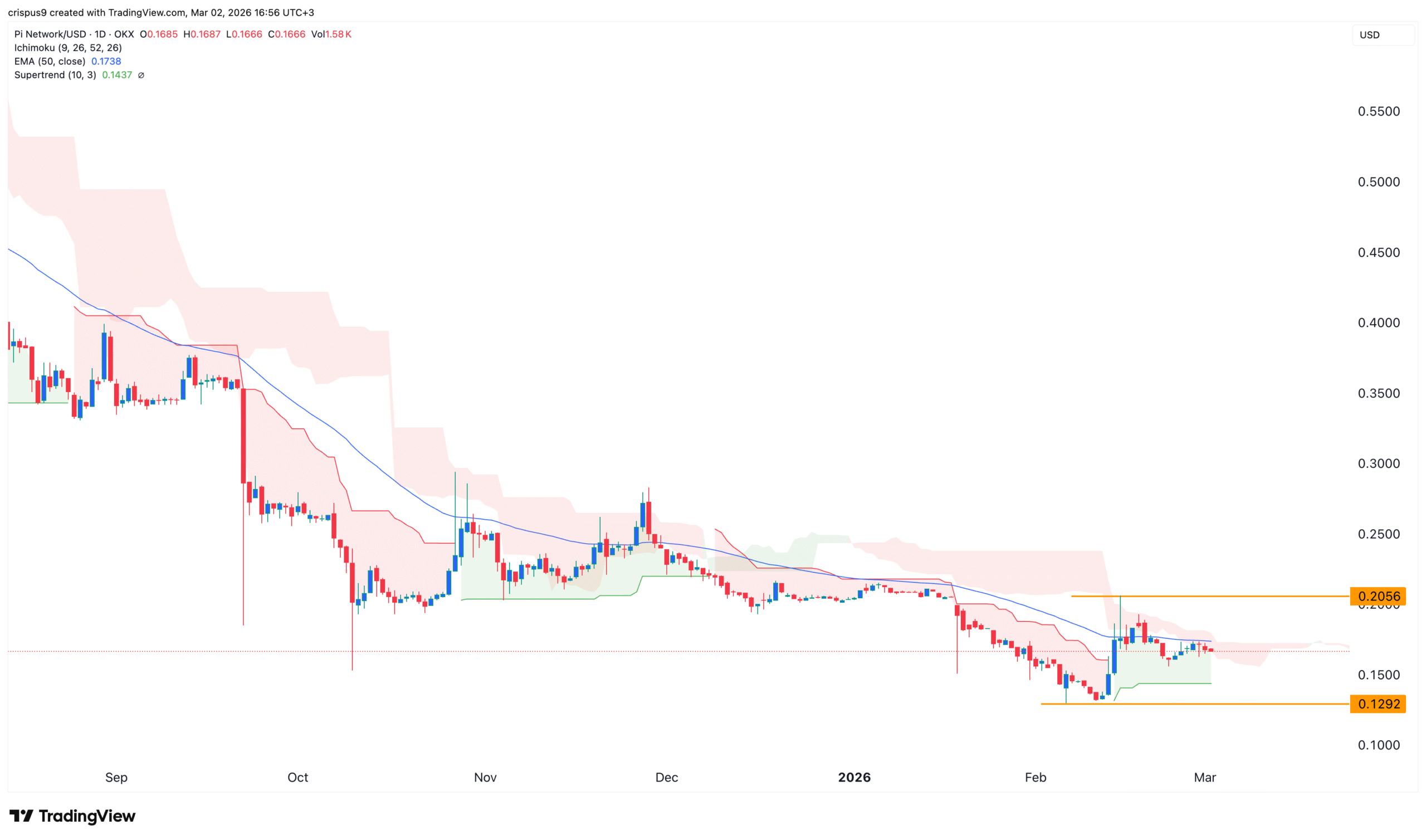
The Relative Strength Index registers near 40, suggesting subdued purchasing activity. A breakthrough above $0.20 accompanied by elevated trading volume would potentially disrupt the current bearish configuration.
Should the $0.15 level collapse, the subsequent significant support zone appears at $0.12. Reaching that point would represent a substantial decline from PI’s peak valuation.
Daily chart analysis shows the token attempting to penetrate above the Ichimoku cloud formation. The Supertrend indicator has shifted from bearish to bullish signals, while the price tests the 50-day moving average threshold.
A validated breakout exceeding $0.2056 could establish a trajectory toward $0.25, according to prevailing chart patterns.
Currently, PI exchanges hands near $0.17, with market participants focused on whether the token can overcome the $0.20 resistance barrier.
