


Key Takeaways
- BTC declined 1.5% on Friday to approximately $67,766 while preserving a modest 0.6% gain over the week, confined within a narrow price corridor
- Market observers characterize the downturn as a leverage washout rather than a directional shift, with purchasing activity resuming by Friday’s trading session
- Alternative cryptocurrencies delivered superior weekly performance versus Bitcoin — Cardano gaining 7%, Solana climbing 5.5%, Ethereum advancing 4.8%, BNB rising 4.3% — while XRP declined 0.1%
- Nvidia (NVDA) dropped 5.5% following quarterly results despite exceeding expectations, pressuring U.S. equity futures and triggering correlated crypto weakness
- Asian stock markets are heading toward their strongest February performance in over two decades, redirecting investment flows from American exchanges
Bitcoin experienced downward pressure on Friday as American equity futures retreated in the wake of Nvidia’s sharp decline. The cryptocurrency weakness reflects a wider risk-averse sentiment permeating international financial markets.
BTC changed hands near $67,766, representing a 1.5% intraday decline. The digital asset nevertheless maintained a 0.6% weekly advance despite Friday’s weakness.
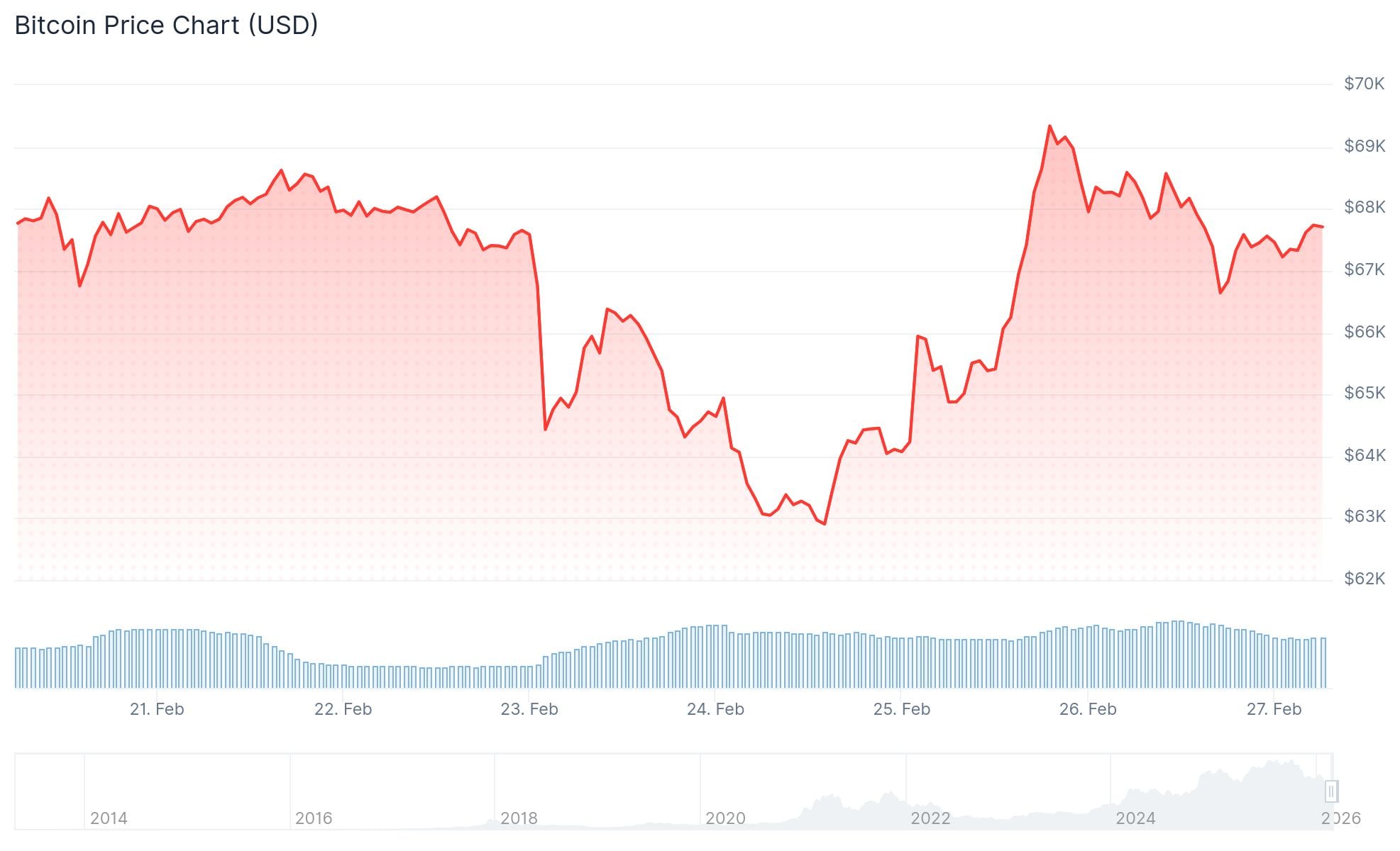
Ethereum declined 1.5% over 24 hours, settling just above $2,047. Both leading cryptocurrencies continue trading within confined ranges established since the February 5 market correction.
Nvidia shares tumbled 5.5% on Thursday session despite surpassing Q4 profit forecasts. The decline appeared to signal investor skepticism regarding the sustainability of elevated artificial intelligence infrastructure spending and associated market valuations.

Digital assets tracked equity weakness as market participants reduced exposure to higher-risk investments. This correlation has persisted throughout recent weeks, with Bitcoin demonstrating tight coupling to Nasdaq movements.
“The current price action reflects Bitcoin’s correlation with broader risk assets,” explained Daniel Reis-Faria, CEO of ZeroStack. “Following Nvidia’s earnings release, the Nasdaq retreated, and cryptocurrency markets exhibited similar behavior.”
Reis-Faria characterized the selling pressure as a technical adjustment rather than a fundamental shift. “Significant leverage accumulated during the recent rally, and when equities begin declining, crypto typically experiences initial de-risking activity.”
By Friday’s morning session, hourly cryptocurrency returns had recovered into positive territory. This reversal indicates renewed buying interest emerged after overnight liquidations eliminated excessive leveraged positions.
Alternative Cryptocurrencies Demonstrate Weekly Strength
Cardano topped major digital assets with a 7% weekly advance. Solana registered a 5.5% gain, Ethereum climbed 4.8%, and BNB increased 4.3%, each surpassing Bitcoin’s weekly performance.
XRP represented the sole major cryptocurrency posting negative seven-day returns, declining 0.1% weekly and 3.7% over 24 hours. This relative weakness proved notable considering most alternative tokens weathered identical macroeconomic pressures while preserving gains.
American Equity Futures and International Capital Movement
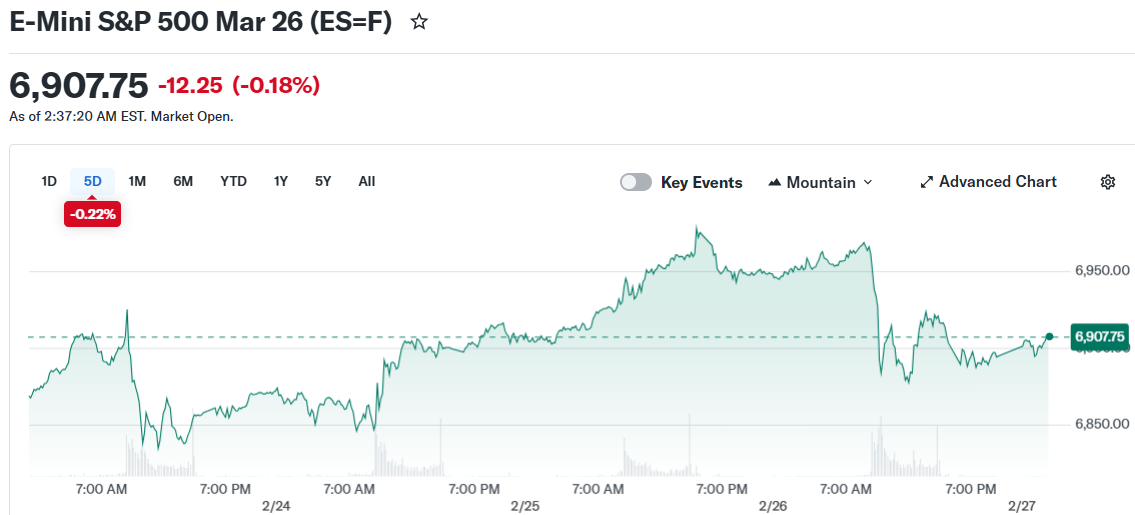
Dow Jones futures declined approximately 0.6%, S&P 500 futures retreated 0.4%, and Nasdaq 100 futures slipped 0.3% during Friday’s overnight session.
Asian equity markets are positioned for their most robust February showing since 1998. South Korean technology shares surged approximately 20% this month as investors repositioned into artificial intelligence infrastructure companies.
The MSCI Asia Pacific Index appears set to outpace S&P 500 returns for a consecutive third month. This geographic rotation has diverted investment capital from American market venues.
Block’s stock price surged over 23% in after-hours trading following CEO Jack Dorsey’s announcement of workforce reductions approaching 50%, attributing the restructuring to artificial intelligence capabilities transforming operational requirements.
Market attention now shifts to Friday’s producer price index release, with economic forecasters anticipating a 0.3% monthly increase in both headline and core wholesale inflation metrics.
