



TLDR
-
Major U.S. equity indexes posted declines as heightened Middle East geopolitical tensions prompted investors to exit risk-oriented positions worldwide.
-
Crude oil prices surged dramatically, with Brent temporarily surpassing $82 per barrel before pulling back moderately.
-
All three major benchmarks—the Dow, S&P 500, and Nasdaq—posted losses amid worries about inflation and supply shocks.
-
Defense contractors and energy producers rallied while airline carriers and technology shares faced selling pressure.
-
Market participants are closely monitoring inflation trajectories and the imminent release of U.S. employment figures.
American equity markets experienced notable downward pressure as Middle East geopolitical risks escalated. Market participants pivoted away from higher-risk assets while crude oil experienced significant gains.
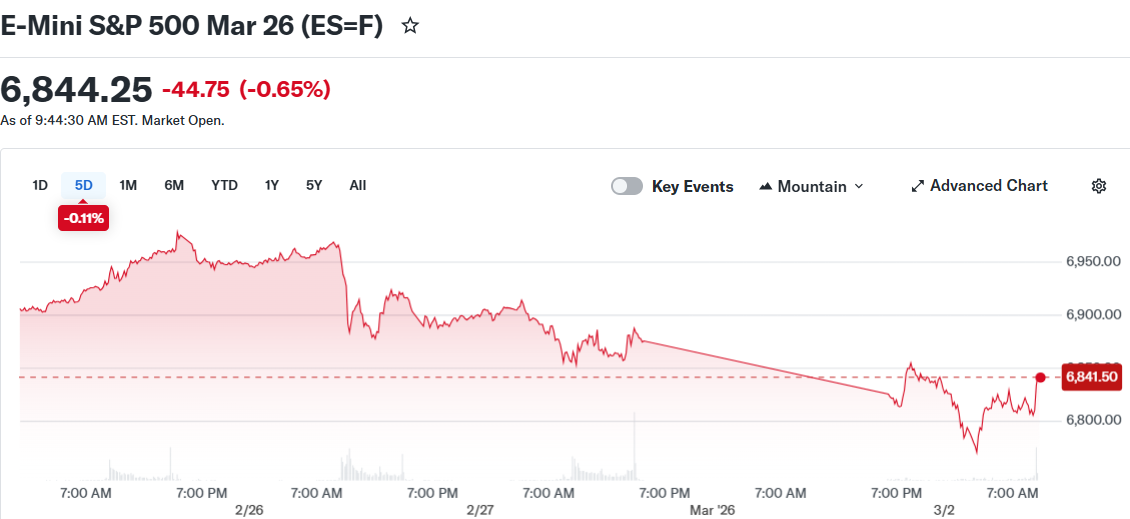
The Dow Jones Industrial Average shed over 500 points during morning trade. Both the S&P 500 and Nasdaq Composite dropped approximately 1% as market turbulence intensified.
The decline came after military operations involving the United States, Israel, and Iran. Retaliatory strikes and warnings targeting energy facilities amplified market jitters.
Oil prices experienced a sharp rally as market participants priced in possible supply interruptions. Brent crude temporarily spiked as much as 13% to exceed $82 per barrel before retreating under $80.

West Texas Intermediate crude experienced similar upward momentum. Prices hovered around $73 per barrel, representing roughly an 8% gain.
Energy Markets and Inflation Pressures
The Strait of Hormuz emerged as a critical concern for energy traders. Potential disruptions to shipping lanes through this corridor heightened worries about prolonged supply tightness.
Approximately 20% of worldwide oil output passes through this strategic waterway. Reduced tanker movements have amplified supply shortage expectations throughout energy markets.
Elevated crude prices can reshape inflation forecasts. Market observers are evaluating how persistent energy cost increases might impact central bank policy decisions.
Treasury yields advanced throughout the trading day. Financial markets lowered their projections for imminent interest rate reductions amid renewed inflation anxieties.
Gold prices advanced as market participants gravitated toward established safe-haven instruments. The greenback also appreciated relative to other major global currencies.
Industry Performance and Trading Dynamics
Energy sector equities climbed alongside rising crude prices. ExxonMobil posted gains while military contractors such as Lockheed Martin attracted buyer attention.
Tourism and travel equities faced downward pressure. Airline operators including Delta Air Lines retreated on elevated fuel expense concerns.
Technology sector stocks experienced broad-based weakness. Artificial intelligence and software companies remained unstable following recent market fluctuations.
Fixed-income securities declined as yields rose, mirroring inflation anxieties connected to elevated energy expenses. Portfolio managers recalibrated holdings throughout multiple asset categories.
The forthcoming U.S. employment report has become a critical focal point for financial markets. Analysts anticipate employment gains will decelerate relative to the prior month’s figures.
International financial markets maintain heightened sensitivity to Middle East developments. Crude oil price trajectories and inflation expectations remain primary drivers of trading behavior.
