


Key Takeaways
- Gold experienced an 8%+ weekly decline, marking its steepest drop since early 2020
- The late February U.S.-Israel military action against Iran sparked inflation concerns, pressuring precious metals
- Central banking institutions worldwide, including the Federal Reserve and ECB, maintained current rates with minimal cut signals
- Silver witnessed a sharper decline of nearly 10% weekly, demonstrating heightened vulnerability to currency fluctuations
- Gold prices fell beneath the $4,800–$5,200 trading corridor established since conflict escalation
Precious metal markets showed modest Friday gains, though gold remains positioned for its third consecutive week of losses. The spot market advanced approximately 1.4% to reach $4,715 per ounce, with futures contracts posting gains near 2.4%.
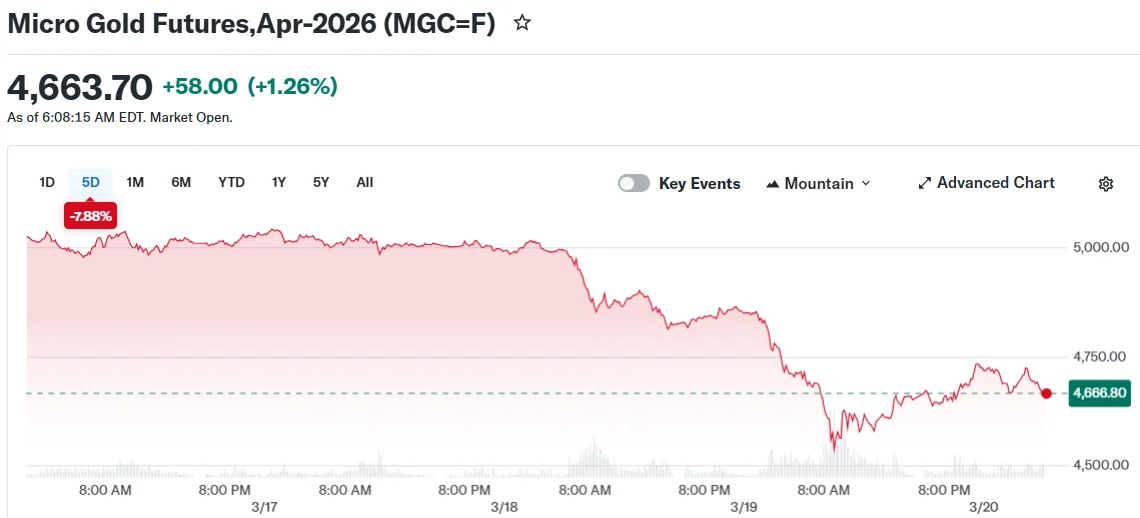
Friday’s modest rebound couldn’t offset the broader weekly pattern, which saw gold prices decline over 8%. This represents the yellow metal’s most significant weekly deterioration since the beginning of 2020.
Before this week’s selloff, gold had maintained a stable trading channel between $5,000 and $5,200 following the commencement of U.S.-Israel military operations against Iran in late February. The current downturn has driven prices substantially beneath this established range.
The ongoing Middle Eastern conflict has fueled anxieties regarding energy market disruptions and accelerating inflation. Crude oil reached nearly four-year peak levels this week following attacks on critical energy infrastructure throughout the region.

Monetary authorities globally have reacted to these inflationary pressures. Australia’s central bank implemented a rate increase, while major institutions including the Federal Reserve, European Central Bank, Swiss National Bank, and Bank of Japan maintained existing policy rates.
These banking authorities collectively communicated that monetary easing remains distant. This messaging particularly damaged gold, as the precious metal typically benefits from lower borrowing costs.
The Federal Reserve’s Wednesday decision to hold rates constant included warnings about potential further inflation acceleration. While gold traditionally serves as an inflation protection mechanism, elevated interest rates enhance the relative attractiveness of interest-bearing investments.
Dollar strength added additional downward pressure on precious metals. Currency appreciation makes gold costlier for international purchasers, potentially suppressing global demand.
Friday saw dollar weakness provide temporary relief for gold. Multiple central banks indicated potential rate increases, strengthening their currencies relative to the U.S. dollar.
Silver Experiences Steeper Losses
Silver posted nearly 10% weekly losses, exceeding gold’s percentage decline. Friday’s spot market gained 0.5% to $73.14 per ounce, though this provided only limited relief from the week’s overall losses.
OCBC analysts highlighted silver’s greater vulnerability to dollar movements and market risk appetite compared to gold. The institution indicated potential downward revisions to their silver price forecasts.
Silver additionally faces headwinds from potential economic deceleration, which could diminish industrial consumption. The metal serves critical functions in photovoltaic panels and electrical applications.
Platinum recorded a 2.9% weekly decline despite Friday’s 2.1% recovery to approximately $2,016 per ounce.
Market Expert Perspectives
Nicholas Frappell, serving as global head of institutional markets at ABC Refinery, informed Reuters that gold maintained crucial technical support thresholds on weekly charts.
He projected potential recovery movement toward the $4,800 breakdown level. Frappell additionally observed that market participants had positioned for selling rather than accumulating gold following its disappointing performance throughout the conflict period.
Spot gold has now retreated more than 10% since the February 28 U.S.-Israel strike against Iran.
