



TLDR
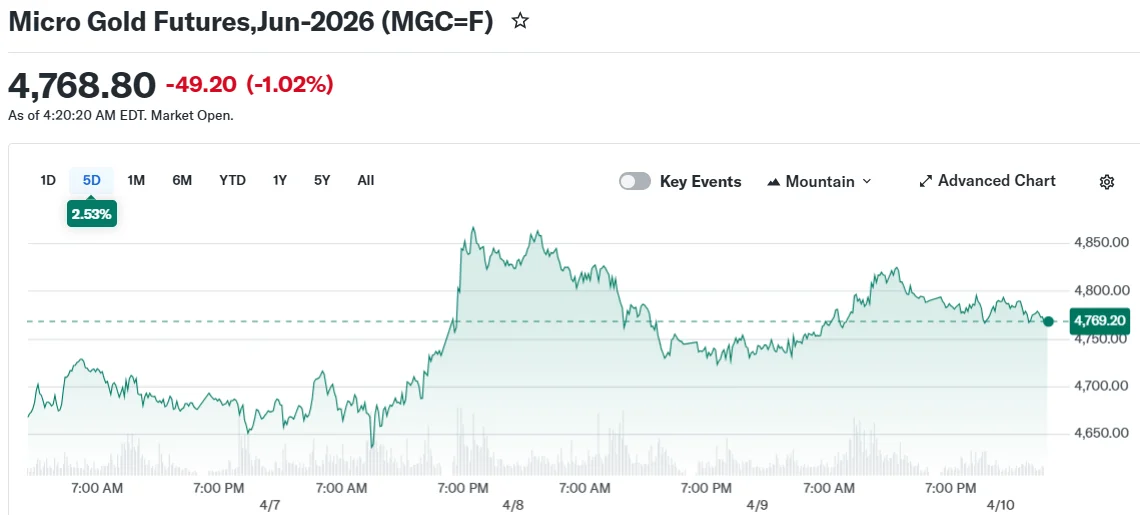
- Gold maintained levels around $4,765/oz, positioned for a third consecutive weekly advance of approximately 2%
- An unstable US-Iran ceasefire and scheduled weekend negotiations in Islamabad are maintaining market uncertainty
- Central banks from Poland to China are maintaining consistent gold accumulation patterns
- The dollar’s weakness throughout the week enhanced gold’s affordability for international purchasers, bolstering valuations
- Friday’s US CPI release may influence Federal Reserve monetary policy outlook
The yellow metal maintained stability around $4,765 per ounce on Friday, positioning itself for a third consecutive weekly advance. This approximately 2% weekly increase unfolds as market participants monitor the precarious ceasefire arrangement between Washington and Tehran.
The ceasefire declaration made earlier this week initially provided market relief. However, complications emerged rapidly. Military operations persisted in Lebanese territory, while Iranian officials contradicted reports claiming their delegation had reached Islamabad for scheduled weekend negotiations with American counterparts.
President Trump expressed “optimism” regarding potential peace arrangements. Simultaneously, he issued warnings to Iran concerning fees imposed on vessels navigating the Strait of Hormuz, a critical passage for international petroleum shipments that remains predominantly inaccessible.
Despite achieving weekly gains, the precious metal has declined approximately 10% following the conflict’s initiation in late February. Certain market participants liquidated gold positions to offset losses across alternative asset classes, diminishing its traditional safe-haven attraction.

Oil markets were tracking their most significant weekly decline since June. Equity markets rebounded during the period, while the US Dollar Index dropped over 1%, enhancing gold’s appeal for non-American purchasers.
Central Banks Maintain Accumulation Strategy
Continued central bank acquisitions have provided consistent underlying support for gold valuations. Polish monetary authorities confirmed their commitment to achieving 700 tons in gold reserves. Chinese institutions added approximately 5 tons during March, representing their most substantial monthly acquisition in more than twelve months.
ANZ Banking Group projects central bank purchases will total roughly 850 tons throughout 2026, with recent price corrections likely stimulating additional buying activity.
Elevated oil prices stemming from the conflict have amplified inflation forecasts. This development has prompted market participants to anticipate potential delays in central bank interest rate reductions or possible rate increases, presenting a challenge for gold given its non-yielding nature.
Inflation Data Takes Center Stage
American consumer expenditure registered minimal growth during February, preceding the conflict’s commencement, according to Bureau of Economic Analysis statistics. Friday’s March consumer price index release was anticipated to reveal the most substantial monthly acceleration since June 2022.
An elevated inflation reading might push rate expectations upward, creating additional headwinds for the precious metal. Conversely, a prolonged conflict could decelerate economic expansion and ultimately necessitate rate reductions, which would support gold prices.
Spot gold traded at $4,766.30 per ounce during Friday afternoon Singapore trading hours. Silver advanced 0.9% to reach $76.03 per ounce. Platinum declined 1.5%, while palladium registered gains. Copper futures demonstrated modest increases across both London Metal Exchange and US trading platforms.
Iran’s rejection of claims regarding active negotiations in Islamabad introduced additional uncertainty to the weekend outlook.
