



Key Highlights
- Gold advanced 0.4% to approximately $4,509/oz on Monday following a decline to $4,000/oz the previous week
- Technical analysis from OCBC points to critical resistance zones at $4,624, $4,670, and $4,850/oz
- Weekend missile strikes on Israel by Houthi forces amplified concerns about expanding regional warfare
- Iranian attacks on aluminum production sites in Bahrain and UAE drove aluminum prices 5.4% higher
- Gold remains under pressure from elevated energy costs and dollar strength, posting a 13% monthly decline
Precious metal markets saw gold prices tick upward during Asian trading hours Monday, with spot prices gaining 0.4% to settle at $4,509.51 per ounce. Gold futures contracts similarly advanced 0.4%, climbing to $4,537.40 per ounce.
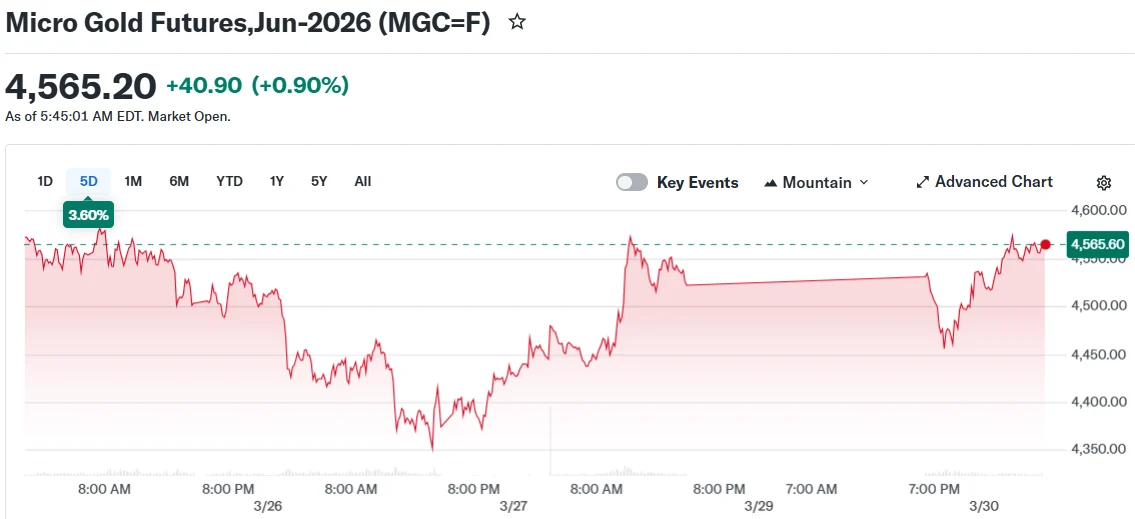
This upward movement follows a volatile trading period that witnessed spot gold plummet to $4,000 per ounce before staging a recovery toward the $4,500 mark by Friday’s close.
Analysts at ANZ noted that bargain hunters reentered the market following what they characterized as the most severe gold liquidation event in recent years. Aggressive selling in gold-backed exchange-traded funds contributed to a monthly price decline exceeding 15%.
Despite Monday’s gains, gold continues to trade more than 13% lower for the month. The combination of an appreciating U.S. dollar and surging crude oil prices has constrained any meaningful price recovery.

Brent crude prices soared past $115 per barrel following Yemen’s Houthi militia’s entry into the conflict and their acknowledgment of launching missile attacks against Israeli targets during the weekend.
Market strategists at OCBC characterized gold’s bounce from weekly lows as predominantly technical in nature. While they observed the relative strength index climbing out of oversold conditions, they cautioned this signal alone doesn’t validate a durable uptrend.
Their analysis highlighted crucial resistance thresholds for spot gold positioned at $4,624, $4,670, and $4,850 per ounce. Inability to breach and maintain levels above these marks could signal continued weakness in gold trading, according to their assessment.
Rising energy costs present an additional headwind. OCBC warned that sustained high energy prices risk maintaining elevated inflation pressures, potentially driving Treasury yields upward and creating a less favorable backdrop for gold investment.
Iran Conflict and Escalation Threats
The ongoing U.S.-Israel military campaign against Iran shifted into a new chapter over the weekend. Yemen’s Houthi movement, which receives backing from Tehran, launched attacks against Israel, sparking heightened anxiety about a widening conflict that could threaten critical Red Sea maritime routes.
Tehran announced its readiness to defend against a potential ground offensive by U.S. forces, following intelligence reports indicating Washington was deploying thousands of additional military personnel to the region.
In remarks to the press, President Trump suggested that diplomatic discussions with Iranian officials were progressing favorably and that an agreement might be within reach. He declined to provide specific timing details while simultaneously cautioning about additional strikes targeting Tehran.
Trump had previously postponed a deadline for military action against Iran’s energy sector until early April.
Aluminum Prices Surge Following Iranian Military Operations
Iranian forces launched strikes against aluminum manufacturing complexes in Bahrain and the United Arab Emirates during weekend operations. London Metal Exchange three-month aluminum futures contracts surged 5.4% to reach $3,461 per metric ton, accumulating gains of more than 10% for the month.
Aluminium Bahrain issued a statement confirming that its production facilities were hit and indicated the company was conducting damage assessments.
Emirates Global Aluminium reported that its Al Taweelah manufacturing plant located in Abu Dhabi suffered significant damage from coordinated Iranian drone and missile bombardments.
ANZ market analysts issued warnings that approximately 4 to 5 million metric tons of aluminum exports from the Gulf region face disruption, with no readily available alternative sources to compensate for the supply deficit.
Other precious metals saw mixed trading Monday, with silver declining 0.9% to $69.09 per ounce, while platinum advanced 1.8% to reach $1,898.73 per ounce.
