



TLDR
- BTC climbed back above $70,000 following a weekend decline to approximately $65,000
- Crude oil’s retreat from roughly $120 down to $90 per barrel reduced inflation concerns
- Market optimism grew after Trump discussed possible resolution to Iran conflict
- Bitcoin ETFs in the U.S. recorded $568 million in net inflows during the previous week; total inflows exceed $55 billion
- Polymarket probability of BTC reaching $75,000 in March surged from 34% to 56% within 24 hours
Bitcoin experienced a significant decline to approximately $65,000 during the weekend before staging a comeback above $70,000 by Tuesday morning in Asian markets. The downturn was sparked by oil price spikes following supply disruptions in the Strait of Hormuz, which pushed both WTI and Brent crude beyond the $100 per barrel threshold for the first time in recent years.
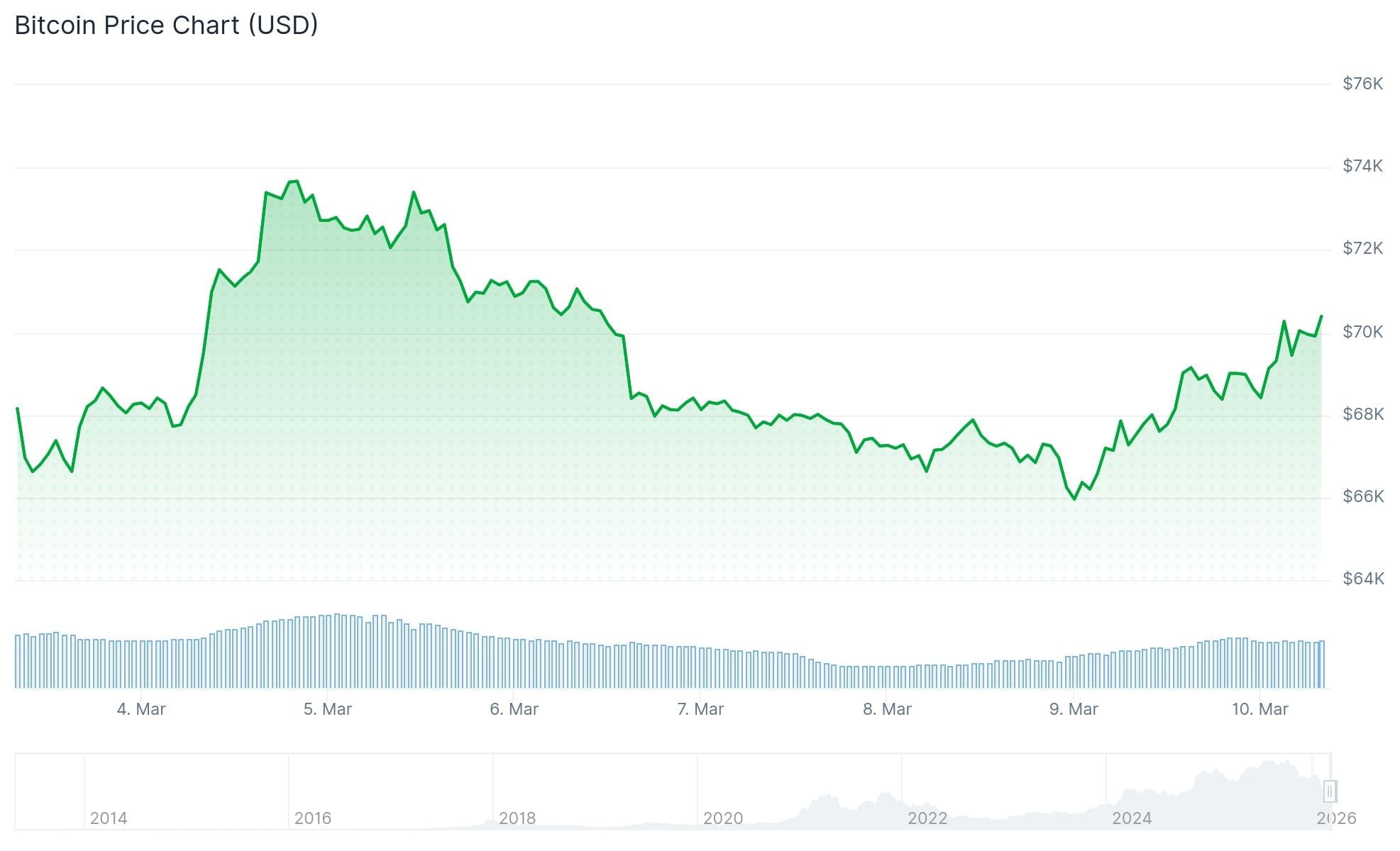
The rebound gained traction as crude prices pulled back and overall market conditions brightened.
President Donald Trump indicated that the ongoing Iran-related conflict might conclude in the near term. While acknowledging a resolution this week was improbable, he warned of a response “20 times harder” should Iran attempt to block the Strait of Hormuz.
Crude oil prices dropped back toward $90 per barrel on Tuesday after approaching $120 on Monday. This decline alleviated concerns about worldwide inflation pressures that had unsettled financial markets.

Asian equity markets showed strength on Tuesday, recovering portions of Monday’s declines. U.S. markets also posted positive results overnight, with Bitcoin following the improved appetite for risk assets.
Bitcoin ETF Demand Continues Strong
U.S. spot Bitcoin exchange-traded funds maintained consistent investor interest despite market turbulence. Net inflows reached approximately $568 million during the preceding week, down from $787 million the week before, based on SoSoValue tracking.
Total cumulative net inflows for all U.S. spot Bitcoin ETF offerings have now surpassed $55 billion. Preliminary figures indicated Monday’s inflows were approximately $57 million, though complete data from all providers wasn’t available at publication time.
Market maker Enflux observed that Bitcoin demonstrated greater resilience compared to equities and certain traditional safe-haven assets during the initial market decline. The company reported BTC briefly dropped under $66,000 before finding stability within the $66,000–$68,000 range.
Market Expectations Pivot Dramatically
Polymarket, a decentralized prediction platform, revealed a dramatic shift in trader outlook. The likelihood of Bitcoin hitting $75,000 during March skyrocketed from roughly 34% to 56% within one day as BTC recaptured the $70,000 threshold.
Glassnode analysts observed that momentum indicators, ETF demand patterns, and profitability measurements are showing enhancement. However, they cautioned that capital inflows remain subdued and speculative market participation continues to be constrained.
From a technical analysis perspective, Bitcoin encounters resistance zones near $69,250 and $69,600. Breaking decisively above $69,600 could establish a path toward $70,500 and subsequently $72,000.
Critical support zones are positioned at $68,000 and $67,500. The primary support floor remains around $65,500.
Market participants are currently focused on upcoming U.S. economic releases: the January CPI report scheduled for Wednesday and the February PCE index data expected Thursday.
