



Key Highlights
- Direct diplomatic negotiations between Washington and Tehran took place in Islamabad, Pakistan from April 11–12 to resolve ongoing tensions
- JD Vance, the Vice President, announced no agreement was secured after approximately 21 hours of diplomatic discussions
- Tehran’s unwillingness to abandon its nuclear weapons development remained the primary obstacle to peace
- Bitcoin prices declined approximately 2% to $71,500 in response to the failed diplomatic effort
- XRP decreased 1.69% to $1.33, while Ethereum slipped 1.26% to $2,216, with cryptocurrency markets broadly losing 1–3%
Diplomatic representatives from the United States and Iran convened in Pakistan’s capital on April 11 for unprecedented direct negotiations—the first high-stakes bilateral discussions between the nations in many years. These talks emerged following several weeks of military confrontation that erupted on February 27, when combined U.S.-Israeli forces executed “Operation Epic Fury,” striking Iranian military installations and nuclear facilities. Supreme Leader Ali Khamenei was killed in the operation.
The military escalation created significant disruption to worldwide energy markets and destabilized international financial systems. Critical maritime corridors near the Strait of Hormuz, which handles substantial portions of global petroleum transport, experienced complications due to mounting tensions.
Pakistan assumed a pivotal intermediary position, providing facilities for both negotiating teams. Previous attempts at establishing a ceasefire had achieved temporary reductions in military activity, but sustainable peace remained elusive prior to this diplomatic engagement.
Prior to the negotiations, Tehran allegedly pursued sanctions removal, release of restricted financial assets, and comprehensive security assurances. Washington maintained demands for rigorous constraints on Iran’s atomic program and oversight of strategic maritime passages.

Esmaeil Baqaei, Iran’s Foreign Ministry spokesperson, characterized the previous 24 hours of talks as addressing the Strait of Hormuz situation, nuclear development concerns, compensation for war damages, sanctions relief, and comprehensive conflict termination. He stated that success hinged on “the seriousness and good faith of the opposing side.”
Baqaei additionally urged Washington to refrain from “excessive demands and unlawful requests” while honoring Iran’s “legitimate rights and interests.”
Diplomatic Efforts Conclude Without Resolution
Following approximately 21 hours of intensive negotiations, Vice President JD Vance announced at a media briefing that diplomats had failed to secure an agreement.
“The bad news is that we have not reached an agreement,” Vance stated. He noted that the United States had communicated its position unambiguously throughout the discussions.
According to Vance, the fundamental obstacle involved Iran’s refusal to pledge abandonment of nuclear weapons development. “The simple fact is that we need to see an affirmative commitment that they will not seek a nuclear weapon,” he explained.
The American diplomatic team departed Pakistan without achieving a settlement. Future developments in the standoff remain uncertain.
Cryptocurrency Markets Experience Downturn Following Announcement
Digital asset markets responded swiftly following Vance’s public statement. Bitcoin declined to approximately $71,500, representing a roughly 2% decrease for the trading session.
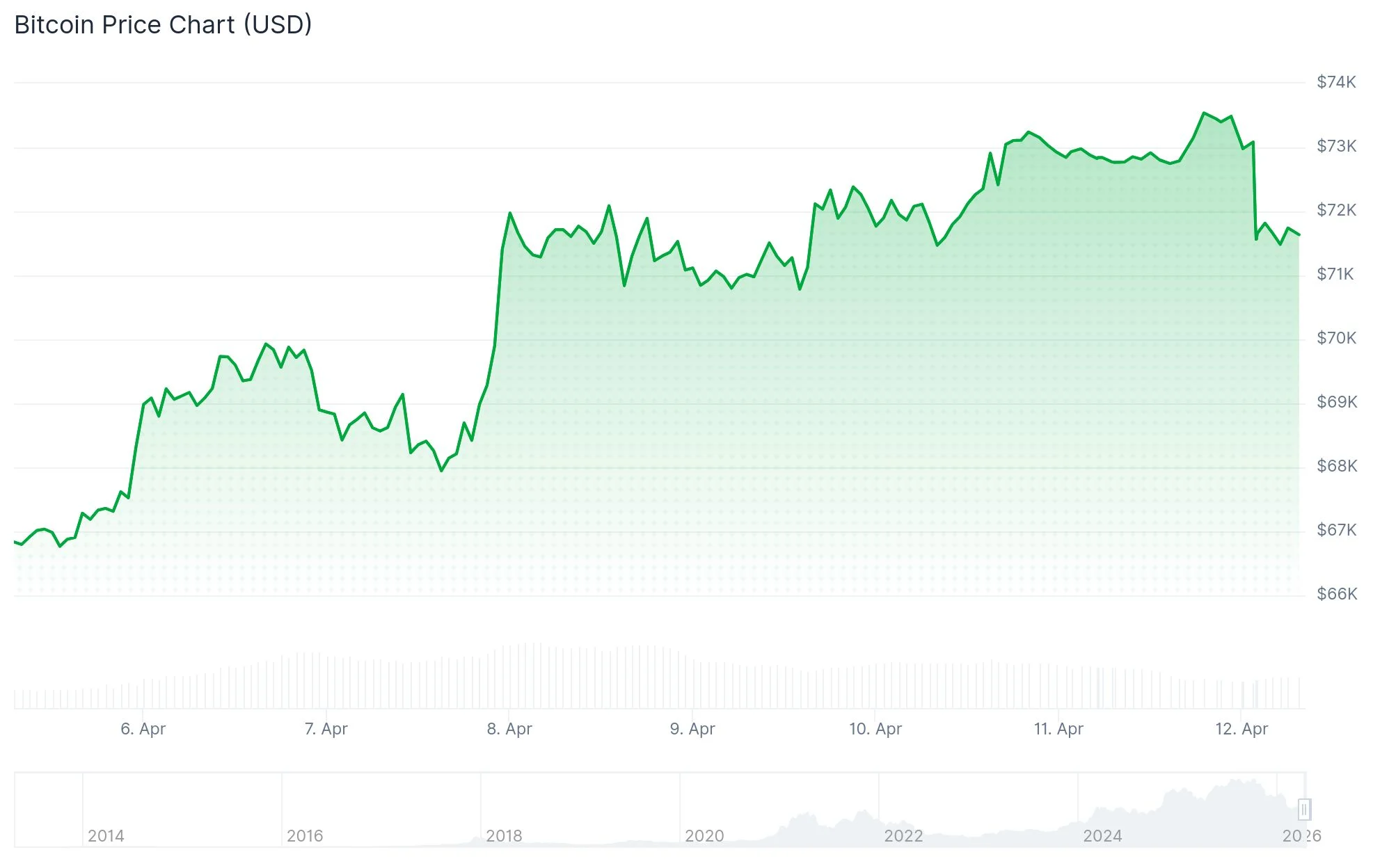
Short-term trading charts revealed a pronounced selloff directly correlated with news coverage of the negotiation failure.
XRP retreated 1.69% to $1.33. Ethereum fell approximately 1.26% to $2,216. Widespread declines throughout cryptocurrency markets spanned from 1% to 3%.
Absent a diplomatic resolution, tensions between Washington and Tehran persist as of April 12.
