


Key Highlights
- Andy Jassy, Amazon’s CEO, rejected concerns about an AI investment bubble in his latest shareholder communication
- The AWS AI division now brings in more than $15 billion annually, accounting for approximately 10% of total AWS revenue
- Amazon’s in-house chip division has experienced 100% growth, reaching a $20 billion annual run rate
- The CEO indicated the chip division could reach $50 billion in revenue if sold externally — matching Broadcom’s AI semiconductor business scale
- Amazon announced plans for $200 billion in capital spending for 2026, with AI infrastructure as the primary focus
In his latest annual letter to shareholders, Amazon CEO Andy Jassy offered a forceful rebuttal to growing concerns about excessive AI infrastructure investment.
“My strong conviction, at least for Amazon, is that the answers are no, no, and yes,” Jassy stated, addressing questions surrounding AI hype, bubble concerns, and whether substantial returns justify the investment.
Thursday’s letter marked the inaugural disclosure of specific revenue figures for Amazon‘s AWS AI services. The division is currently producing over $15 billion in annualized revenue, calculated from first-quarter results.
This amount constitutes roughly 10% of AWS’s total $142 billion annual revenue run rate. The market had been anticipating this data point for several years.

According to Jassy, AI revenue continues to climb “ascending rapidly,” and AWS would be experiencing even stronger growth without industry-wide capacity limitations.
The e-commerce and cloud giant has pledged $200 billion in capital investment this year, primarily targeting AI infrastructure development. This enormous spending commitment sparked investor anxiety earlier this year and intensified discussions about a potential industry-wide investment bubble.
Jassy challenged this narrative directly. “We’re not investing on a hunch,” he explained, noting that Amazon has already secured customer agreements covering a substantial portion of AWS capital expenditures planned through 2026.
In-House Semiconductor Division Shows Explosive Growth
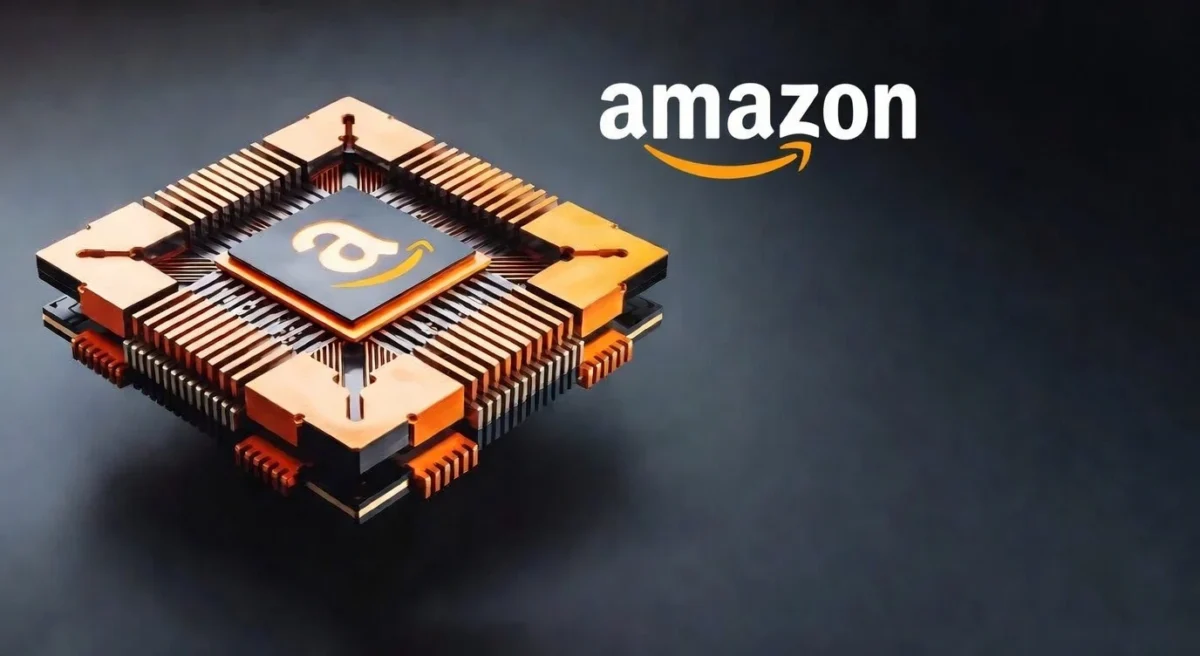
Among the most noteworthy revelations in the shareholder letter was the performance update on Amazon’s proprietary chip operation. The division — encompassing Trainium AI processors, Graviton chips, and Nitro networking components — has achieved a 100% increase in its annualized revenue run rate, surpassing $20 billion.
This represents significant growth from the $10 billion figure Amazon reported with its fourth-quarter earnings.
Jassy expanded on this point, suggesting that if Amazon redirected all its chip production this year toward external customers, the division could potentially generate $50 billion in annual revenue.
To put this in perspective, Broadcom’s AI semiconductor division is projected to deliver approximately $10.7 billion this quarter alone. Broadcom currently maintains a market capitalization of $1.66 trillion, driven substantially by its semiconductor business.
External Chip Sales Under Consideration
Jassy suggested that Amazon might eventually offer its chips for direct purchase to external customers, positioning the company as a competitor to Nvidia and Broadcom — ironically, two suppliers Amazon currently relies on.
“There’s so much demand for our chips that it’s quite possible we’ll sell racks of them to third parties in the future,” he indicated.
Google has already explored a similar strategy. Last October, the tech giant announced an agreement to provide Anthropic with one million custom AI processors, a deal valued at tens of billions of dollars.
Reuters previously disclosed that Jassy informed an internal company meeting that AWS could potentially achieve $600 billion in annual revenue — twice his previous projection — fueled predominantly by AI services.
The company has also implemented workforce reductions of approximately 30,000 positions in recent months, streamlining underperforming divisions and adjusting post-pandemic staffing levels.
Amazon stock experienced gains of approximately 1.5% in premarket trading session following the shareholder letter’s publication.
