



Key Highlights
- Precious metal prices retreated nearly 2% following weekend confrontations at the Strait of Hormuz
- US Navy forces intercepted an Iranian vessel, with Washington and Tehran trading accusations over ceasefire compliance
- Crude oil prices jumped as much as 7%, triggering renewed inflation concerns that pressured gold
- The US dollar strengthened by 0.2%, further weighing on the dollar-denominated commodity
- Bullion has shed approximately 9% since hostilities with Iran escalated in late February
Precious metal markets experienced significant selling pressure Monday as escalating confrontations in the strategically vital Strait of Hormuz sent shockwaves through global markets, propelling crude oil higher and pulling bullion down nearly 2% at its intraday bottom.
Spot gold declined 0.9% to reach $4,786 per ounce during Asian market hours. Gold futures contracts retreated 1.5% to settle at $4,804 per ounce. While both benchmarks managed to claw back some losses from their session nadirs, downward momentum persisted throughout the trading day.
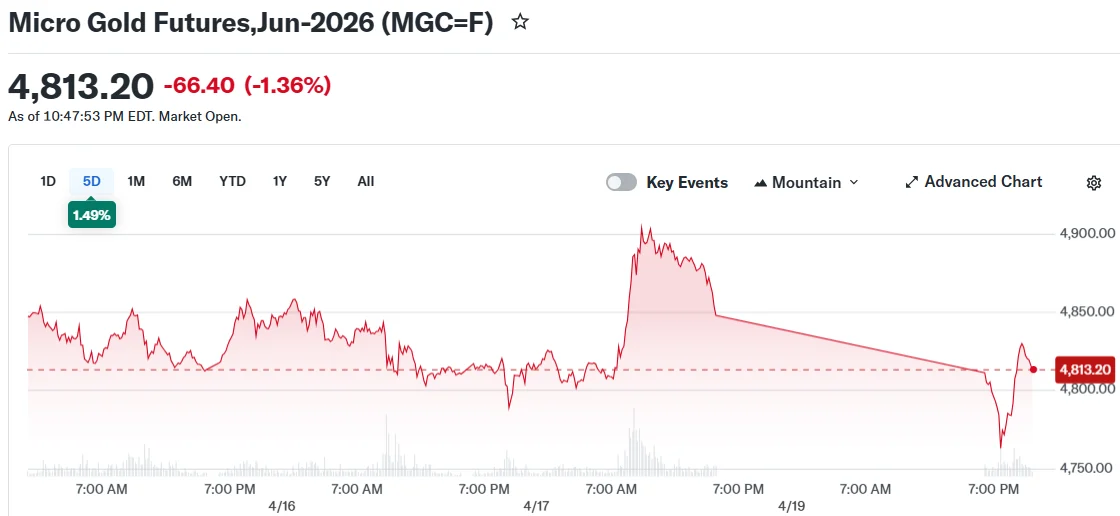
President Donald Trump revealed during weekend statements that US Naval forces opened fire on and commandeered an Iranian-registered cargo vessel that attempted to breach a maritime blockade. Tehran responded with warnings that any shipping activity approaching the Strait of Hormuz would be interpreted as violations of the fragile ceasefire agreement.
Multiple commercial ships were compelled to reverse course from the critical shipping channel within hours of Iran’s Friday announcement that the waterway had reopened. The abrupt about-face intensified skepticism regarding prospects for lasting peace.

The temporary 14-day cessation of hostilities is scheduled to lapse Tuesday. While Trump indicated optimism about potential diplomatic progress, he simultaneously revived warnings about striking Iranian critical infrastructure. Iranian officials countered that meaningful dialogue appears increasingly unlikely.
Diplomatic negotiations were planned for Islamabad, though Iranian state media indicated Tehran has not confirmed participation in any upcoming summit meetings.
Energy Markets and Currency Fluctuations Apply Downward Force
Oil prices rocketed upward by as much as 7% Monday following sharp declines in the prior trading session. Natural gas futures similarly advanced. The dramatic surge in energy commodity valuations rekindled anxieties about inflationary pressures stemming from the persistent supply disruption.
Strengthening in the US dollar compounded challenges for gold investors. The Bloomberg Dollar Spot Index advanced 0.2%, increasing the cost of gold for international buyers transacting in alternative currencies.
Gold has now surrendered roughly 9% of its value since military confrontations with Iran commenced in late February. The regional conflict has triggered an energy supply crisis that elevated inflation readings and diminished expectations for central bank rate reductions, thereby eroding the attractiveness of non-interest-bearing assets such as precious metals.
Federal Reserve Leadership and Monetary Policy Expectations
Investors are closely monitoring Tuesday’s US Senate confirmation proceedings for Kevin Warsh, President Trump’s nominee to chair the Federal Reserve.
Market analysts suggest that any indication Warsh leans toward accommodative monetary policy could provide support for gold valuations. Conversely, a more hawkish posture on inflation management might accelerate downward price movement.
Strategists at OCBC indicated their view that gold’s trajectory will continue to be dictated by overall risk appetite and developments in ceasefire negotiations. They advised clients to accumulate positions during price weakness rather than pursuing momentum, projecting a near-term trading band between $4,700 and $4,900 per ounce.
Lorenzo Portelli, head of cross asset strategy at Amundi, expressed his assessment that the inflationary consequences of the energy supply shock will prove transitory rather than persistent.
Silver contracts declined 1.5% to $79.62 per ounce. The white metal had exceeded gold’s performance the preceding week following an industry analysis highlighting an accelerating supply shortage projected for 2026. Platinum and palladium also registered losses Monday.
Spot gold was quoted at $4,786 as of mid-afternoon trading hours in Singapore.
