



Key Takeaways
- Bitcoin demonstrated resilience with only a 1.6% decline to $74,335 despite escalating U.S.-Iran geopolitical tensions
- Crude oil prices soared, with Brent climbing 5.7% to $95.50 per barrel and WTI surging 6.9% approaching $90
- Major U.S. stock index futures declined between 0.6% and 0.7% during Monday’s early trading
- Ether decreased 2.6%, Solana declined 1.5%, and BNB remained unchanged
- President Trump issued warnings regarding Iranian infrastructure following the weekend seizure of an Iranian vessel by U.S. naval forces
Cryptocurrency markets displayed notable stability Monday morning as geopolitical friction between Washington and Tehran intensified following weekend developments.
U.S. naval forces intercepted the Iranian vessel TOUSKA over the weekend, with President Trump announcing via Truth Social that U.S. Marines had taken control of the ship. The president issued stern warnings about potential strikes on Iranian infrastructure including power facilities and transportation networks if diplomatic efforts collapse.
Iran’s response included reimplementing restrictions on the Strait of Hormuz, a critical chokepoint for global petroleum shipments. This marked a sharp reversal from Friday when Iranian officials had announced the strait was “completely open,” news that had propelled the S&P 500 to a record closing high.
That positive sentiment evaporated quickly.

Bitcoin was trading at $74,335 during Monday’s early hours, representing just a 1.6% decline over the previous 24-hour period. The digital asset maintained a 4.8% gain for the week. This marks the fourth significant Iran-related market shock that cryptocurrency markets have weathered since hostilities began, with each successive selloff proving less severe.
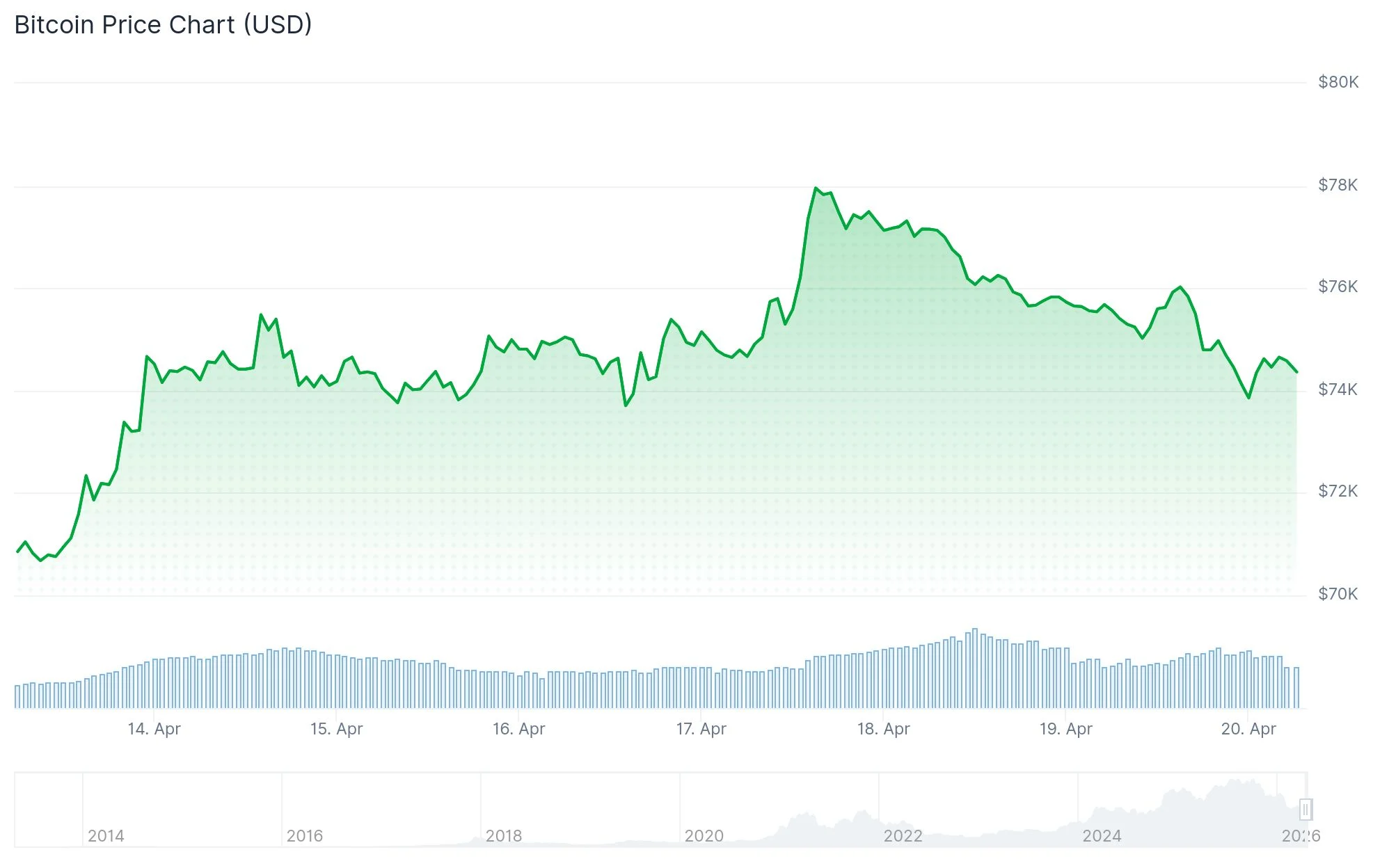
Ether retreated 2.6% to $2,272. Solana slipped 1.5% to $84. BNB held steady at $618. Among the top ten cryptocurrencies by market capitalization, none experienced losses exceeding 3%.
Energy Markets and Equities Face Steeper Declines
Energy markets exhibited pronounced volatility. Brent crude oil climbed 5.7% to reach $95.50 per barrel. West Texas Intermediate crude advanced approximately 6.9% to just below $90 per barrel. European natural gas futures spiked as much as 11%.
Gold declined 0.8% to $4,790. The U.S. dollar strengthened modestly as market participants rotated into conventional safe-haven instruments.
U.S. equity index futures retreated across the board. Dow futures decreased roughly 0.7%. Both S&P 500 and Nasdaq 100 futures fell approximately 0.6%. European equity futures indicated a 1.2% decline at Monday’s market open.
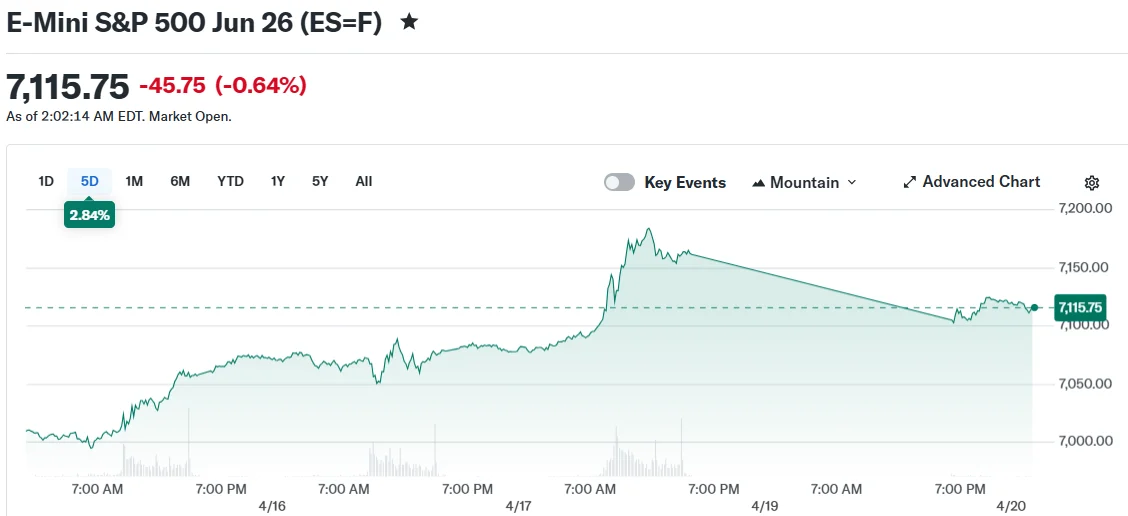
The weekend escalation erased three weeks of diminishing conflict risk across global markets. Equities and emerging market assets had rallied broadly Friday following Iran’s announcement regarding the strait.
Bitcoin’s Evolving Response to Geopolitical Shocks
Since the beginning of the Iran conflict, Bitcoin has exhibited progressively smaller price declines with each wave of Iran-related market turbulence. Market analysts suggest this pattern may indicate that investors who intended to liquidate positions based on geopolitical developments have already exited.
The expanding footprint of spot Bitcoin exchange-traded funds may also be establishing a more resilient price support level.
Market participants were monitoring whether the 10-year Treasury yield, hovering around 4.27%, combined with dollar strength would create downward pressure on Bitcoin through broader risk asset channels.
Bitcoin maintained support near the $74,000 level as European trading sessions commenced Monday morning.
Market focus will also turn to a busy corporate earnings calendar this week, with major companies including Tesla, Intel, and United Airlines scheduled to release quarterly results.
