


Key Takeaways
- With approximately 150 billion tokens circulating, Dogecoin maintains a market capitalization near $14.2 billion, securing its position among top cryptocurrencies
- Real-world utility exists through Tesla’s continued acceptance of DOGE for select merchandise transactions
- Daily network throughput averages 22,344 transactions with remarkably low fees averaging just $0.038
- An unlimited supply model introduces approximately 5 billion new tokens annually, creating perpetual dilution pressure
- Concentration risk remains significant, with the largest 100 wallets holding roughly 66.39% of total supply
Launched in 2013 as a satirical cryptocurrency, Dogecoin has defied expectations to remain a prominent player in digital assets more than ten years later. According to CoinGecko data, it maintains top-tier status with approximately 150 billion tokens in active circulation and a valuation hovering around $14.2 billion.
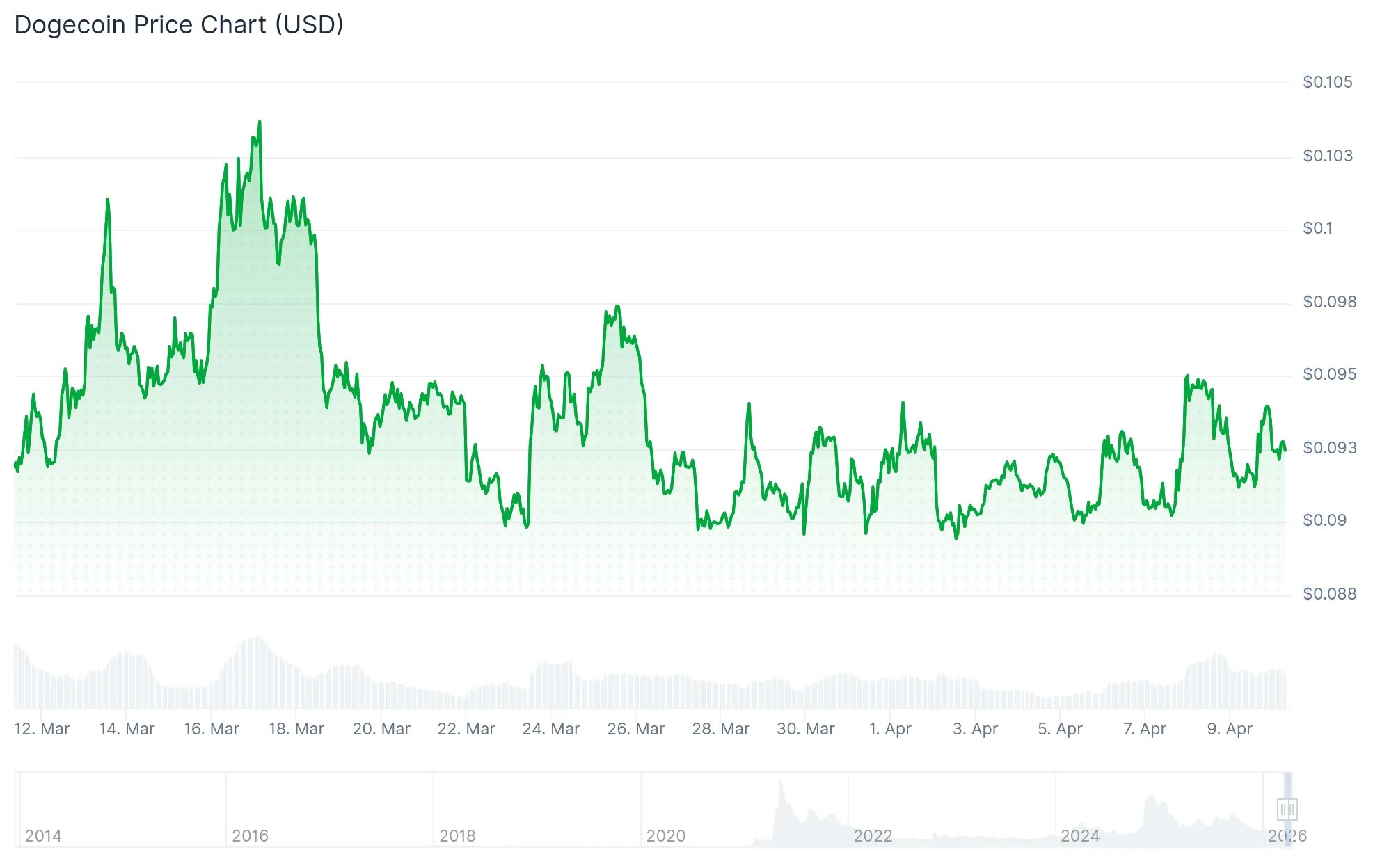
Within cryptocurrency markets, name recognition frequently converts to trading volume. Strong liquidity provides staying power that extends asset longevity beyond fundamental expectations.
The protocol operates on a Scrypt-based proof-of-work consensus mechanism. Rather than positioning itself as a smart contract ecosystem, the project emphasizes practical payment functionality. The Dogecoin Foundation’s development priorities include infrastructure like GigaWallet designed to streamline merchant integration.
Tesla’s official payment documentation continues to recognize Dogecoin for qualifying product purchases. This represents tangible commercial adoption that separates it from purely speculative meme tokens.

Transaction Metrics and Network Performance
Blockchain analytics from BitInfoCharts indicate the network facilitated approximately 22,344 transactions during the previous 24-hour period. Transaction costs remain minimal, averaging roughly $0.038, while the median fee hovers near $0.007. During this same timeframe, over 34,000 unique addresses participated in network activity.
These metrics demonstrate accessibility and cost-effectiveness. For a cryptocurrency focused on payment utility, this represents solid infrastructure.
Yet transaction volume alone doesn’t guarantee value appreciation. Dogecoin lacks a substantial decentralized application environment that could drive higher fee generation. Most participants hold for brand appeal or speculative positioning.
Supply Dynamics and Dilution Concerns
Unlike Bitcoin’s fixed 21 million cap, Dogecoin implements an uncapped supply model. The protocol generates 10,000 DOGE with each block, and blocks emerge approximately every minute. This schedule introduces roughly 5 billion additional tokens to circulation annually.
While this mechanism incentivizes miners and maintains network security, it simultaneously dilutes existing holders. For price appreciation, demand growth must continuously exceed the supply expansion rate.
Although the percentage inflation rate decreases as total supply expands, this remains a fundamental obstacle for sustained price growth.
Ownership distribution presents additional concerns. BitInfoCharts data reveals the top 100 wallets command approximately 66.39% of all circulating DOGE, with the top 10 controlling around 44.44%. Major custodians and individual whales retain disproportionate influence over market dynamics.
Investment Perspective
Dogecoin offers strong liquidity, universal brand awareness, minimal transaction costs, and multi-cycle market resilience. These characteristics distinguish it from typical meme cryptocurrencies. However, its investment thesis depends primarily on sustained brand relevance and speculative interest rather than robust tokenomics or utility-driven demand. Ultimately, investing in DOGE represents a wager on whether its cultural significance endures over the coming years.
