


Key Highlights
- BTC climbed past $72,000 following Israeli PM Netanyahu’s announcement of Lebanon ceasefire discussions
- Bitcoin has gained 9% in the last 30 days, contrasting with the iShares Tech-Software ETF’s 12% decline
- The February PCE inflation figure registered at 2.8% year-over-year, matching analyst predictions
- Fourth-quarter US GDP underwent a downward revision to 0.5% on an annualized basis, amplifying recession fears
- Tomorrow’s March CPI release — the initial reading following the outbreak of the US-Iran conflict — is expected to show an uptick
Bitcoin climbed beyond the $72,000 threshold on Thursday following encouraging developments in Middle Eastern diplomacy. Israeli Prime Minister Benjamin Netanyahu directed his cabinet to initiate ceasefire discussions with Lebanon concerning the disarmament of Hezbollah. This development reversed what had appeared to be a downward trajectory for cryptocurrency markets earlier in the session.
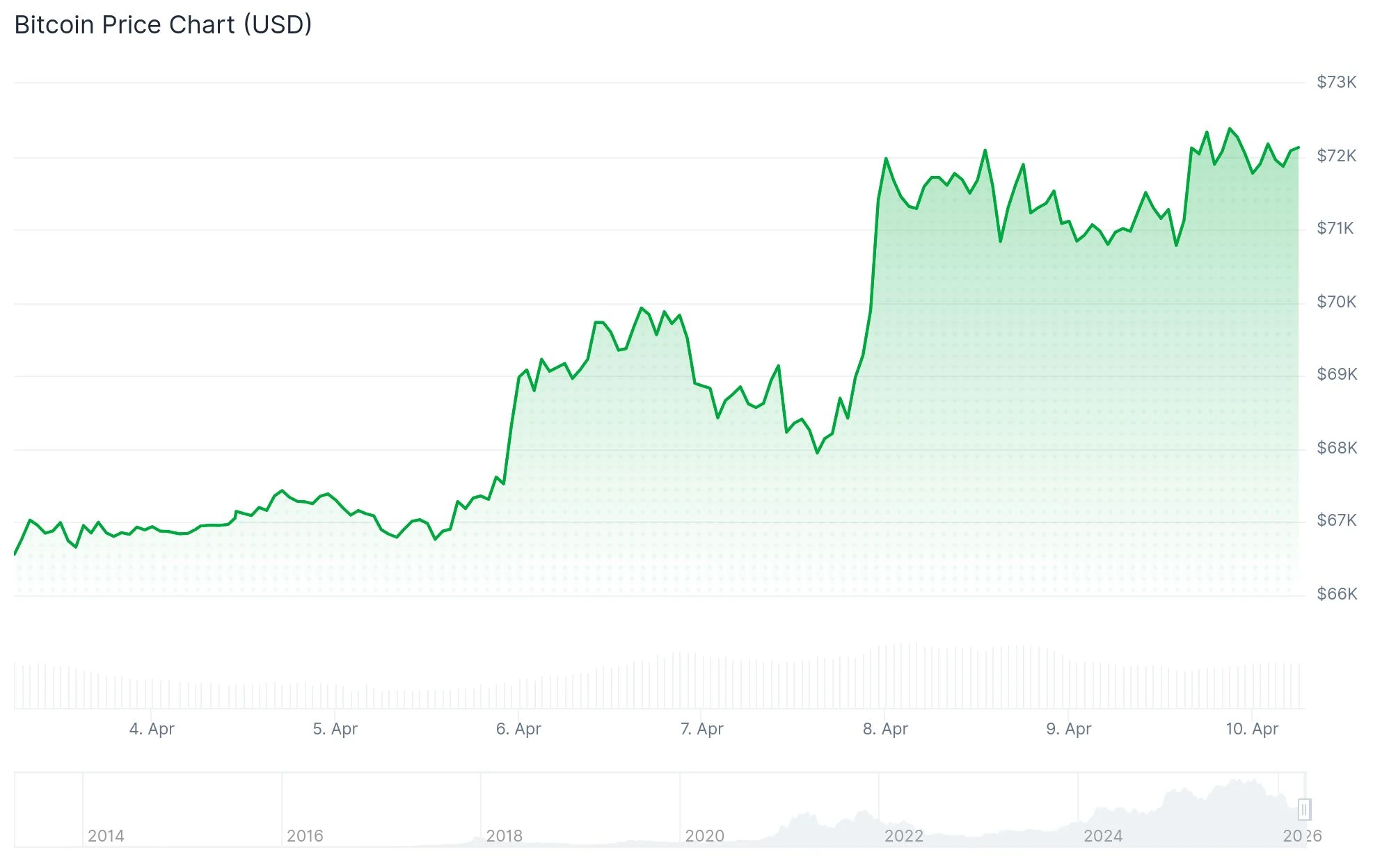
The leading cryptocurrency experienced an approximately 3% spike following this announcement, touching $72,300. American equity markets similarly rebounded, with the Nasdaq advancing 0.65%. WTI crude oil retreated from its near-$103 per barrel peak to approximately $98.60 in the wake of the ceasefire news.
Bitcoin demonstrated superior performance compared to alternative major digital assets throughout the trading session. Ethereum (ETH), Solana (SOL), and XRP each posted gains below 1%, whereas BTC maintained its leadership position.
Prior to the ceasefire announcement, February’s PCE inflation metrics arrived in alignment with market forecasts. The Bureau of Economic Analysis disclosed that PCE increased 2.8% on a year-over-year basis, with core PCE experiencing a modest decline to 3%, down from January’s 3.1% reading.

Bitcoin had already begun its recovery prior to the ceasefire development, ascending from an intraday floor of $70,500 to approximately $71,200 subsequent to the inflation data publication.
It merits attention that February’s PCE figures encompass the timeframe preceding the late February commencement of the US-Iran conflict. Market participants and economists are anticipating more recent data to assess the conflict’s impact on price levels.
BTC Diverges From Technology Software Equities
Bitcoin and technology software equities have exhibited divergent trajectories throughout the previous month. The iShares Expanded Tech-Software ETF (IGV) has declined 12% across 30 days, whereas BTC has appreciated 9% during the identical timeframe.
The 20-day correlation coefficient linking Bitcoin and IGV has fallen to 0.34, illustrating a pronounced divergence in the performance of these two asset categories.
Federal Reserve Maintains Current Stance as Recession Concerns Mount
The fourth quarter US GDP figure underwent a downward revision to a 0.5% annualized rate, signaling decelerating economic expansion. Nevertheless, market participants exhibited reduced risk aversion, partially attributable to the understanding that weaker growth increases the likelihood of government liquidity measures.
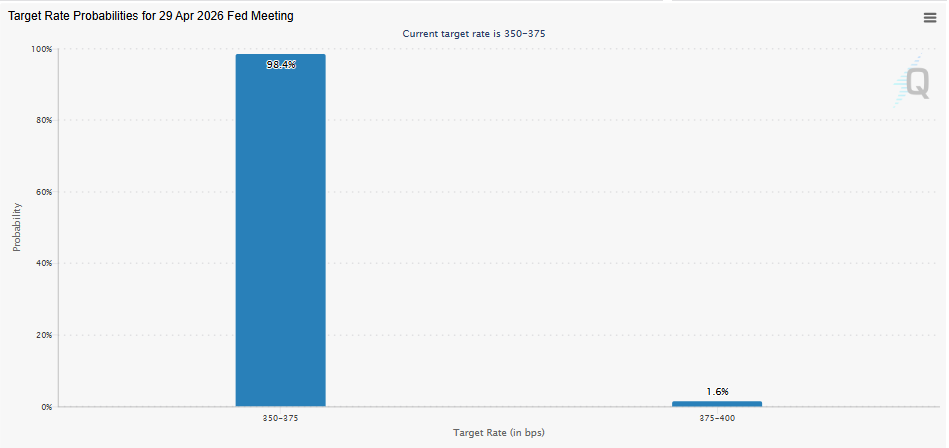
FOMC minutes published Wednesday revealed that Fed policymakers remain receptive to interest rate reductions this year, although a majority indicated they would contemplate rate increases should inflation persist substantially above the 2% objective. CME FedWatch statistics demonstrate a 98.4% probability that the Federal Reserve will maintain current rates at its April 29 policy meeting.
A weakening US dollar has provided support for Bitcoin, as diminished confidence in the Federal Reserve’s inflation management capabilities typically benefits assets with limited supply.
March’s CPI data is slated for Friday’s release. Wall Street analysts anticipate 3.3% year-over-year, representing an increase from February’s 2.4% reading, which would constitute the first inflation measurement since the US-Iran conflict’s inception.
