


TLDR
- Crude markets experienced dramatic volatility Monday amid conflicting signals of diplomatic negotiations and military escalation
- Brent benchmark surged past the $110 threshold before retreating on speculation about a proposed 45-day ceasefire framework
- U.S. President issued a Tuesday evening ultimatum warning of attacks on Iranian infrastructure unless shipping lanes reopen
- Tehran’s Revolutionary Guards cautioned against targeting civilian sites, promising escalated retaliation against American economic assets
- Latest OPEC+ production boost of 206,000 bpd for May faces implementation challenges due to regional conflict disruptions
Oil prices experienced dramatic fluctuations throughout Monday’s trading session as energy market participants attempted to balance escalating military threats against emerging diplomatic overtures.
The Brent benchmark temporarily breached the $110 per barrel threshold before retreating from those highs. Asian trading hours saw the international crude marker hovering near $109.80, representing a 0.7% increase. Meanwhile, West Texas Intermediate futures remained relatively stable at $111.62.
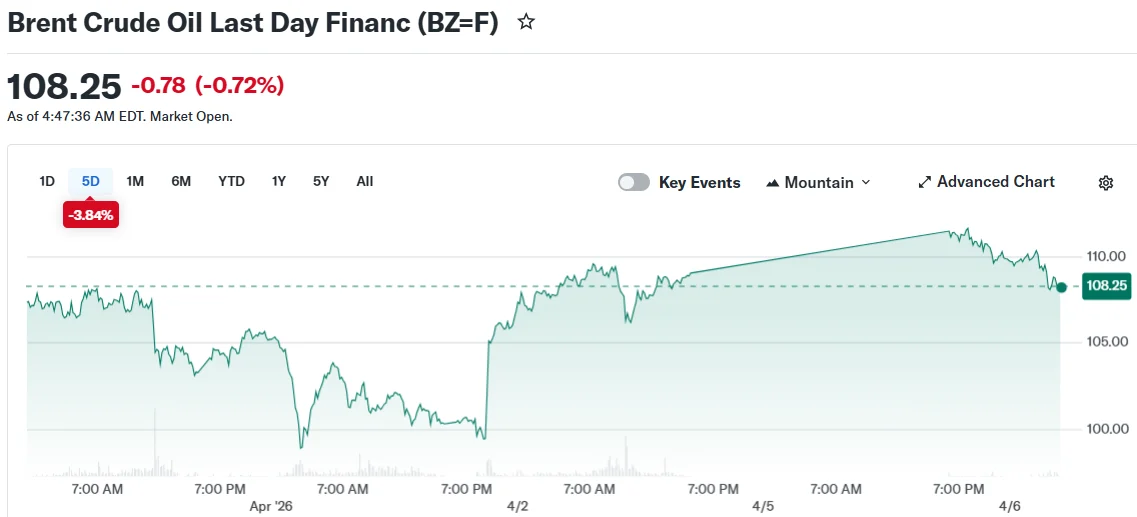
The pronounced price volatility underscores how sensitive energy markets have become to every twist in the escalating confrontation between Washington and Tehran, which erupted following coordinated U.S.-Israeli military operations against Iranian targets on February 28.
Prior to the outbreak of hostilities, Brent was changing hands around the $70 level. The psychological $100 barrier was crossed during the previous week following aggressive rhetoric from the White House threatening devastating military action.

During the weekend, the American president posted an inflammatory message on his preferred social media platform, warning of imminent attacks on Iranian critical infrastructure unless maritime passage through the strategic waterway is restored by Tuesday evening U.S. Eastern time.
The president’s message stated: “Tuesday will be Power Plant Day, and Bridge Day… Open the Fuckin’ Strait, you crazy bastards, or you’ll be living in Hell.”
Subsequently, he specified the exact deadline: “Tuesday, 8:00 P.M. Eastern Time.”
During a Fox News interview, the president indicated diplomatic progress was possible, suggesting a “good chance” of reaching an agreement Monday. However, he simultaneously raised the prospect of complete military conquest and resource seizure should negotiations collapse.
Iranian authorities dismissed the ultimatum outright. High-ranking military commander General Ali Abdollahi Aliabadi characterized the deadline as “helpless, nervous, unbalanced and stupid,” warning that “the gates of hell will open” for the American administration.
Diplomatic Framework Under Discussion
According to reporting from Axios, American and Iranian representatives alongside regional intermediaries are evaluating a proposed 45-day cessation of hostilities that could potentially establish foundations for a permanent resolution. Reuters corroborated these reports, indicating both parties had received a preliminary framework document with implementation potentially beginning as soon as Monday.
The White House has not issued official commentary on these diplomatic developments. British Broadcasting Corporation correspondents noted they had not independently confirmed the Axios reporting.
Military operations continued throughout the weekend, with Iranian forces claiming responsibility for strikes targeting petrochemical facilities across Kuwait, Bahrain, and the United Arab Emirates. The Revolutionary Guards issued fresh warnings Monday that economic targets associated with U.S. interests would face intensified attacks if strikes against Iranian civilian infrastructure persist.
OPEC+ Production Increase Faces Constraints
The oil producers’ alliance finalized an agreement Sunday to expand crude output by 206,000 barrels daily starting in May. Market observers note, however, that the nominal increase faces significant practical limitations, as multiple core member states cannot actually boost production due to conflict-related disruptions.
The strategic Strait of Hormuz chokepoint, normally facilitating approximately 20% of global energy shipments, has remained effectively closed for several weeks. This closure has contributed to worldwide energy price inflation and sparked concerns about broader economic impacts in nations heavily dependent on Middle Eastern crude imports.
Energy analyst Sushant Gupta from Wood Mackenzie consultancy anticipates continued price instability, with each development in the ongoing crisis generating immediate market reactions.
