



Key Takeaways
- BTC is hovering around $66,126, potentially closing March as its sixth consecutive negative month.
- The U.S. 10-year Treasury yield is climbing toward the critical 5% threshold, a historically bearish signal for Bitcoin.
- Weekly Bitcoin ETF outflows reached $296 million, ending a month-long streak of positive inflows.
- Brent crude has rocketed from approximately $75 to $106 in March, intensifying inflation fears.
- BTC remains trapped in a trading corridor between $65,000 and $72,000 as investors avoid risk-taking.
Bitcoin finds itself caught in a challenging macro environment as escalating U.S. Treasury yields, soaring energy costs, and shifting ETF sentiment create downward momentum. At press time, BTC was changing hands near $66,126, positioned for another monthly decline.
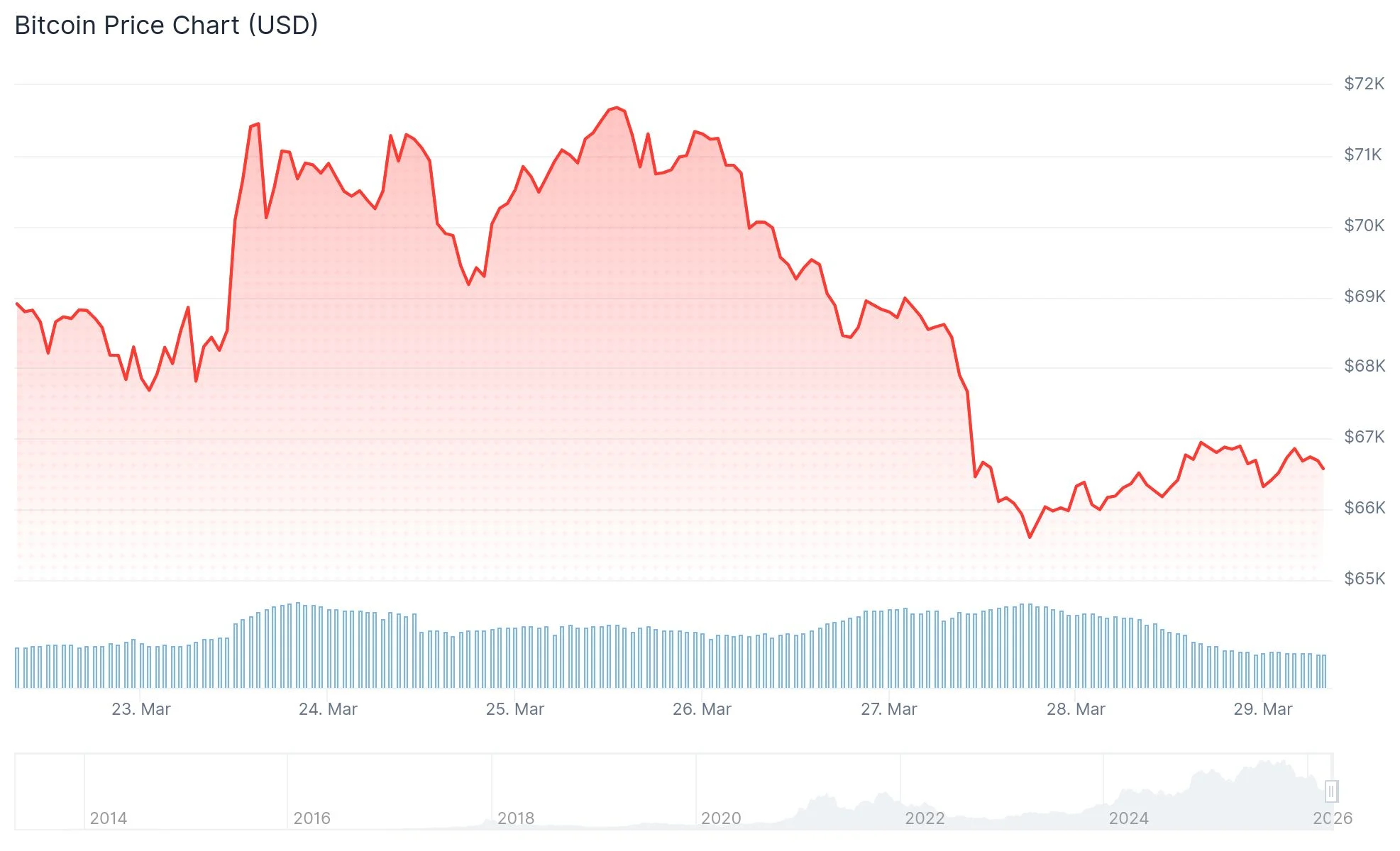
The cryptocurrency began March on a positive note, reaching a peak of $76,000 during the first week. This upward movement was partially attributed to favorable geopolitical signals involving the United States, Iran, and Gulf region nations. However, broader economic pressures have since dominated the narrative.
Market participants are now closely monitoring the U.S. 10-year Treasury yield. Technical patterns suggest the yield is forming a bullish flag configuration, typically indicating continued upward momentum. Should this pattern confirm, yields could advance toward or beyond the 5% mark, territory not visited since 2023.
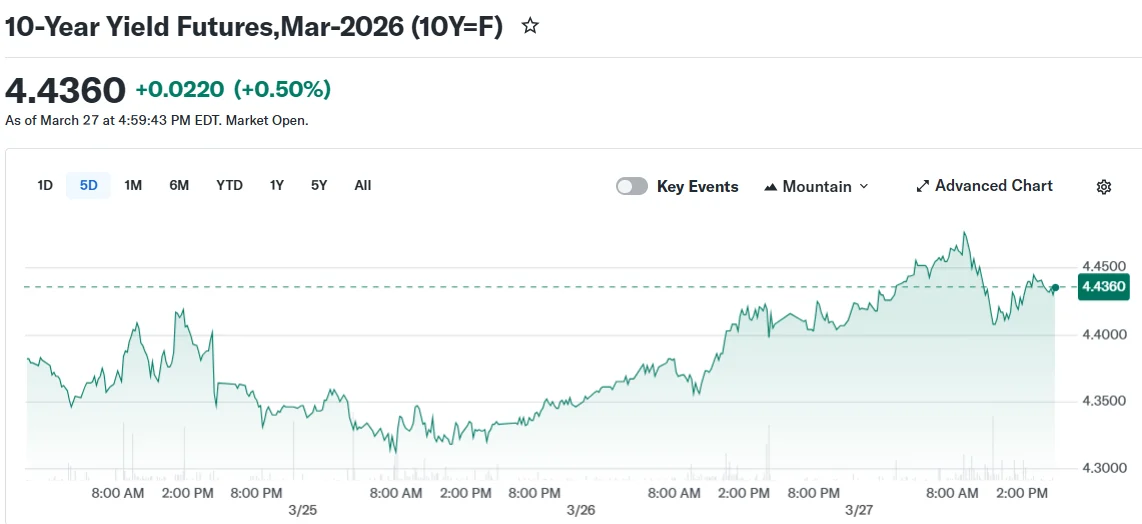
Elevated yields enhance the appeal of traditional fixed-income investments, drawing liquidity away from speculative assets such as Bitcoin. Historical precedent supports this correlation. During the period spanning October 2021 through December 2022, Treasury yields climbed from 1.45% to 3.90% while BTC tumbled from $67,000 down to $16,256.

Should yields breach the 5% level, market observers anticipate Bitcoin could retreat toward a support corridor ranging from $58,632 to $55,302.
Bitcoin ETF Flows Turn Negative
Spot Bitcoin exchange-traded funds experienced a sentiment reversal, registering $296.18 million in net outflows during the week that concluded Friday. This marks the end of a four-week accumulation period that had brought in over $2.2 billion.
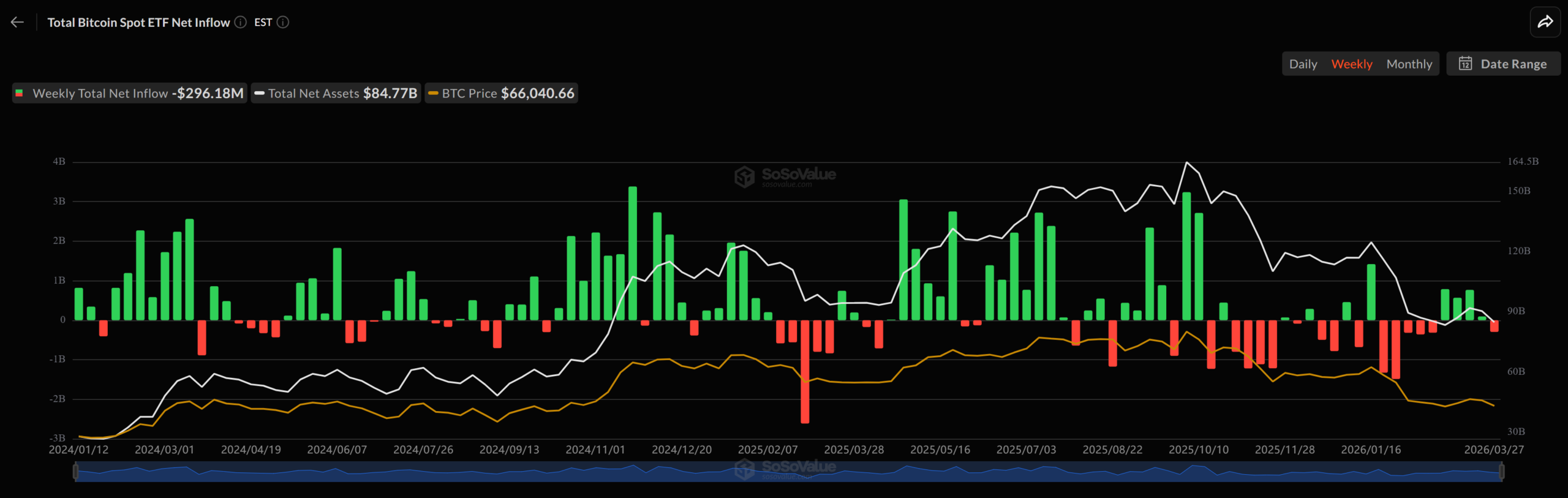
The final two trading days of the week accounted for more than $396 million in redemptions. Friday’s single-session outflow of $225.48 million represented the most significant withdrawal since early March.
Combined net assets held within spot Bitcoin ETFs contracted to $84.77 billion from above $90 billion the previous week. Trading activity also declined substantially, with weekly volume dropping to $14.26 billion compared to $25.87 billion earlier this month.
According to a Bitunix market analyst, the current environment reflects “surface stability, internal imbalance.” The observation highlighted that Bitcoin is exhibiting characteristics more aligned with liquidity constraints than breakout potential. “Capital hasn’t departed entirely, but market participants are demonstrably risk-averse,” the analyst emphasized.
Energy Market Rally Compounds Inflation Worries
Crude oil markets have experienced dramatic appreciation throughout March. Brent crude advanced from approximately $75 per barrel at month’s beginning to roughly $106 currently. WTI crude was trading near $101 at the time of analysis.
This price acceleration stems from supply constraints and heightened geopolitical uncertainty, particularly surrounding potential disruptions in the Strait of Hormuz. Rising energy costs diminish the likelihood of imminent monetary policy easing, maintaining restrictive financial conditions.
Spot Ethereum ETFs similarly experienced negative flows for a consecutive second week, recording $206.58 million in withdrawals.
Cryptocurrency analyst Ash Crypto highlighted via X platform that a negative March close for BTC would constitute the sixth consecutive monthly decline — a pattern witnessed only once previously in Bitcoin’s trading history, occurring in 2018.
Despite recent outflows, cumulative net inflows into spot Bitcoin ETFs remain substantial at $55.93 billion according to the most recent figures.
