


Key Highlights
- Bitcoin surged past $71,000 amid Middle East de-escalation optimism boosting risk appetite
- Iranian officials denied U.S. ceasefire overtures, creating market confusion with contradictory statements
- Stock futures dropped 0.4% Wednesday night as geopolitical uncertainty persisted
- Crude oil prices declined on peace hopes, WTI closed at $90.32 while Brent reached $102.22
- UK government banned cryptocurrency political contributions and limited foreign donations to £100,000 annually
The leading cryptocurrency surged beyond $71,000 Wednesday as markets responded positively to potential diplomatic progress between the United States, Israel, and Iran. Bitcoin gained 1.1% to reach $71,129 during early evening trading on the East Coast.
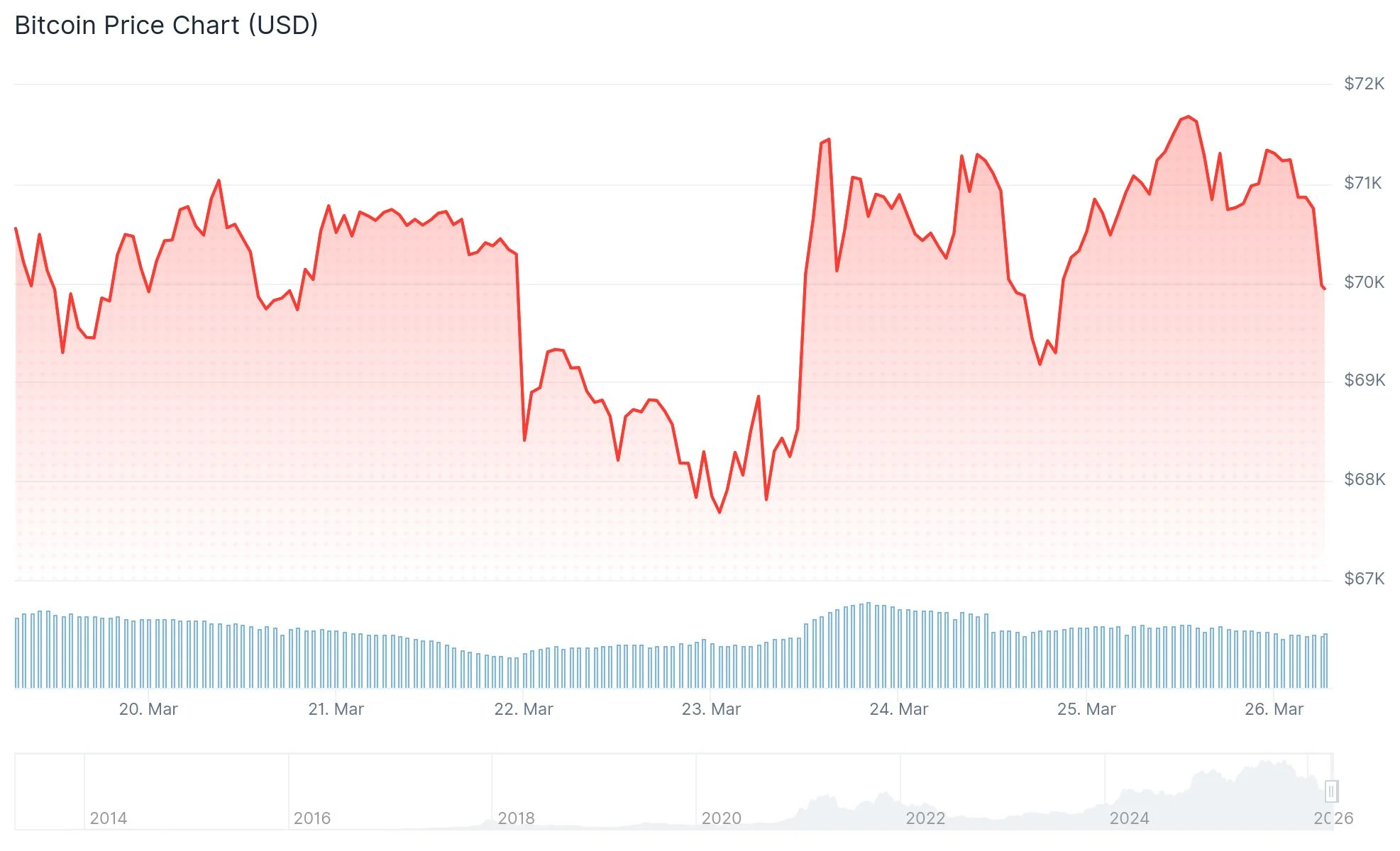
The digital asset had previously fallen beneath the $70,000 threshold earlier this week following heightened Middle East tensions that sparked widespread selling across risky investments.
President Trump announced Tuesday that discussions with Iran were currently underway and suggested Tehran appeared receptive to reaching a peace agreement. Multiple sources indicated the United States had submitted a comprehensive 15-point framework to Iranian leadership aimed at conflict resolution.
However, Iran’s response created significant confusion. Fars News Agency stated Iran rejects any ceasefire agreement, while Foreign Minister Abbas Araghchi declared no active diplomatic communications exist with Washington.

Iranian state-controlled media published five specific conditions, including cessation of all military operations and global acknowledgment of Iran’s sovereignty over the Strait of Hormuz. Tehran reportedly also insisted on shutting down every American military installation throughout the Gulf region.
Despite Tehran’s public denial, Axios sources revealed the United States had not officially received any formal rejection letter from Iran regarding the peace proposal. These contradictory signals maintained markets in a tentatively hopeful stance.
Oil prices declined Wednesday as energy traders incorporated reduced supply disruption probabilities. West Texas Intermediate crude closed at $90.32 per barrel while Brent crude decreased to $102.22.
Equity Markets Navigate Geopolitical Turbulence
Futures contracts for U.S. equity indexes fell 0.4% during Wednesday’s extended trading session. Contracts tracking the S&P 500, Nasdaq 100, and Dow Jones Industrial Average all moved downward as market participants maintained caution.
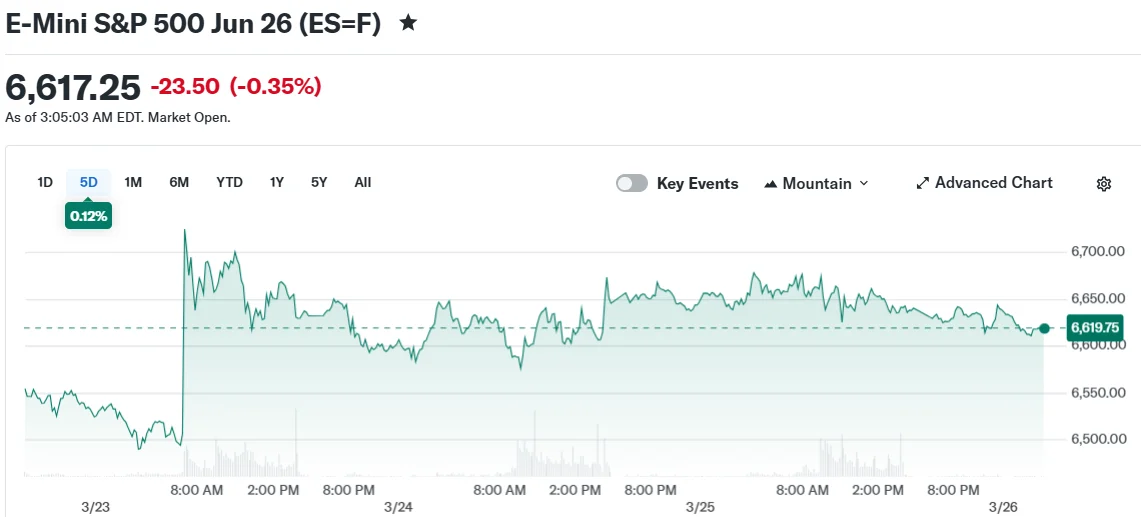
Notwithstanding the futures decline, principal equity benchmarks have accumulated weekly gains, positioning them to potentially end a four-week decline. Persistent worries regarding crude oil fluctuations and economic contraction possibilities have dampened investor confidence.
Market participants are closely monitoring Thursday’s weekly unemployment claims release. Carnival Corporation is scheduled to announce quarterly results before Friday’s opening bell.
Britain Prohibits Cryptocurrency Political Contributions
The United Kingdom introduced a prohibition on digital currency contributions to political organizations, taking effect Wednesday. Authorities simultaneously established a £100,000 annual ceiling for overseas contributions from British nationals residing internationally.
Housing Secretary Steve Reed justified the cryptocurrency prohibition as necessary to eliminate an evident pathway for questionable money entering the political system. This action emerged from an investigation into foreign financial interference, initiated after a former Reform UK representative received a prison sentence for accepting illegal payments.
Reform UK, under Nigel Farage’s leadership, pioneered accepting Bitcoin contributions among British political parties. Approximately two-thirds of the party’s previous year’s financing originated from international contributors.
Most alternative cryptocurrencies posted gains Wednesday. Ethereum advanced 1% to $2,166, XRP climbed 0.2% to $1.41, and Dogecoin increased 1.5%.
