


TLDR
- Brent crude surged to $119 per barrel this week following Israeli attacks on Iran’s South Pars gas infrastructure, later retreating to approximately $108.
- Qatar reports a 17% reduction in natural gas export capability, with restoration potentially requiring five years after strikes on Iranian facilities.
- Saudi officials predict crude could reach $180/barrel if supply disruptions extend through late April.
- Treasury Secretary Bessent proposed releasing approximately 140 million barrels of sanctioned Iranian crude to stabilize markets.
- Prime Minister Netanyahu indicated the conflict would conclude faster than anticipated, contributing to Friday’s price easing.
Global energy markets experienced dramatic volatility this week as escalating tensions between Israel and Iran drove crude prices to multi-year highs, with critical infrastructure across the Middle East sustaining damage.
Brent crude futures climbed to $119 per barrel mid-week following Israeli military operations targeting Iran’s South Pars gas field, a massive natural gas complex with global significance. By Friday morning, prices had moderated to roughly $107.87, while West Texas Intermediate declined 1.2% to $94.46 per barrel.
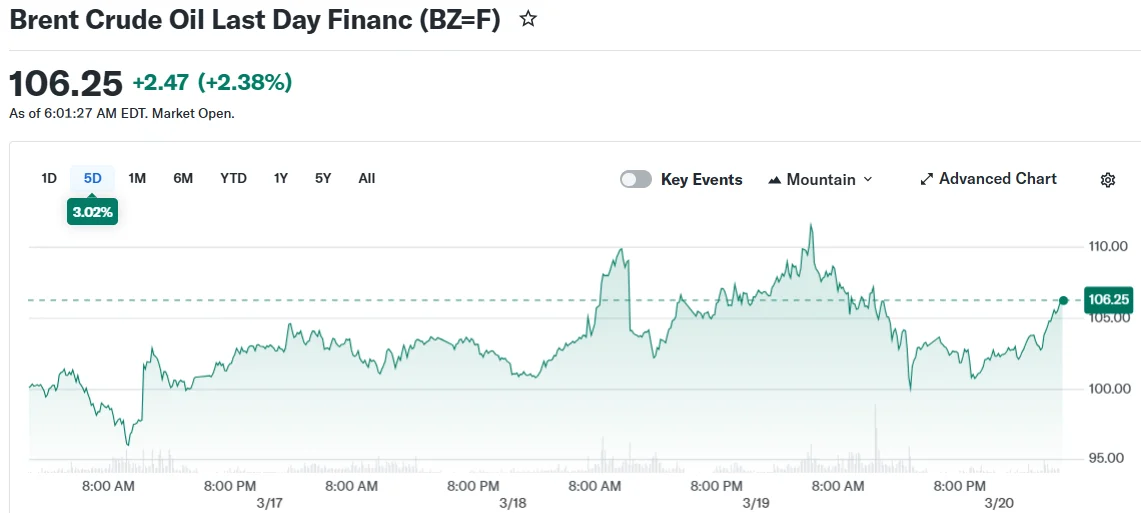
The substantial spread between Brent and WTI pricing illustrates the divergent pressures on international versus domestic U.S. oil markets. American energy infrastructure remains untouched by direct attacks, while discussions have emerged regarding potential Trump administration restrictions on U.S. crude exports to maintain lower domestic fuel costs.
Iranian forces responded with coordinated strikes throughout the region following the initial Israeli operations. U.S.-aligned nations reported incoming drone and missile threats. Israel subsequently launched attacks on Tehran after defensive systems activated in Jerusalem and northern Israeli territory.

Qatar, a dominant force in global liquefied natural gas markets, verified that strikes damaged its Ras Laffan export terminal. Officials announced a 17% capacity reduction and estimated reconstruction timelines stretching to five years. European markets, heavily reliant on Qatari natural gas imports, witnessed regional benchmark prices spike sharply in response.
What Could Bring Prices Down
Administration officials are implementing strategies to stabilize volatile energy markets. Treasury Secretary Scott Bessent indicated the government could lift sanctions on Iranian oil currently in transit, potentially injecting approximately 140 million barrels into global circulation. Additional strategic petroleum reserve releases remain under consideration.
U.S. military forces alongside coalition partners have intensified operations to restore transit through the Strait of Hormuz, the critical chokepoint handling substantial global oil flows. American naval vessels may provide escort services for commercial shipping once Iranian attack threats diminish. However, Vital Knowledge analysts emphasized that fully reopening the strait demands either significant military action or successful diplomatic negotiations.
Israeli Prime Minister Benjamin Netanyahu revealed Thursday that President Donald Trump requested Israel cease operations against Iranian energy sites. Netanyahu further suggested the conflict would conclude considerably sooner than most observers expect, providing modest relief to oil markets.
Trump confirmed to media representatives his commitment to resolving the crisis while ruling out ground force deployments. He disclosed that Pentagon leadership submitted a $200 billion war funding request to the administration.
How High Could Oil Go?
Saudi Arabian energy ministry sources informed the Wall Street Journal that crude could exceed $180 per barrel should conflict and supply constraints persist beyond late April. This worst-case scenario currently influences market pricing mechanisms.
WTI futures have declined nearly 5% across the most recent five trading sessions, suggesting cautious market optimism regarding potential conflict resolution. Analysts caution that even with Strait of Hormuz navigation restored, extensive physical damage to production infrastructure could constrain supply for extended periods.
Iran’s Supreme Leader Mojtaba Khamenei declared in an official statement that “safety must be taken away from our domestic and foreign enemies.” His predecessor, Ali Khamenei, was killed during earlier conflict stages as Israeli forces targeted Iran’s leadership structure.
