


TLDR
- Crude oil surged beyond $119 per barrel on Sunday, stabilizing between $103–$107 by Monday morning
- Dow Jones futures plunged more than 1,000 points in overnight trading; S&P 500 and Nasdaq futures declined approximately 1%
- Escalating Iran tensions have effectively shut down the Strait of Hormuz, disrupting crucial oil shipping lanes
- Iraqi production reportedly declined roughly 70%; Kuwaiti officials confirmed output reductions without specifics
- G7 finance leaders convene Monday to evaluate releasing as much as 400 million barrels from strategic stockpiles
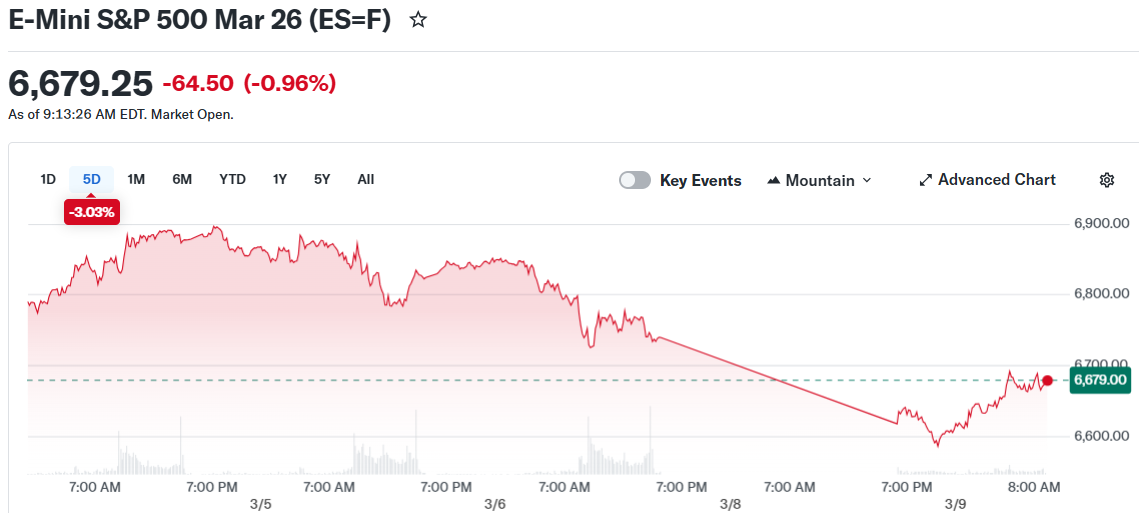
U.S. equity futures tumbled Monday morning following crude oil’s dramatic surge above the $100 threshold for the first time in over two years, sparked by intensifying Middle Eastern tensions and significant energy supply chain disruptions.
Futures tied to the Dow Jones Industrial Average plummeted more than 1,000 points during overnight sessions before recovering slightly. Both S&P 500 and Nasdaq 100 futures contracts declined roughly 1%.
West Texas Intermediate reached a peak of $119.48 per barrel Sunday before moderating. Monday morning sessions saw prices hovering around $103. Meanwhile, international benchmark Brent crude traded above $107, representing approximately 15% gains for the session.
The dramatic spike in oil prices stems from attacks targeting petroleum infrastructure throughout Tehran. Leadership has transferred to Mojtaba Khamenei, son of the late Ayatollah Ali Khamenei, who now assumes the role of supreme leader. Expectations point toward continued confrontation given his historical support of hardline positions.

The strategically vital Strait of Hormuz shipping channel remains essentially impassable. Energy Secretary Chris Wright indicated Sunday that optimistic projections suggest tanker operations could restart within several weeks at earliest.
Iraqi petroleum production has plummeted approximately 70% according to industry reports. Kuwaiti authorities have acknowledged output reductions while withholding precise volumes. Multiple Persian Gulf nations have curtailed or halted refining activities, with Saxo Bank analysts highlighting refined products—particularly diesel and aviation fuel—as immediate supply concerns.
G7 Responds to Energy Crisis
G7 finance ministers are convening Monday to evaluate coordinated petroleum reserve releases coordinated through the International Energy Agency. Deliberations center on deploying up to 400 million barrels from strategic stockpiles. Three member nations, including the United States, reportedly favor the initiative.
News of potential reserve releases provided modest relief to crude prices and equity futures, which had experienced steeper declines during early overnight sessions.
President Trump characterized temporary oil price increases as a “very small price to pay” for neutralizing Iran’s nuclear capabilities in a social media statement. Those remarks initially unsettled markets Sunday before G7 reserve deployment reports helped stabilize investor sentiment.
Bitcoin Briefly Drops Below $65,000
Bitcoin dipped beneath the $65,000 level during early Monday trading before rebounding toward $68,000. Precious metals futures showed modest declines, with both gold and silver down less than 1%.
The U.S. Dollar Index advanced 0.3%. Treasury yields edged higher, with the benchmark 10-year note climbing to 4.175%.
Equity markets endured challenging conditions throughout the previous week. The Dow Jones posted approximately 3% losses, marking its worst weekly performance since tariff-related volatility roiled markets during April 2025. The S&P 500 declined roughly 2% while the Nasdaq shed over 1%.
Market participants are now focused on Wednesday’s Consumer Price Index data and Friday’s Personal Consumption Expenditures figures, though neither release will fully capture the recent oil price shock’s economic impact.
Oracle and Adobe represent the week’s primary earnings announcements.
