



Key Highlights
- Ethereum declined 6% following a failed attempt to sustain prices above $2,200 amid equity market turbulence and geopolitical tensions
- Options market skew reached 7%, indicating institutional traders are positioning defensively for potential losses
- US-based Ethereum spot ETFs experienced combined net withdrawals of $91 million on March 5
- Network validator entry queue expanded to 3.4 million ETH while exit queue contracted to merely 58,944 ETH
- Ethereum maintains dominance with 65% of aggregate blockchain TVL across all layers, including $55.4B on mainnet
Ethereum is currently changing hands near $2,080 following an unsuccessful effort to maintain support above the $2,200 threshold earlier this week. The pullback coincided with deteriorating global risk appetite, fueled by escalating tensions involving Iran and a significant US court decision mandating the Treasury to return more than $130 billion in tariff revenues to corporate taxpayers.
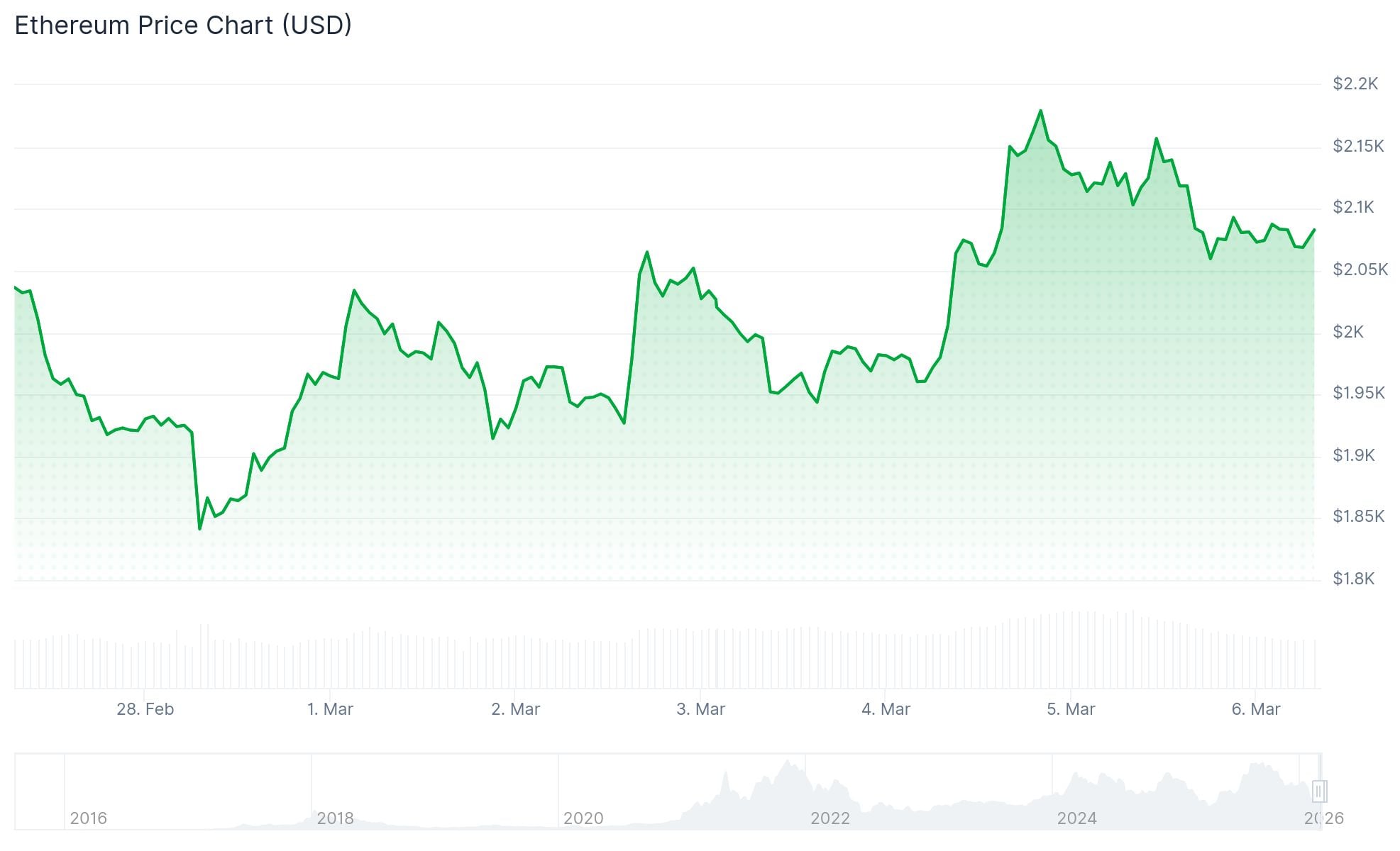
The second-largest cryptocurrency had posted a 22% rebound from its February trough of $1,800, yet that upward trajectory lost steam abruptly. Following Wednesday’s brief touch of $2,200, ETH surrendered 6% of its value, tracking parallel weakness in American stock indices.
Futures market data reveals the 30-day annualized premium for Ethereum contracts remains substantially beneath the 5% neutral benchmark. This condition reflects diminished appetite for leveraged bullish exposure among market participants.
The ETH options skew metric (put-call ratio) expanded to 7% on Thursday. Historical patterns indicate that readings surpassing 6% typically correspond with professional market makers purchasing downside protection.

According to CoinGlass tracking data, Ethereum experienced $58 million in forced liquidations over a 24-hour window, with long positions accounting for $35.7 million of that total.
Institutional Flows and Validator Dynamics
The price deterioration aligned with institutional investment patterns. US spot Ethereum ETFs registered aggregate net redemptions totaling $91 million on March 5, signaling a temporary retreat in professional investor interest.
This outflow contrasts with more robust accumulation observed during the preceding days, demonstrating how rapidly institutional sentiment responds to broader market volatility.
Meanwhile, the validator entry queue painted a contrasting picture. The queue expanded to approximately 3.4 million ETH, simultaneously as the exit queue diminished to only 58,944 ETH. Current waiting periods for new validator activation have extended to 57 days.
This pattern indicates substantial holders are opting to stake their ETH holdings for yield generation rather than liquidating during periods of market uncertainty.
On-Chain Metrics and Value Locked
Decentralized exchange volumes on Ethereum’s mainnet contracted to $12.6 billion over the past week, representing a decline from $20.2 billion recorded one month prior. DApp protocol revenues decreased to $14.1 million during the seven-day period, marking a 47% reduction versus the previous month.
Solana experienced comparable deterioration, with DEX transaction volumes declining 50% across the identical 30-day measurement period.
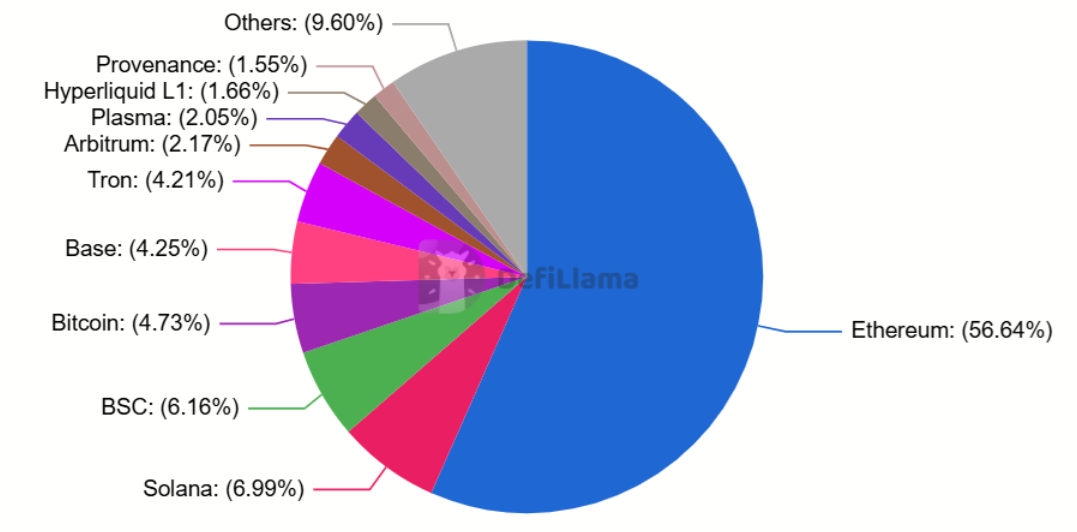
Notwithstanding the softer on-chain engagement metrics, Ethereum continues to command the lion’s share of total value locked across blockchain networks. When incorporating layer-2 scaling solutions, the Ethereum ecosystem accounts for roughly 65% of industry-wide TVL. The base layer independently secures $55.4 billion, substantially exceeding Solana’s $6.8 billion.
Immediate resistance emerges at $2,108 based on daily chart analysis. A decisive close above this threshold could establish a trajectory toward $2,388. Should the $1,741 support zone fail, subsequent downside targets include $1,524 and $1,404.
Technical analysts have identified $1,826 as the lower boundary of the current trading range, representing the most likely destination if bearish momentum accelerates from present levels.
