


Key Highlights
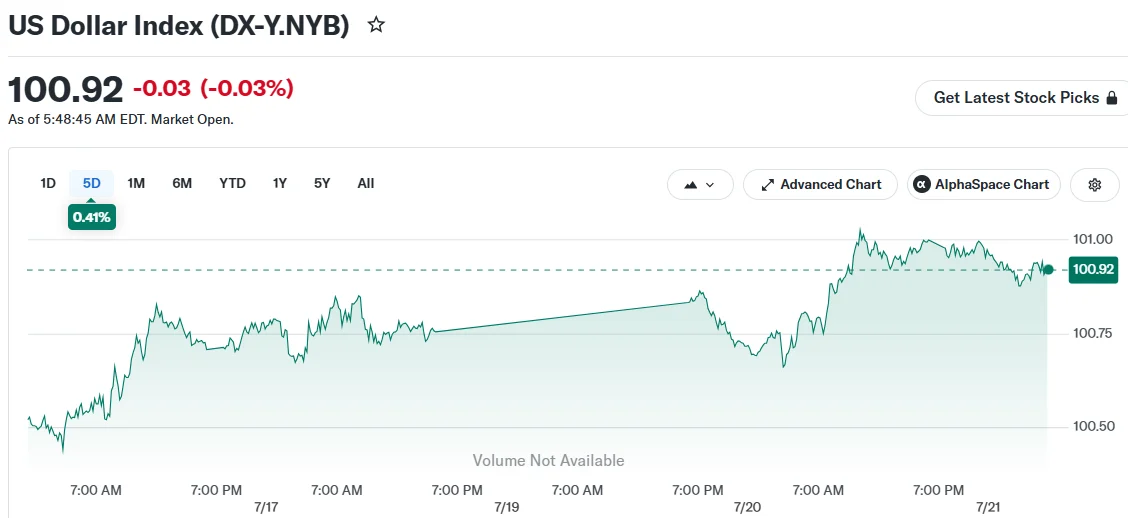
- The Dollar Index maintained levels around 100.93, hovering near its strongest position in a week as geopolitical tensions in the Middle East sustained safe-haven appetite
- American forces have conducted strikes against Iranian targets for ten consecutive days, though diplomatic channels are exploring a 10-day pause in hostilities
- Sterling gained 0.1% following Britain’s new Prime Minister Andy Burnham’s commitment to maintaining current fiscal discipline
- The single currency held steady around $1.1424 as market participants await Thursday’s European Central Bank policy announcement, with no rate adjustments anticipated
- Traders assign an 85% probability that the Federal Reserve will maintain its current policy stance at the upcoming meeting, given persistent inflation uncertainties
The greenback has maintained trading levels close to its strongest position since mid-July, buoyed by rising Treasury yields. The benchmark 10-year note yield remains elevated near 4.59%, while the 30-year bond yield trades above the 5% threshold.
Foreign exchange market participants find themselves balancing two contrasting dynamics: continued military operations in the Middle East versus potential diplomatic breakthroughs.
American military operations have targeted Iranian command facilities and naval infrastructure for ten consecutive nights, as confirmed by U.S. Central Command statements. Typically, such military escalation drives capital flows toward safe-haven currencies like the dollar.
However, diplomatic efforts continue. A high-ranking Iranian representative informed Reuters that Tehran has received a proposal for a 10-day cessation of hostilities through mediators. This uncertainty has prevented traders from establishing significant directional positions.

“The uncertainty surrounding the conflict’s trajectory has left the dollar in a holding pattern,” noted Jimmy Jean, chief economist at Desjardins, suggesting that meaningful dollar weakness appears more probable as a 2027 scenario.
Yemen-Backed Forces Threaten Energy Routes
Iran-supported Houthi forces in Yemen have declared a maritime blockade targeting Saudi Arabia, intensifying worries about global oil transportation corridors. Brent crude prices have surged approximately 21% throughout the current month, despite retreating 1.1% in Tuesday’s session.
Energy market volatility carries significant implications for currency valuations, as commodity-driven price pressures could compel monetary authorities to maintain restrictive policy settings for extended periods.
“Dollar upside risks persist as markets demonstrate a concerning level of complacency regarding the renewed military escalation,” observed Francesco Pesole, foreign exchange strategist at ING.
Sterling Strengthens Following Fiscal Commitment
The pound sterling appreciated 0.1% versus the dollar, reaching $1.3441, positioning itself to break a three-session decline.
Andy Burnham assumed office as Britain’s prime minister on Monday — marking the nation’s seventh leader within ten years. He committed to maintaining established fiscal frameworks and named John Healey as finance minister.
Financial market participants reacted favorably to the fiscal prudence pledge, although uncertainty lingers regarding Burnham’s strategy to finance campaign promises without increasing tax burdens on ordinary workers.
The euro recorded modest gains, climbing to $1.1424 before Thursday’s European Central Bank monetary policy meeting. The ECB is broadly expected to maintain current interest rates and appears unlikely to indicate future reductions while energy-related inflation threats remain pronounced.
The Federal Reserve convenes next week. Market pricing currently reflects an 85% likelihood that policymakers will hold rates unchanged, as officials monitor how Middle Eastern developments might influence inflation dynamics.
The Canadian dollar stabilized after reaching its weakest level in a month, following Washington’s implementation of 50% tariffs on various Canadian products amid ongoing trade tensions.
