


Key Takeaways
- Goldman Sachs elevated NIO from Neutral/Hold to Buy, establishing a $7 price target — representing roughly 47% potential upside from Friday’s $4.78 closing price
- Premarket trading saw NIO’s U.S. ADRs advance approximately 2% following the rating change
- The ES8 and ES9 SUV models command a 39% share of China’s NEV market segment priced over 400,000 yuan
- First-half 2026 deliveries surged 67% compared to last year, while the overall Chinese NEV market contracted 14%
- Goldman projects NIO will post 1.6 billion yuan in adjusted net profit for 2026, reversing a 12.4 billion yuan deficit from 2025
Shares of NIO’s American depositary receipts advanced roughly 2% during Monday’s premarket session, reaching $4.87, following Goldman Sachs’ decision to upgrade the Chinese electric vehicle manufacturer from Neutral to Buy.
The Wall Street firm established a one-year price objective of $7 for the ADRs and HK$55 for the Hong Kong-listed shares — each representing approximately 47% appreciation potential from Friday’s $4.78 close.
This ratings boost arrives despite NIO’s ADRs trading 6% lower year-to-date and sitting 32% beneath their April 2026 high point. Goldman characterized this valuation gap as “misaligned with the company’s strengthening operational fundamentals.”

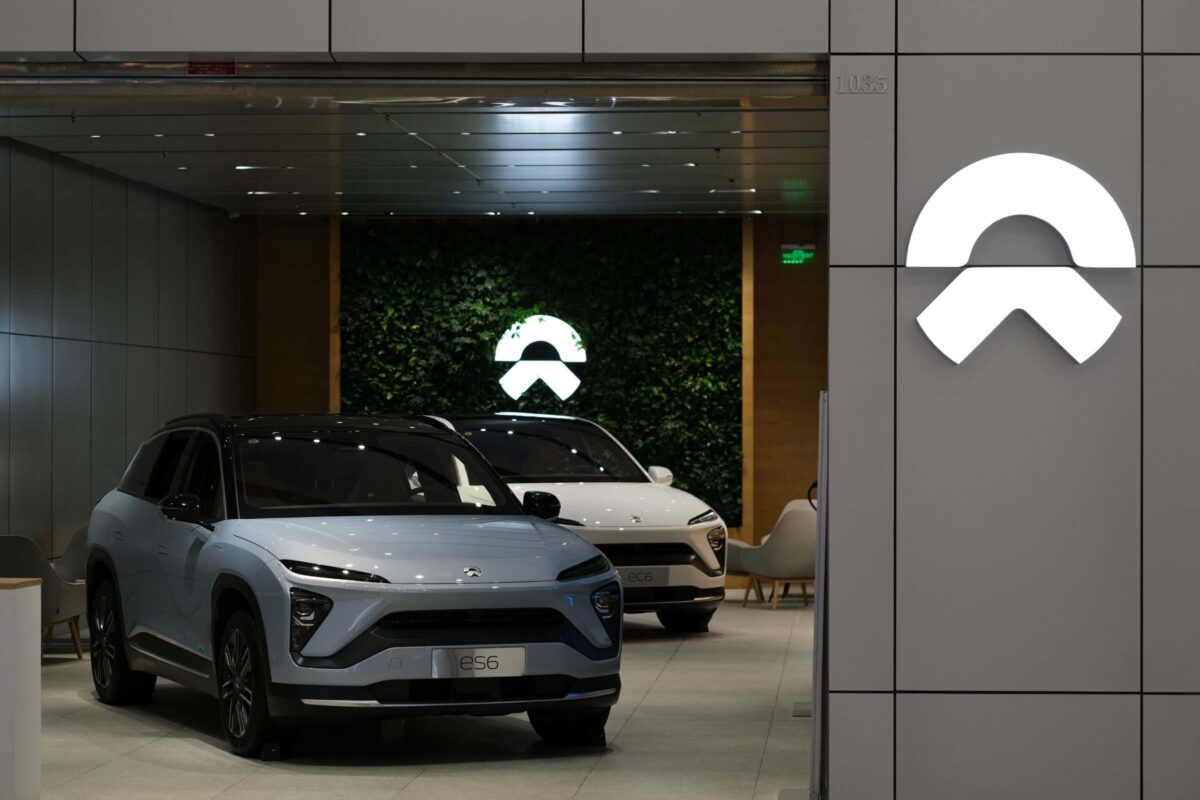
The investment thesis centers heavily on the success of NIO’s redesigned ES8 and ES9 premium SUV offerings. These two vehicles have captured the top position in China’s electric and hybrid vehicle segment above the 400,000 yuan price point, commanding 39% of that market.
This achievement becomes even more remarkable considering China’s overall NEV market declined 14% year-over-year during the first six months of 2026. Meanwhile, NIO’s delivery volume expanded 67% during that identical timeframe.
Goldman’s projections call for full-year 2026 delivery and revenue expansion of 43% and 60%, respectively. The investment bank anticipates NIO will achieve adjusted net profitability of 1.6 billion yuan in 2026, a dramatic reversal from the 12.4 billion yuan deficit recorded in 2025.
Free cash flow generation is similarly expected to flip positive — transitioning from negative 3.1 billion yuan in 2025 to positive 12.1 billion yuan during the current year.
Valuation Gap Drives Goldman’s Thesis
Goldman’s research team highlighted that NIO currently trades at a 25% to 29% valuation discount compared to pure-play EV competitors based on 2026–2027 price-to-sales ratios, along with a 17% discount on 2027 price-to-earnings multiples. This valuation disparity, paired with strengthening business fundamentals, prompted the firm’s upgrade decision.
Goldman’s earnings projections for 2026–2028 exceed Visible Alpha consensus by 30%, supported by elevated revenue assumptions and reduced operating expense forecasts. The firm believes NIO’s premium positioning will enable more consistent pricing power and reduced marketing expenditures.
The bank lifted its 2026–2028 profit estimates by 1% to 9%, primarily reflecting improved gross margin assumptions linked to ES8 and ES9 deliveries.
Future Growth Opportunities for NIO
Looking forward, Goldman identifies additional expansion potential. The firm’s analysts suggested NIO could deploy comparable strategies for its 5 Series and 6 Series vehicle lines — positioned in the 200,000 to 400,000 yuan range — to accelerate delivery growth throughout 2027 and subsequent years.
NIO is projected to achieve break-even operating performance in 2026, advancing from a $1.1 billion operating deficit in 2025. Analyst consensus anticipates $443 million in operating profit for 2027 — representing what would be the company’s inaugural positive operating result.
Following this upgrade, 78% of analysts covering the stock now maintain Buy recommendations. For context, typical S&P 500 components average between 55% and 60% Buy ratings. The consensus analyst price target for NIO’s ADRs currently stands around $7.40.
Goldman identified two immediate potential catalysts: accelerating deliveries of the five-seat ES8 variant, and profitability improvements evident in forthcoming quarterly reports.
