


Key Takeaways
- Burry labels AI’s language-dependent foundation as fundamentally flawed from the start
- His concept of “Ballard’s Test” argues real intelligence must function independently of language
- The “parameter trap” means companies are merely expanding broken systems rather than fixing core issues
- Nvidia’s need for endless growth conflicts directly with hyperscalers’ goal to reduce spending
- Recent SEC filings show Burry has initiated short positions on Nvidia, Tesla, and semiconductor funds
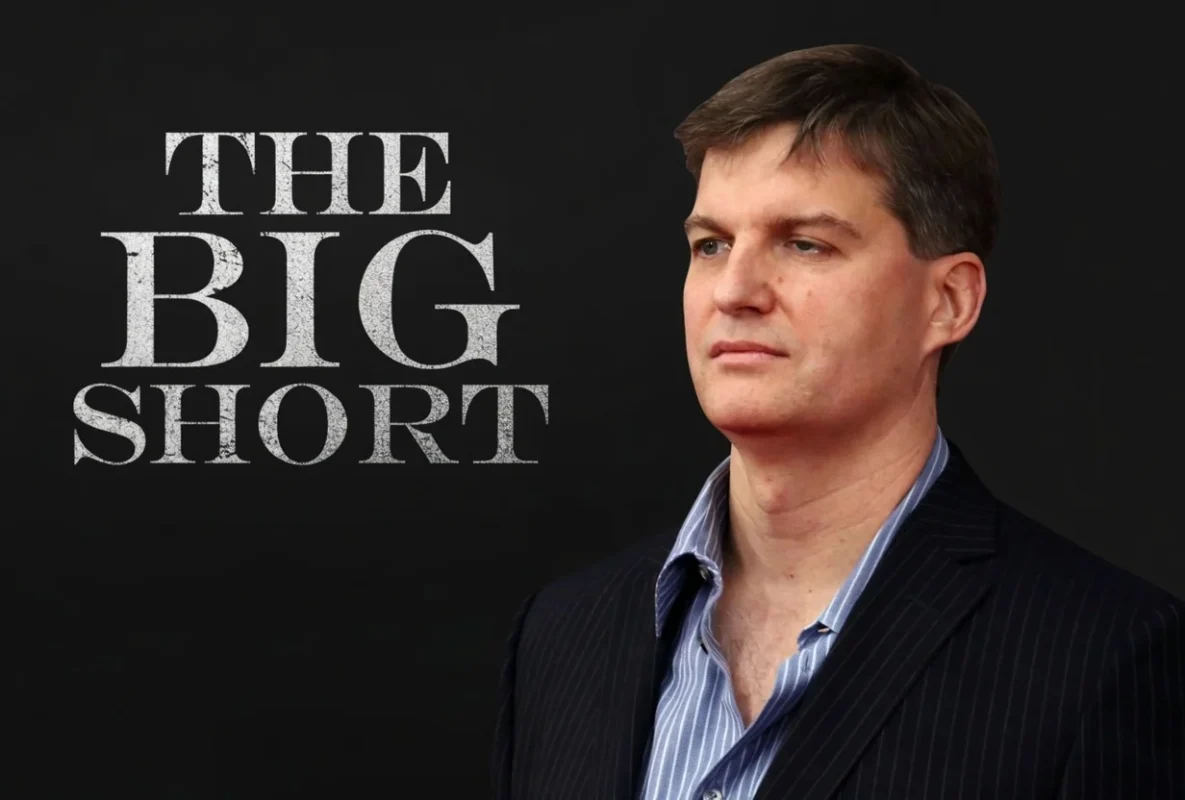
Michael Burry—the hedge fund manager who earned fame for his prescient bet against the housing market before the 2008 financial crisis—has now set his sights on the artificial intelligence sector and the tech giants driving it forward.
Through his Substack publication “Cassandra Unchained,” Burry presented a dual critique: one examining the technical foundations of AI systems, and another dissecting the financial dynamics sustaining the industry.
The Foundation Is Broken, According to Burry
Burry unveiled what he terms “Ballard’s Test”—a benchmark asserting that authentic intelligence must possess reasoning capabilities independent of linguistic frameworks.
According to Burry, the initial objective of AI research centered on developing this type of pure reasoning capability. However, when researchers encountered insurmountable obstacles, they pivoted toward language-driven architectures.
Burry characterizes this pivot as a “known flaw” and a “bad start.” From his perspective, the technology sector never addressed this fundamental weakness—it simply proceeded anyway.

The consequence, he argues, is what he calls a “parameter trap.” Rather than addressing the underlying problem, corporations are continuously expanding flawed architectures to unprecedented scales.
He emphasized that this strategy requires enormous computational resources—what he described as “zillions of power-hungry chips.”
The Nvidia Dilemma
Burry then shifted focus to the economic dynamics of artificial intelligence, identifying a fundamental contradiction in the market.
Nvidia requires perpetual expansion in AI chip demand. This sustained growth trajectory supports its current revenue streams and validates the stock’s elevated valuation.
Meanwhile, hyperscalers—companies including Meta, Amazon, and Microsoft—require precisely the opposite outcome. Their business models depend on capital expenditure cycles concluding within three to four years, allowing operational costs to decline.
“The hyperscalers are promising permanent demand growth and temporary spending over 3-4 years all in the same breath,” Burry observed.
He contends these opposing realities cannot coexist.
Burry also highlighted that free cash flow among leading hyperscalers is approaching zero. While earnings reports appear healthy on the surface, he suggests this is partially an accounting illusion created by extended depreciation timelines that obscure actual capital consumption.
According to Burry, AI optimists envision a “third door”—a scenario where chip demand remains robust while infrastructure spending simultaneously decreases, creating a win-win outcome for all participants.
Burry’s response is unambiguous: “There is no third door.”
He’s reinforced this conviction through action, establishing short positions against Nvidia, Tesla, and the iShares Semiconductor ETF according to recent regulatory filings.
Regardless of whether his market timing proves accurate, Burry’s thesis poses a fundamental challenge—who ultimately profits from the AI revolution, and is it possible for semiconductor manufacturers and cloud infrastructure providers to simultaneously succeed?
Burry’s answer is unequivocal: they cannot.
