


Key Takeaways
- June data revealed a 2.4% decline in existing home sales, reaching an annualized pace of 4.09 million units
- Mortgage rates for 30-year loans climbed to 6.49%, while median home values reached an unprecedented $440,600
- Opendoor’s inventory-heavy business model faces direct exposure to stagnant market dynamics
- Seven Wall Street analysts project a consensus 12-month target of $4.38 per share, spanning from $1.40 to $8.00
- Financial forecasters anticipate mortgage rates remaining north of 6% until 2028, delaying meaningful market recovery
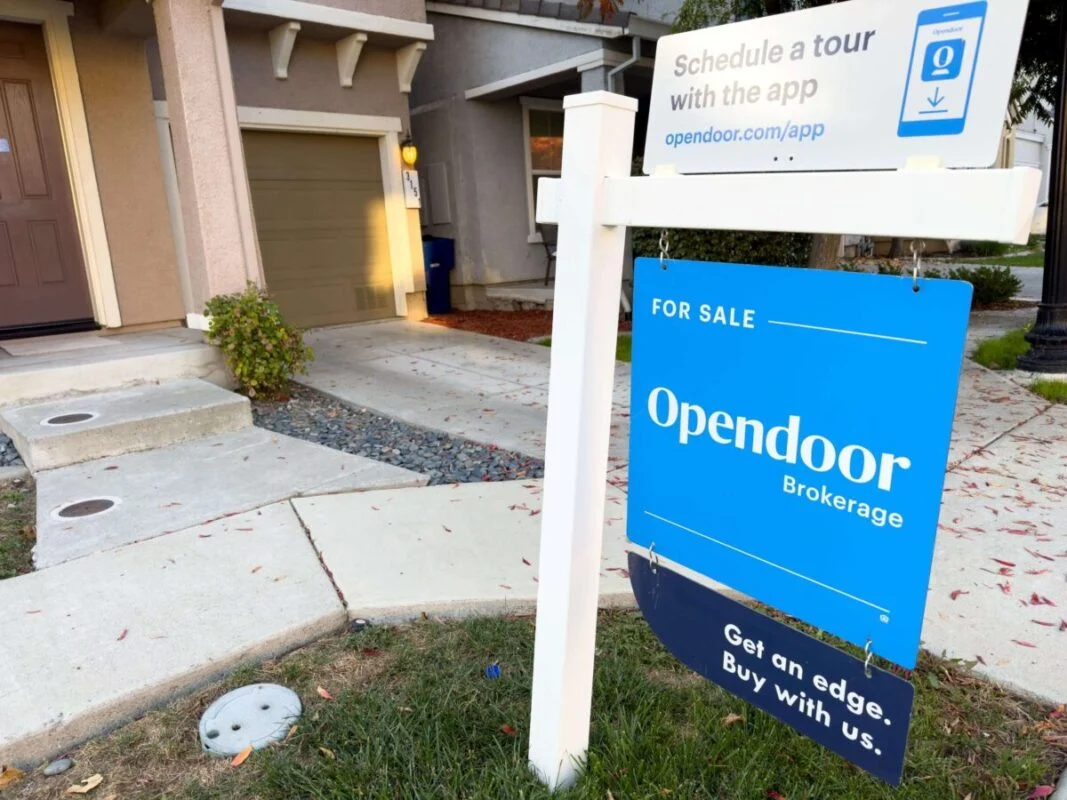
Opendoor Technologies (OPEN) stands among the most interest-rate-vulnerable companies trading today. Its business strategy centers on purchasing residential properties, maintaining inventory, and reselling — an approach fundamentally dependent on market liquidity and precise valuation.
Opendoor Technologies Inc., OPEN
Current market dynamics present significant challenges.
According to Reuters reporting, June witnessed an unanticipated 2.4% contraction in existing home transactions, declining to a seasonally adjusted annual velocity of 4.09 million units. This represents meaningful weakness, particularly consequential for Opendoor in ways traditional listing platforms or construction firms wouldn’t experience.

The AP disclosed that average 30-year fixed mortgage rates advanced to 6.49%. Concurrently, median prices for existing properties established a new peak at $440,600. This pairing — elevated borrowing costs alongside premium valuations — creates the precise environment that discourages potential purchasers.
Since Opendoor maintains actual property ownership on its financial statements, market stagnation rapidly impacts profitability metrics and liquidity positions. Traditional listing services can weather dormant periods. Opendoor incurs ongoing holding expenses.
The Optimistic Perspective Remains
Despite headwinds, bullish arguments maintain validity. According to Reuters coverage from June 17, pending transactions climbed to a six-month peak in May. Such indicators sustain investor interest among the optimistic camp.
Should borrowing costs moderate even incrementally while transaction velocity accelerates, Opendoor possesses capacity for rapid improvement. The inherent operational leverage is substantial — when market conditions reverse, financial performance can strengthen considerably. This potential maintains OPEN’s relevance despite prevailing weakness.
The equity tends to respond more dramatically to rate projections and housing sentiment than underlying operational results. This characteristic presents both opportunity and risk.
Analyst Sentiment and Forecasts
Wall Street maintains measured expectations. MarketBeat tracking reveals seven analysts establishing a consensus 12-month valuation of $4.38 per share, with projections spanning from $1.40 to $8.00.
The mean target registers beneath recent trading levels, implying analysts perceive the stock as ahead of fundamental justification based on present conditions.
This represents prudent positioning rather than outright rejection. The distinction matters.
Fitch’s mid-year residential market assessment highlighted persistent inflation pressures, diminished affordability metrics, and softening employment conditions as continued demand suppressors. A Reuters polling of housing economists revealed expectations for rates maintaining positions above 6% through 2028, with only incremental decreases anticipated.
This extended timeline complicates constructing a definitive bullish narrative around recovery timing.
Opendoor’s consensus Wall Street price target currently registers at $4.38 per share, reflecting analysis from seven equity research professionals tracked by MarketBeat’s latest compilation.
