


Key Takeaways
- Goldman Sachs advises investors to view market pullbacks as opportunities, citing robust economic fundamentals
- Middle East tensions continued for a fifth consecutive day with new attacks on Tehran
- Tehran’s intelligence ministry allegedly contacted US intelligence officials to discuss potential conflict resolution
- Crude oil prices retreated on diplomatic news, with Brent trading around $82 per barrel
- US stock index futures reversed declines following reports of Iranian diplomatic overtures
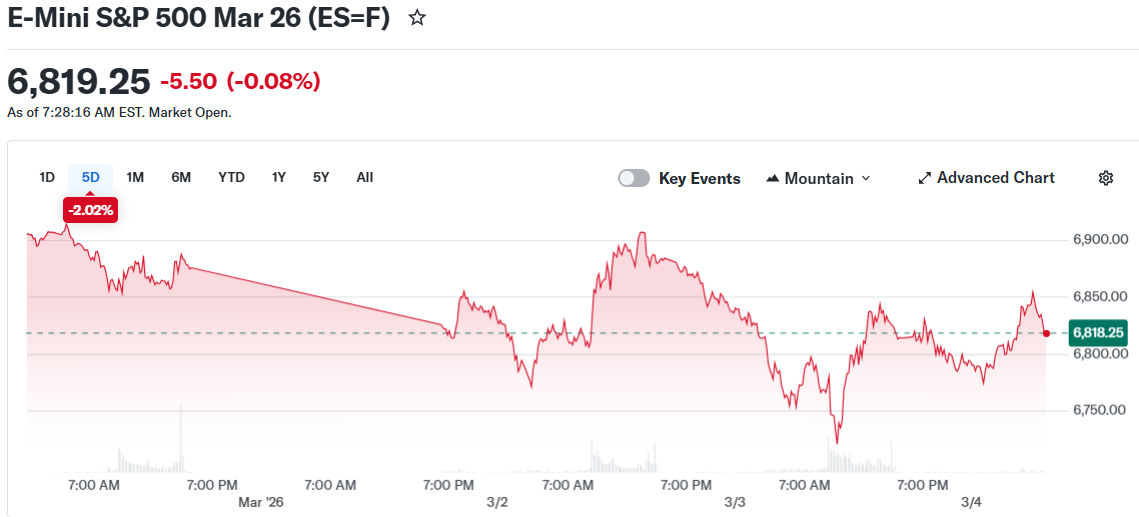
Stock index futures in the United States moved higher midweek following emerging reports that Tehran’s intelligence apparatus initiated quiet communications with American intelligence services to discuss a potential path toward de-escalation with Israel.
S&P 500 contracts advanced 0.1% while Nasdaq 100 futures added approximately 0.2%, recovering from earlier negative territory. Dow Jones Industrial Average futures hovered around unchanged levels after Tuesday’s session saw steep losses across all three primary indices.
The Middle Eastern conflict reached its fifth consecutive day Wednesday. Fresh Israeli military operations targeted Tehran as Iran organized memorial services for Supreme Leader Ali Khamenei, who perished in weekend military actions.
The escalating situation has created significant volatility across international financial markets. South Korea’s primary equity index experienced its largest single-session decline ever recorded amid concerns about broader regional instability.

News of Iran’s diplomatic initiative provided temporary relief to Wall Street sentiment. Nevertheless, American officials reportedly expressed doubt about the genuineness of the gesture, with market watchers cautioning it may be premature to draw conclusions.
Wall Street Giant Advocates Calm Approach
Goldman Sachs investment strategists, under the leadership of Peter Oppenheimer, released research advising clients that market downturns should be viewed as accumulation opportunities. Their analysis emphasized that any market decline would likely be contained due to solid corporate profit expansion and fundamental economic strength.
“We see correction risks as high given current valuations, but expect this to present a buying opportunity with relatively low risk of a more protracted and deep bear market,” Oppenheimer wrote.
The research team recognized that global equity sectors across the board appear expensive when measured against their two-decade historical averages. This elevated valuation environment increases market vulnerability to disruptions including the Middle Eastern crisis and concerns surrounding artificial intelligence developments.
Oppenheimer added that “most geopolitical shocks in recent years have not had a long-lasting impact on markets.”
Energy Markets and Strategic Waterway Concerns
Surging energy commodity prices have emerged as a primary worry for investors. President Trump announced Tuesday that American forces would provide protection and insurance coverage for commercial oil vessels navigating the Strait of Hormuz, where maritime traffic has significantly slowed due to Iranian military posturing.
Brent crude contracts declined more than 2% following the diplomatic development reports, settling near $82 per barrel. West Texas Intermediate fell to approximately $75.
Elevated energy prices threaten to accelerate inflation pressures, which would constrain the Federal Reserve’s flexibility to implement interest rate reductions.
Market participants are closely monitoring Wednesday’s ADP employment report from the private sector. The data precedes Friday’s comprehensive employment figures, both critical indicators influencing Federal Reserve policy trajectory.
Quarterly financial results from Broadcom, Costco, and Alibaba are also expected during the current week.
