


Key Takeaways
- Federal Reserve policymakers identify artificial intelligence infrastructure expansion as a significant inflationary pressure point affecting semiconductor prices, energy consumption, and data center expenses
- Interest rates remained at 3.5%–3.75% during June’s Federal Reserve meeting under new Chair Kevin Warsh
- Half of the 18 voting Federal Reserve members anticipate at least one interest rate increase before 2026 concludes
- According to CME FedWatch data, there’s a 69.5% probability rates remain unchanged at the upcoming July 29 meeting, declining from 80% the previous week
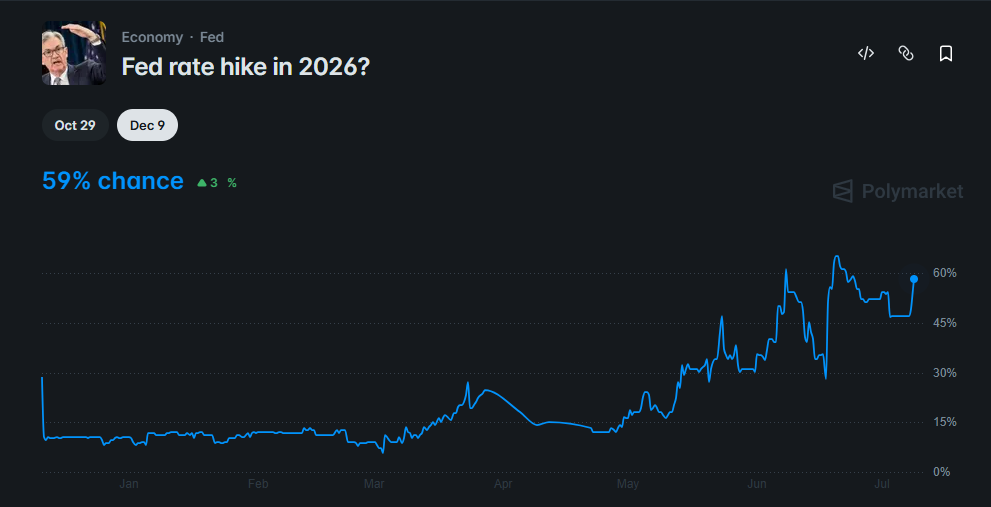
- Prediction market Polymarket indicates 59% odds for a rate increase this year, influenced by escalating U.S.-Iran geopolitical tensions
Central bankers at the Federal Reserve faced disagreement during their June policy meeting regarding the appropriate path forward for interest rates. Wednesday’s release of the meeting minutes highlighted artificial intelligence demand as a primary inflationary concern among numerous officials.
The central bank’s apprehension revolves around the phenomenon market observers have dubbed “chipflation.” This term describes escalating semiconductor costs required for data center operations, subsequently driving up consumer prices across electronics, digital devices, and household electricity bills.
A majority of meeting participants noted that economic expansion fueled partially by robust AI-related business spending “could contribute to more persistent inflationary pressures.” Officials anticipated inflation would remain elevated in the immediate term, although some suggested potential relief if Middle Eastern geopolitical conflicts subside.
The Federal Reserve’s internal forecasts underscore this apprehension. Their year-end PCE inflation projection surged from 2.7% to 3.6%.

According to Nick Ruck, who serves as director at LVRG Research, the minutes validate that the AI infrastructure expansion is “driving higher inflation through surging demand for semiconductors, energy and data centers, even as it promises future productivity gains.”
Interest Rate Increase Remains Under Consideration
The Federal Reserve maintained its interest rate target at 3.5%–3.75% in June, though policymakers haven’t ruled out future increases. Half of the 18 voting committee members forecast at least one rate adjustment upward before 2026 ends. Six members within that group anticipate two separate quarter-point increases.
Numerous participants indicated the appropriate federal funds rate would align at or marginally below the current range by year’s end. However, many others argued it should exceed current levels, revealing significant internal committee divisions.
Market expectations have evolved. The probability of an interest rate increase at the July 29 policy meeting currently stands at 30.5% according to CME FedWatch, rising from approximately 20% seven days earlier. Polymarket tracking shows 59% odds for at least one hike in 2026, a figure that increased following President Trump’s warnings of potential military action against Iran this week.
Several participants during the June gathering contended there was already justification for implementing rate increases immediately, pointing to heightened inflation risks and resilient labor market conditions.
Elevated interest rates typically create headwinds for cryptocurrency markets. They diminish market liquidity, increase borrowing expenses, and enhance the relative attractiveness of cash holdings and fixed-income securities compared to speculative assets. Market analysts observed this week that digital asset markets might gain support if the Federal Reserve intervenes to stabilize U.S. equity markets during economic downturns.
The Federal Reserve’s next policy meeting convenes July 29. Market participants will closely monitor any messaging adjustments as inflation statistics and international risk factors continue developing.
