



TLDR
- The precious metal plunged approximately 5% on Tuesday before staging a 2% recovery on Wednesday as bargain hunters stepped in
- The US dollar’s strength, climbing roughly 1.5% over the week, is limiting gold’s upward momentum
- Escalating US-Iran tensions are boosting safe-haven flows while simultaneously elevating crude oil valuations
- Climbing crude prices are intensifying inflation concerns, dampening prospects for Federal Reserve monetary easing
- Market participants now see an 80% probability of multiple rate reductions this year, a decline from expectations of two cuts just last Friday
The precious metal experienced dramatic volatility this week, with Tuesday’s steep decline giving way to a notable recovery on Wednesday as market participants reassessed risk factors.
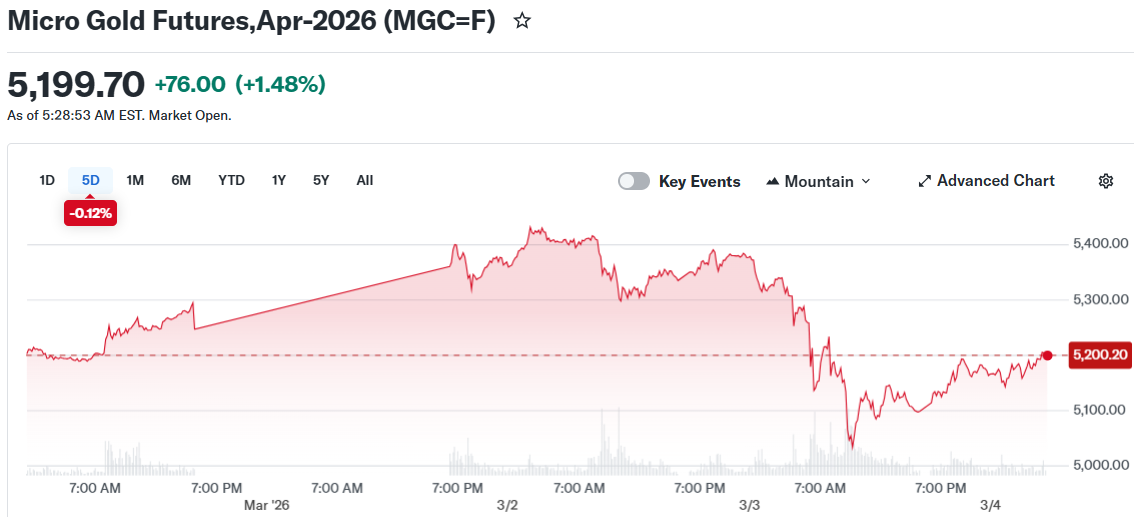
Spot gold advanced 1.6% to reach $5,171.89 per ounce during late morning trading in London. This represented a significant turnaround from the prior session’s 4.5% decline, marking one of the most pronounced single-day retreats in recent memory.
The yellow metal reached record territory above $5,595 per ounce during late January trading. Year-to-date gains have approached 20%.
Tuesday’s downturn was primarily attributed to a strengthening US Dollar Index, which climbed nearly 1.5% across two sessions to touch six-week peaks. Dollar appreciation typically pressures gold by increasing its cost for international purchasers.

Additional selling pressure emerged as certain market participants liquidated gold holdings to offset losses elsewhere in their investment portfolios.
Silver experienced an even more volatile session, plummeting over 8% Tuesday before rallying 4.1% to $85.38 on Wednesday. Platinum declined 10% before recovering 2.8% to settle at $2,148.50 per ounce.
Iran Conflict Drives Safe-Haven Demand
The military confrontation between the US-Israel alliance and Iran has now entered its fifth day. Israeli forces conducted additional strikes on Tehran Tuesday, targeting a facility in Qom where religious leaders were reportedly gathering to select a replacement for Supreme Leader Ayatollah Ali Khamenei, according to reporting from Israel’s Kan News. Iran’s semi-official Mehr news agency acknowledged the strike but maintained the structure was vacant during the attack.
The escalating conflict has generated significant turbulence across international financial markets, maintaining elevated investor anxiety. Concerns regarding expanded regional destabilization continue mounting as Iran has threatened retaliatory actions following American military operations against Iranian-affiliated installations.
Maritime traffic navigating the Strait of Hormuz, a critical chokepoint for approximately one-fifth of global oil and natural gas shipments, has diminished substantially. President Trump announced US provision of naval protection and insurance coverage for tankers traversing the strategic waterway, though maritime industry representatives characterized the measure as only partially addressing concerns.
Rising Oil Prices Complicate Rate Cut Expectations
Elevated crude oil valuations are amplifying inflation projections. This development is reducing the likelihood of near-term rate reductions by central banking authorities, including the Federal Reserve.
Market pricing now reflects 80% odds for multiple quarter-point Fed rate cuts throughout the current year. Just last Friday, markets had fully incorporated expectations for two separate reductions.
Elevated interest rate environments create obstacles for gold valuations since the metal generates no yield.
Position data from the CFTC indicates that money managers’ net long exposure to gold has contracted since late January to approach decade-low levels. Market analysts suggest this diminished positioning could establish a floor limiting further downside.
In China, government PMI figures indicated manufacturing sector contraction, while privately compiled survey data revealed above-consensus expansion, highlighting conflicting economic indicators in the world’s second-largest economy.
