



TLDR
- Cantor Fitzgerald projects Bitcoin’s current bear cycle may conclude by late October 2026
- Analysis based on historical patterns shows BTC down approximately 51% from 2025 highs
- Current Bitcoin trading price hovers around $59,500 as of publication
- Investment bank highlights Hyperliquid, Ethereum, and Bitcoin as preferred assets for lasting value
- Cantor launched coverage on two digital asset treasury firms with favorable ratings
A prominent Wall Street institution, Cantor Fitzgerald, has indicated that Bitcoin’s bear market could be approaching its conclusion within months. In a comprehensive Tuesday analysis, the firm’s research team, spearheaded by Gareth Gacetta, stated that cryptocurrency markets are transitioning into the terminal phase of the ongoing bearish cycle.
According to data from June 10, Bitcoin has experienced 252 days since reaching its 2025 zenith, suffering approximately a 51% decline. Historical analysis of the prior three market cycles reveals that Bitcoin typically reaches its nadir an average of 384 days following peak valuations. Extrapolating from this pattern, the current downturn could conclude near the end of October 2026.
The financial institution emphasized that this framework shouldn’t be interpreted as an exact forecasting mechanism. Variables including macroeconomic conditions, regulatory developments, and international political tensions could alter projections. However, Cantor observed that cryptocurrency’s self-reinforcing characteristics mean historical patterns frequently repeat themselves.
At press time, Bitcoin was exchanging hands at approximately $59,500.

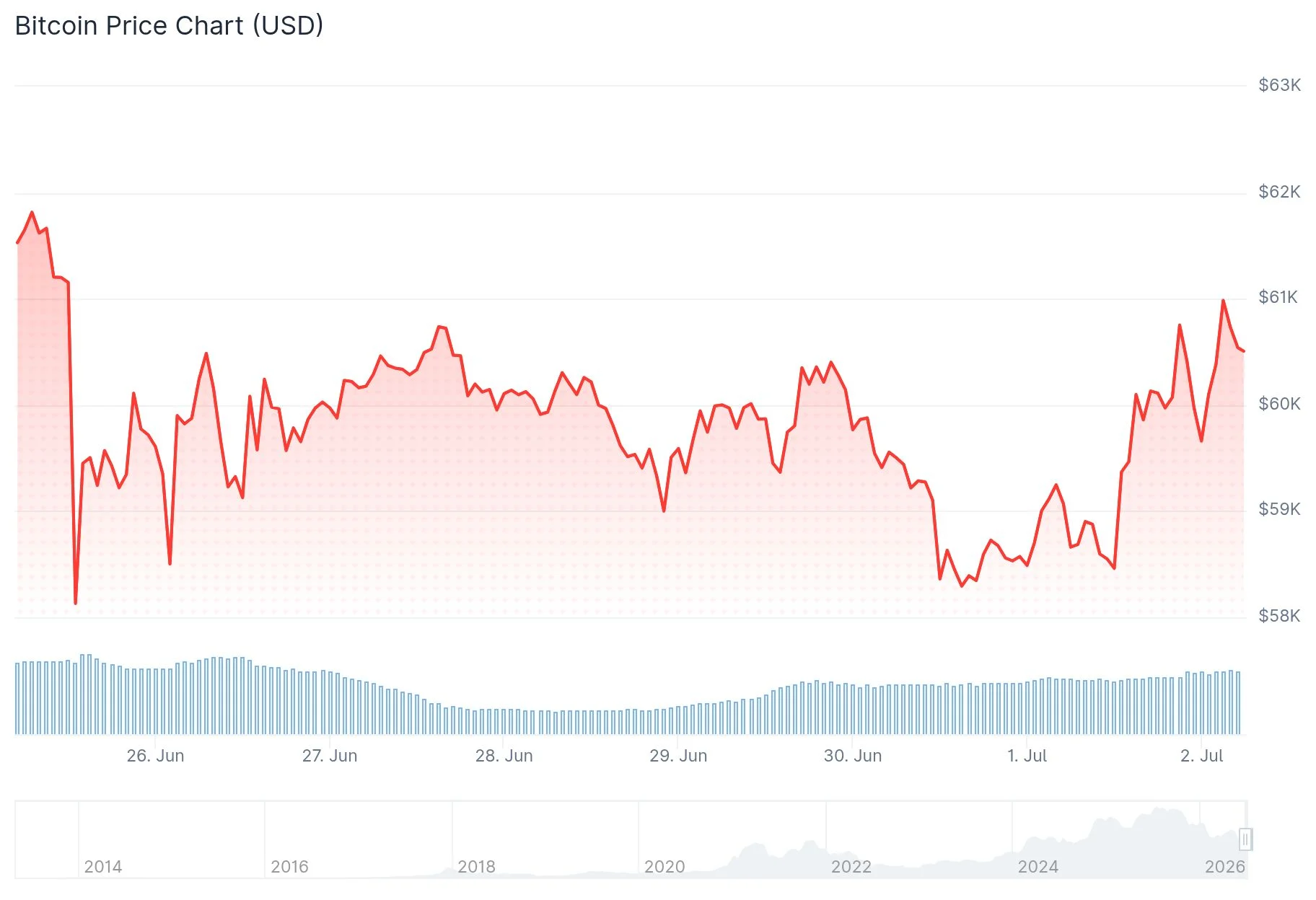
The wider digital asset ecosystem has faced headwinds throughout recent months. An aggressive June correction, fueled by continuous ETF capital outflows, heightened borrowing costs, and diminished appetite for risk assets, drove Bitcoin more than 50% beneath its late-2025 pinnacle.
Ether alongside most prominent alternative cryptocurrencies have delivered weaker performance compared to Bitcoin throughout this downturn. Several specific sectors, particularly decentralized finance protocols and asset tokenization platforms, have demonstrated comparative strength.
Cantor’s Value Investment Recommendations
As markets approach a potentially pivotal inflection point, Cantor advised investors to redirect attention away from speculative trading toward blockchain networks demonstrating sustainable value generation.
The banking institution contended that network activity by itself doesn’t create token appreciation. Projects positioned for long-term success must transform usage metrics into consistent revenue streams or enduring monetary demand.
Cantor identified Hyperliquid as the most transparent example of fee-based token economics, highlighting its systematic buyback and token burn mechanism. Bitcoin received recognition as the foundational monetary store of value. Ethereum earned distinction as the predominant collateral infrastructure for decentralized financial applications.
Solana, Sui, XRP, and Zcash each possess unique competitive advantages, according to Cantor, though they must still demonstrate capability in converting ecosystem expansion into sustainable token value appreciation.
The bank additionally spotlighted digital asset treasury corporations as an underappreciated investment opportunity. It noted that leading companies are evolving beyond simple cryptocurrency holdings toward active operational strategies that produce yield and develop critical infrastructure.
Cantor commenced research coverage on Forward Industries and Cypherpunk Technologies with overweight recommendations. Target valuations were established at $7.90 and $0.90, respectively.
Market Context
According to CoinShares intelligence, Bitcoin-focused investment vehicles have emerged as the primary driver of net capital inflows into cryptocurrency products throughout 2026. Nasdaq disclosed IPO activity totaling $129.3 billion across its platform during the initial six months of 2026.
A Bitcoin price recovery could serve as a stimulus for increased exchange listings and venture capital deployment within the blockchain sector. Regulatory transparency from agencies including the SEC continues to represent a critical determining factor.
Primary downside threats include macroeconomic turbulence and regulatory ambiguity. Principal upside catalysts encompass enhanced ETF infrastructure and increasingly favorable market architecture.
