


Key Takeaways
- President Trump issued a warning of 100% tariffs against nations implementing Digital Services Taxes targeting American companies.
- European countries considering levies on companies like Meta, Alphabet, and Amazon are the primary targets of this threat.
- According to Trump, these tariffs would supersede all current trade agreements, regardless of their status.
- Legal challenges loom after the Supreme Court previously blocked Trump’s sweeping “reciprocal” tariff scheme.
- France has maintained its 3% digital tax since 2019 and refuses to eliminate it under U.S. pressure.
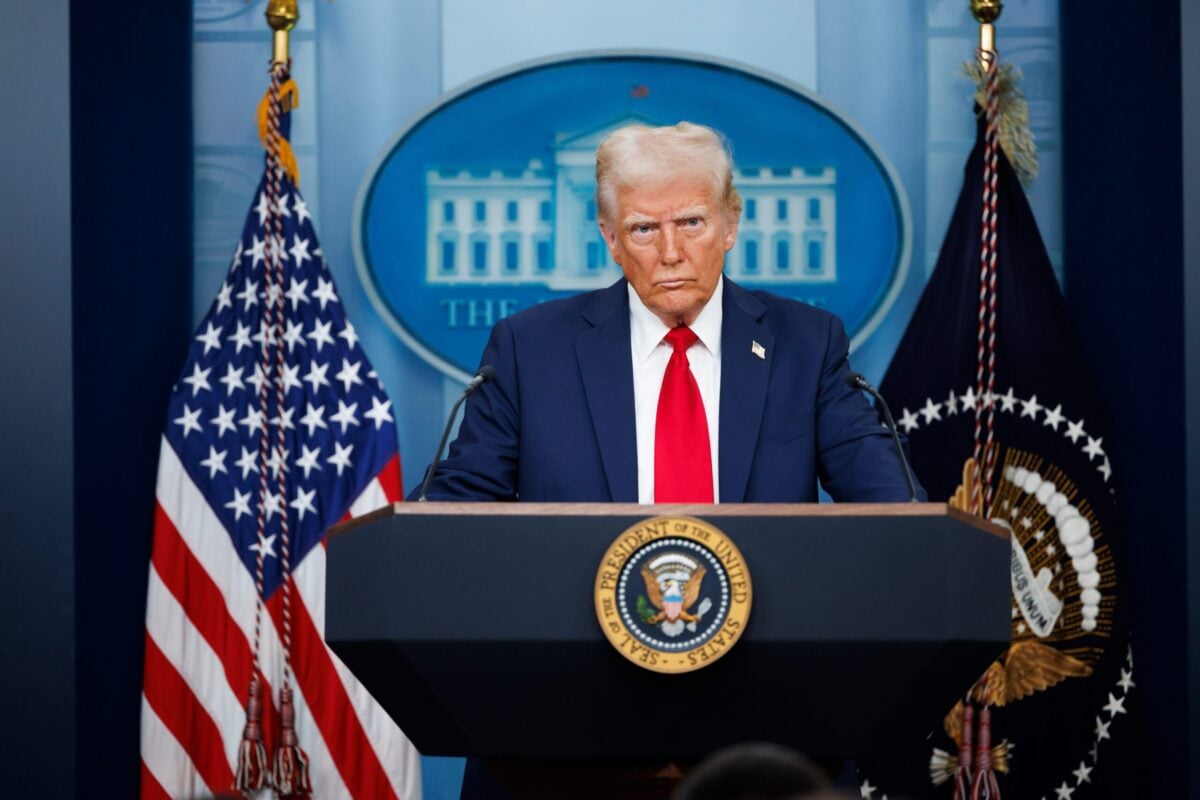
On Friday, President Donald Trump issued a stark ultimatum via Truth Social, declaring that any nation imposing a Digital Services Tax on American technology companies would be hit with a 100% tariff on all exports to the United States.
Trump’s statement specifically referenced “numerous European Countries” that are contemplating such tax measures. He made clear that the punitive tariff would take effect without delay if these nations proceed with their taxation plans.
“Please let this statement serve to represent that any Country that imposes such a Tax will immediately be met with a 100% TARIFF on any and all Goods sent to the United States of America,” Trump declared in his post.
Furthermore, he indicated that these tariffs would nullify existing trade arrangements with the United States, whether they have been finalized or are currently under negotiation.
The announcement’s timing is particularly significant. It emerged merely 24 hours after European Union member states gave their approval to a trade agreement with the U.S. that establishes a 15% ceiling on taxes for European goods entering America.

Digital services taxes specifically target the world’s most dominant technology corporations. Companies such as Meta, Alphabet, and Amazon face these levies because they earn substantial revenues in foreign markets while contributing minimal local taxes.
Currently, over a dozen nations have implemented various forms of this tax.
France Maintains Its Position
France implemented its digital services tax in 2019. The levy imposes a 3% charge on digital service revenues for corporations earning over €25 million in French revenue and €750 million globally.
During last week’s G7 summit, French President Emmanuel Macron firmly stated that France would not eliminate its digital tax in response to American demands.
Prior to the summit, Trump had already issued threats of 100% tariffs on French wine imports if France refused to abandon the tax.
This isn’t Trump’s first use of such threats. Previously, he warned Canada about its proposed digital tax initiative. Canada ultimately abandoned the levy before its implementation.
Questions About Legal Authority Emerge
The legal foundation Trump would rely upon to enforce these tariffs remains uncertain.
The Supreme Court previously invalidated his broad “reciprocal” tariff program, determining that the International Emergency Economic Powers Act didn’t authorize the administration to unilaterally impose comprehensive global tariffs.
Following that court decision, Trump issued an executive order establishing a 10% universal tariff under Section 122 of the Trade Act of 1974. That statute, however, permits such tariffs for only 150 days. Congressional authorization would be required for any continuation beyond that period.
While the legal validity of this newest tariff threat remains questionable, the political signal is unmistakable: the United States is monitoring European actions on digital taxation with intense scrutiny.
