



Key Takeaways
- BNB has evolved significantly from a simple exchange utility token into a multi-purpose asset driving fees, governance, staking, and decentralized finance on BNB Chain
- An automated burn mechanism continuously shrinks the circulating supply, with a final goal of reaching 100 million tokens
- BNB Smart Chain maintains substantial blockchain activity, featuring genuine DeFi engagement and consistent transaction volume
- Centralization represents the primary vulnerability—BNB’s connection to Binance introduces both platform dependency and regulatory concerns
- The 2023 U.S. regulatory settlement with Binance continues to influence investor perception of BNB
Originally launched as a discount token for Binance platform users, BNB has transformed into a multifaceted cryptocurrency asset supporting an extensive blockchain infrastructure.
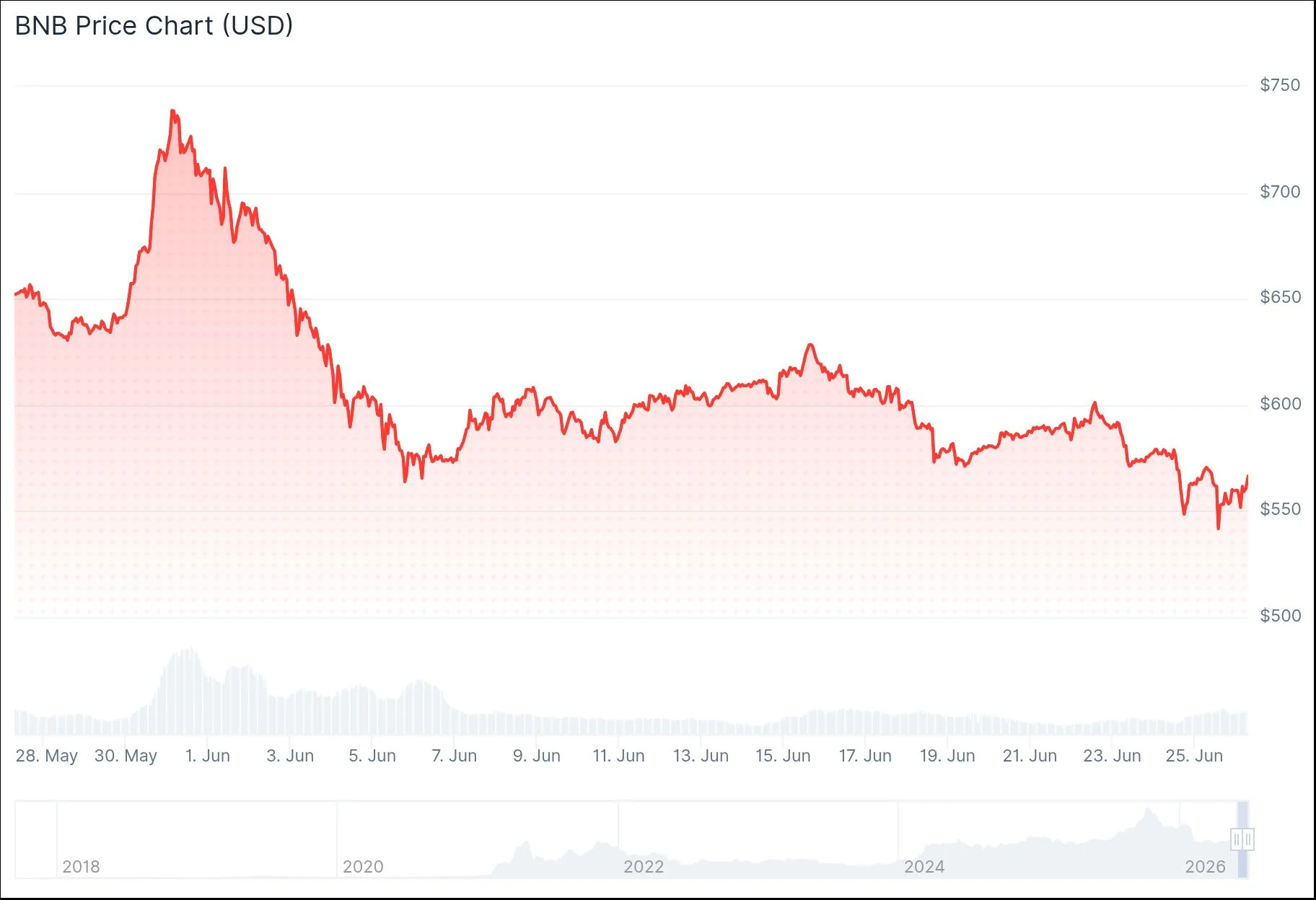
This evolution carries significant weight for those assessing BNB’s investment potential. The asset now commands genuine utility-driven demand rather than purely speculative trading interest.
BNB Chain participants pay network fees in BNB. Binance traders receive reduced trading costs, and ecosystem participants access numerous reward programs. These use cases establish continuous baseline demand that distinguishes BNB from many alternative cryptocurrencies.
As one of the blockchain industry’s more active networks, BNB Smart Chain processes substantial decentralized finance volume, stablecoin transactions, and daily on-chain activity. This usage pattern generates legitimate, recurring demand for the underlying token.

Supply Dynamics Favor Token Holders
BNB’s economic model represents a notable strength. The platform employs an automatic burning protocol that regularly eliminates tokens from the available supply. Additionally, a real-time burn function linked to network gas fees operates continuously.
The ultimate objective targets a total supply reduction to 100 million BNB tokens. This framework establishes a supply trajectory that benefits current holders as time progresses.
While this doesn’t guarantee BNB is underpriced at any given moment, it does indicate a more structured supply management approach than most comparable altcoin projects.
Platform Centralization Presents the Primary Concern
BNB Chain delivers speed and efficiency, yet it doesn’t rank among the most decentralized blockchain networks. The validator network shows considerable concentration, and a substantial portion of BNB usage originates directly from Binance’s ecosystem.
This relationship presents advantages and drawbacks. Binance provides BNB with extensive market access and user distribution. However, this arrangement prevents the token from establishing complete independence from Binance’s regulatory position and corporate reputation.
The 2023 settlement between Binance and U.S. regulatory agencies marked a significant moment. While subsequent developments have improved sentiment somewhat, this regulatory history continues influencing how both institutional and individual investors evaluate BNB’s risk profile.
Any cryptocurrency this fundamentally connected to a single centralized entity inherently carries platform-specific risk. This represents a structural reality rather than mere conjecture.
BNB functions essentially as a position on the continued large-scale operation of both Binance and BNB Chain. For those comfortable with this framework, the utility proposition and supply management provide BNB with stronger fundamentals than most large-capitalization altcoins.
The token burn initiative persistently reduces available supply, decentralized finance activity on BNB Smart Chain maintains momentum, and Binance preserves its position among cryptocurrency’s largest user communities.
